I’ve seen too many businesses chase the wrong terms, obsess over volume, and panic over keyword difficulty without asking the only question that matters: will this bring real local customers?
Local keyword research is also messier than people expect.
Search results change by neighbourhood, map pack rankings don’t always match organic rankings, and the same service can be phrased ten different ways (including slang, spelling variants, and “near me” queries).
Add in duplicate location pages, competitors bidding on brand terms, and tools that don’t show true hyper-local intent, and it’s easy to end up with keywords that “rank” but don’t convert.
This is where many local SEO service providers get stuck. They rank, but the phone doesn’t ring, because they’re targeting terms that don’t match local intent.
This guide fixes that without the jargon. I’ll show you how people actually search for nearby services and how to find keywords that drive calls, bookings, and walk-ins.
What Is Local Keyword Research for SEO?
Local keyword research for SEO is finding the specific keywords potential customers in a certain geographic area use to search for nearby businesses, products, or services.
These keywords will then be used to help businesses optimise their website and Google Business Profile (GBP) to appear in those crucial local searches. So it’s not just what they want, but where they want it.
Why Does Local Keyword Research Matter?
The business value is simple and very real. Local searches usually come from people who are ready to act or in SEO-speak, high-intent searchers.
Someone searching “emergency electrician near me” isn’t browsing, they’re trying to solve a problem today. When you target these queries properly, you increase your chances of showing up in local organic results and the map pack, which is often the first thing users see.
That visibility translates directly into calls, direction requests, bookings, and walk-ins, not vanity traffic.
Core Components of Local Keywords
Explicit vs Implicit Local Intent
Explicit local intent is easy to spot because the location is spelled out.
These searches include city names, neighborhoods, ZIP codes, or phrases like “near me.”
When someone types “dentist in choa chu kang” or “coffee shop near me,” they’re clearly telling Google they want a local result, and Google responds accordingly with maps, listings, and nearby businesses.
Implicit local intent is trickier but just as important. These searches don’t include a location, yet users still expect local results. Think “hair salon,” “pizza delivery,” or “car repair.” Google understands that these services are almost always local, so it automatically tailors results based on the searcher’s location.
As an SEO consultant, I’ve learned not to ignore these keywords just because they don’t look local on the surface. These are also high commercial and transactional intent keywords.
And for that reason, they often drive some of the highest quality traffic.
Location Modifiers You Should Be Using
Location modifiers go far beyond just city names. Over the years, I’ve seen better results when businesses get specific and reflect how locals actually talk about their area.
Neighborhoods, districts, landmarks, and even street names can all act as powerful signals when used naturally. Someone searching “best cafe in South Lake Union” is far more targeted than someone typing “Seattle cafe,” and the competition usually drops with that specificity.
The key is realism. I don’t recommend stuffing every possible location into a page. Instead, I look at how customers describe where they are and mirror that language.
A law firm might benefit from “near the courthouse,” while a restaurant could rank better using a popular square or shopping area. When your keywords match real-world behavior, search engines and users both respond better.
How to Conduct Local Keyword Research Step by Step
Step 1: Brainstorm Your Core Terms
I always start by listing what the business actually sells, not what I think people search for.
Services, products, and main categories come first, and I keep it grounded in reality. One place I consistently pull ideas from is the Google Business Profile itself.
Say you are a florist like Floristique, some seed keywords can be:
- online florist
- flower delivery
Step 2: Add Location Tags and Modifiers
Once the core terms are clear, I layer in location signals.
This is where local intent becomes obvious.
A phrase like “emergency plumber” is broad, but “emergency plumber near me” or “emergency plumber in bukit gombak” tells search engines exactly who the result should be shown to.
Local keyword modifiers can be based on:
- Country – Singapore, Thailand, Portugal
- State/Province – Penang, Nakhon Pathom, Colorado
- City – Johor Bahru, São Paulo, New York City
- Neighbourhood – Choa Chu Kang, Bukit Timah, Sengkang, Punggol
- Malls – Lot One, Marina Bay Sands, Northpoint City
I pay attention to how people actually phrase these searches because wording can change by region, and matching that language matters more than being clever.
Step 3: Use Tools to Expand Your List
Tools save time and uncover patterns I’d never find manually.
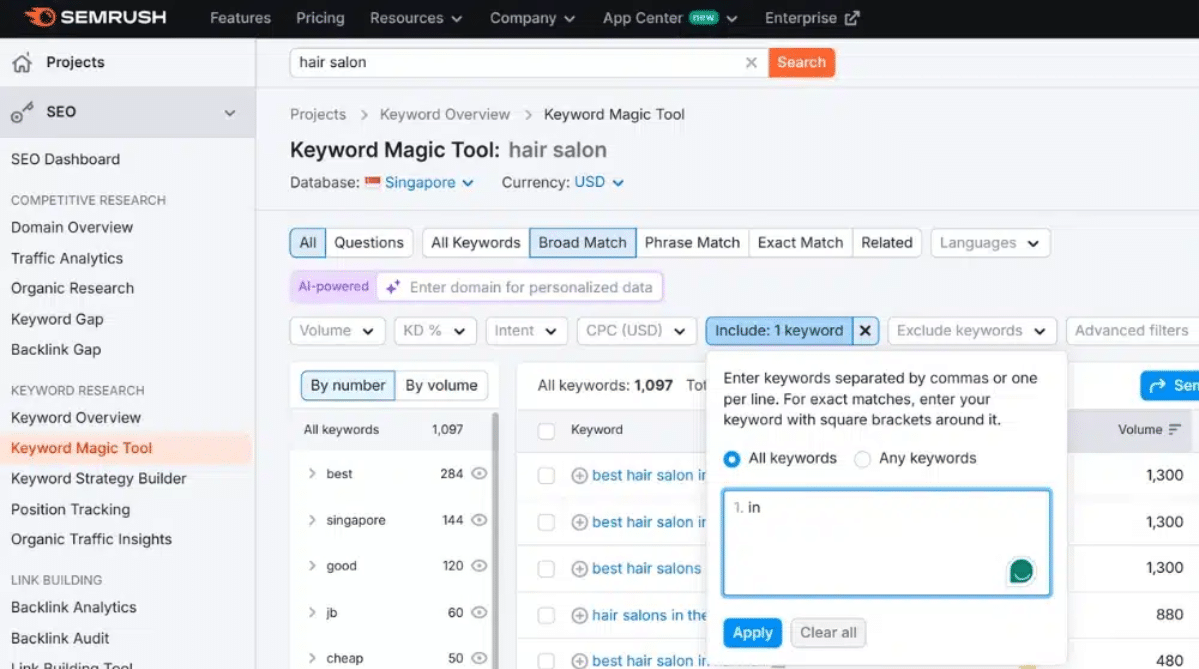
I’ll drop my core terms into keyword tools and set the location filter to the exact city or service area I’m targeting. That step alone changes the data dramatically.
On top of that, I still rely on Google’s own autocomplete and related searches when I want fast insight into long tail queries. Those suggestions usually reflect real searches happening right now, not just averages in a database.
Step 4: Analyze Local Search Metrics
Not every keyword is worth chasing, especially for smaller businesses.
I look at local search volume, keyword difficulty, and how crowded the results page is with ads and map listings.
When budgets are tight, I prioritize keywords that show clear intent and manageable competition, even if the volume looks modest.
A lower volume local keyword that converts is more valuable than a flashy term that never brings in real customers.
Step 5: Spy on Competitor Keywords
Competitors leave clues everywhere. I’ll analyze businesses that consistently show up in local results and see which keywords are driving their traffic.
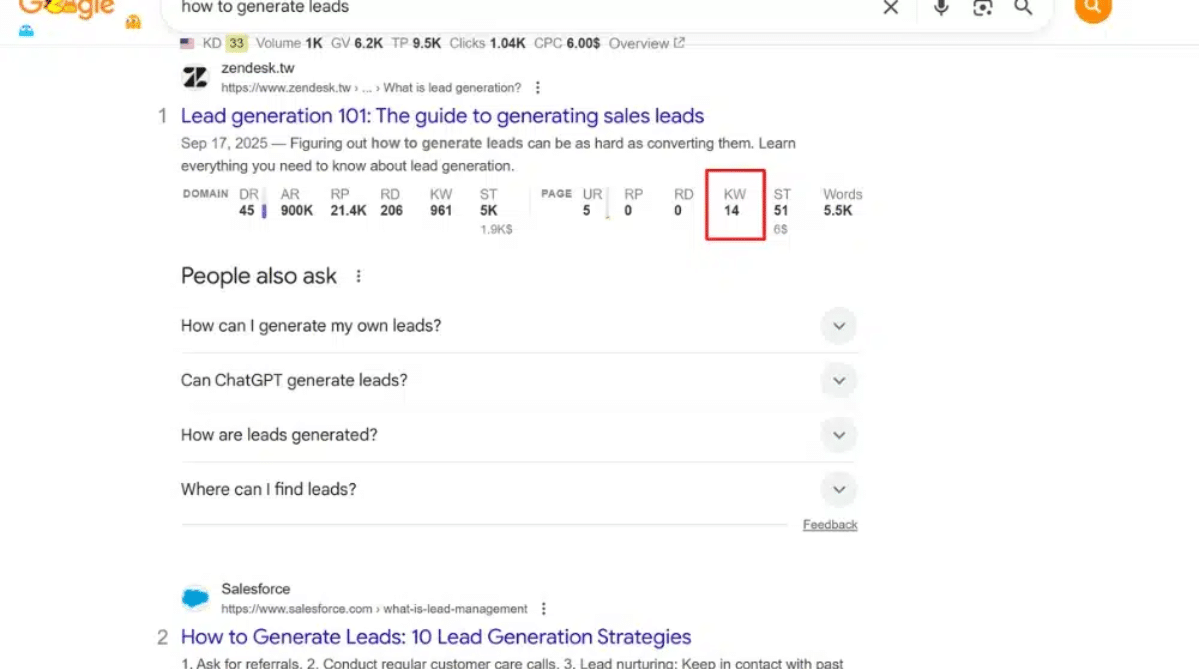
I typically used the Ahrefs Chrome extension to have easy and quick access to my competitors’ keywords.
This often reveals service terms or location variations the business I’m working with overlooked.
The goal isn’t to copy blindly, but to identify gaps and opportunities that make sense within the same market and search landscape.
Step 6: Map Keywords to Pages
The final step is organization, and it’s one a lot of people rush.
I assign local keywords to the homepage or core service or product category pages, while more specific location or niche terms get their own pages when it makes sense. So using Floristique as an example again:
- Homepage: singapore florist
- Product category pages: rose bouquet singapore, sunflower bouquet delivery singapore
Blog content supports these pages by answering related questions and capturing long tail searches. These blog posts can then be used to promote products and services to the local markets. Using GoDaddy as an example:
- Product page: website builder singapore
- Blog post: how to build a website in singapore, cost of building a website in singapore
Best Practices for Using Local Keywords
On-Page Placement
Where you place local keywords matters just as much as which ones you choose. I’ve seen solid keyword research fall flat because it never made its way into the right parts of a page.
Titles and meta descriptions are usually my first stop since they help search engines and users understand relevance fast. From there, I work keywords naturally into headings and the main content, making sure they fit the context instead of feeling forced.
Images matter too. Alt text gives you another chance to reinforce local relevance, especially for service photos or location based visuals.
Consistency is the quiet win most people overlook.
Your name, address, and phone number need to match everywhere they appear on your site, and they should align with how your location is referenced in your content. When search engines see the same signals repeated cleanly across pages, trust builds.
Over time, that trust helps local pages perform more reliably in both organic results and map listings.
Don’t Stuff Keywords
Keyword stuffing is one of the fastest ways to make a page feel spammy, and users notice it immediately.
I’ve audited pages that repeat the same city and service combo in every sentence, and they rarely convert.
Compare “We are the best Dallas dentist offering Dallas dentist services for Dallas families” with something cleaner like “Our Dallas dental office focuses on comfortable, family friendly care.” The second version reads like something a real business would say, and search engines reward that clarity.
My rule is simple. If a sentence sounds awkward when read out loud, it’s probably over optimized.
Local SEO works best when the content sounds like it was written for people first and search engines second. When you get that balance right, rankings tend to follow without heavy handed tactics.
Include local entities
When I was writing a piece on how to open a gym business in Singapore for GoDaddy Asia’s blog, I was super deliberate in including local entities in the content. Think organisation names, location names etc.
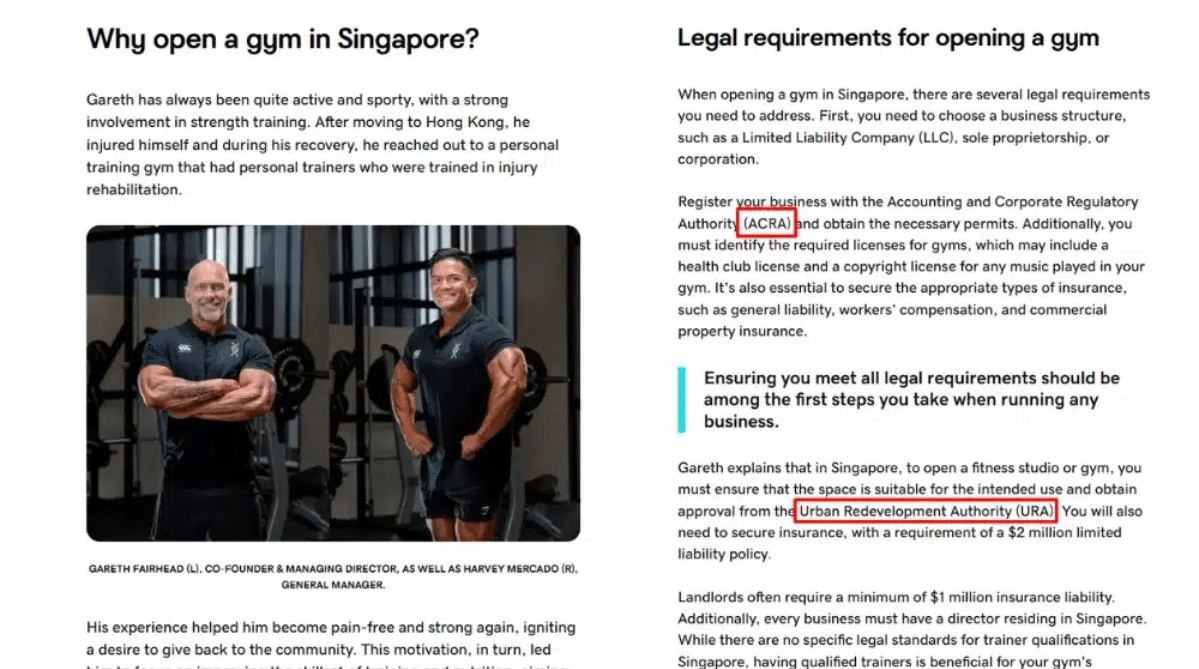
The purpose of using local entities in SEO is to help search engines understand the relationships and context of an entity within a specific geographic area, leading to increased visibility in local search results, higher targeted traffic, and more potential customers.
How the Rise of LLMs Influences Local SEO Tactics
Search behavior is changing, and I see it daily in query data.
People are no longer typing short, clipped phrases as often. They’re asking full questions, explaining their situation, and expecting precise answers.
Tools powered by large language models have trained users to search conversationally, which means local keyword research has to account for longer, more descriptive queries that still carry strong intent.
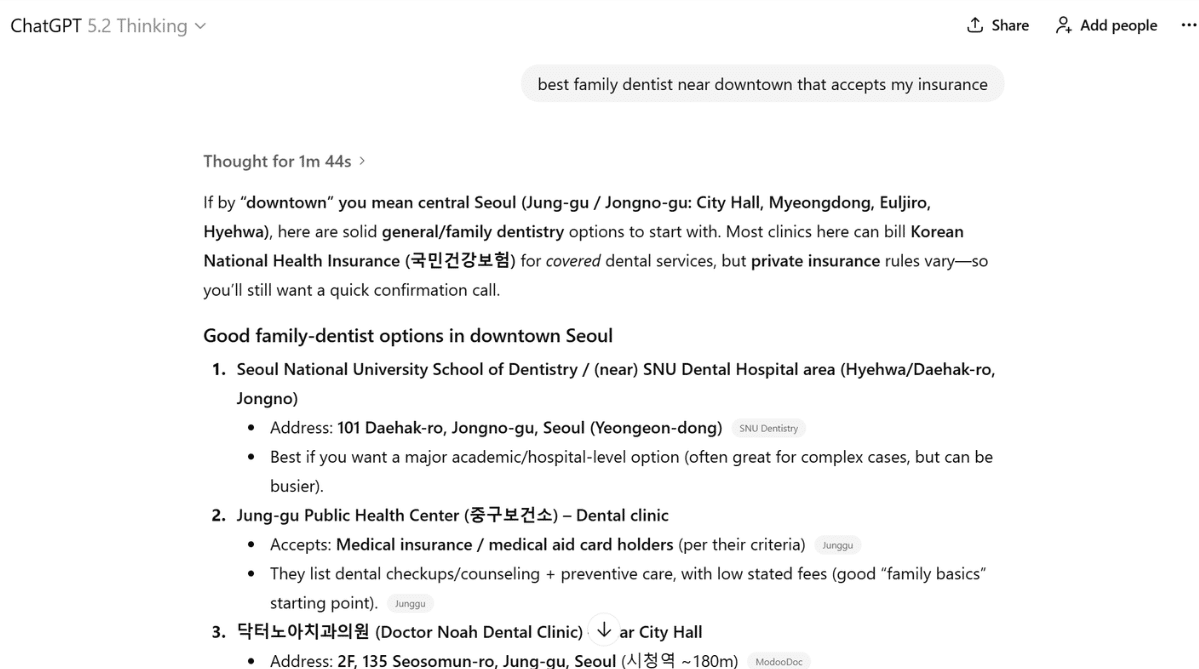
To adapt, I focus more on natural language variations and question based intent. Instead of optimizing only for “dentist near me,” I’ll build content that naturally supports searches like “best family dentist near downtown that accepts my insurance.” These longer phrases often convert better because they reflect real decision making.
When local pages answer these detailed questions clearly and honestly, they align well with how modern search works and with what users actually want when they’re ready to choose a business.
Measuring Success and Tracking Local Keywords
Tools for Tracking Rankings
After years of managing local campaigns, I don’t rely on guesswork to know what’s working.
I track keyword performance using a mix of tools that show both organic results and map visibility. Rank trackers help me see how a business appears across different parts of a city, while platforms like Search Console show which local queries actually trigger impressions and clicks.
When I combine ranking data with real search performance, I get a clear picture of progress instead of surface level wins.
What Metrics You Should Watch
Rankings alone don’t pay the bills, so I watch behavior closely.
Local organic visibility matters, but I also track how much traffic comes from local searches, how often users click into map listings, and whether those visits turn into calls, form fills, or direction requests.
When those numbers move together, it’s a sign the keyword strategy is attracting the right audience, not just more impressions.
Turning Local Searches Into Real Customers
Local keyword research doesn’t need to be complicated. Focus on how people actually search, add real location signals, and pick keywords by intent, not vanity metrics. That’s what makes local SEO easier and more effective.
The winners aren’t chasing every high-volume term. They’re relevant, clear, and consistent. The fundamentals still win: understand local intent, place keywords naturally on the right pages, track what converts, and keep adjusting as behavior shifts.
Search is changing too. With LLMs and more conversational queries, people are more specific and expect better answers. That makes solid local keyword research even more important.
If you want help, First Page Digital Singapore builds local SEO strategies that work now and stay resilient. They connect local intent, modern search behavior, and measurable growth to drive real results.
Sign up for a FREE strategy call worth $2000 today!
Frequently Asked Questions About Local Keyword Research
How often should I update my local keyword list?
I revisit local keywords every few months or whenever the business changes something meaningful. New services, new locations, seasonal demand, or shifts in customer language can all affect search behavior.
A quick quarterly review usually keeps things fresh without overreacting to minor fluctuations.
Can local keyword research help with Google Maps ranking?
Yes, and I’ve seen it happen repeatedly.
Strong local keyword targeting improves relevance signals across your website and Google Business Profile. When your content, categories, and on page language align with how people search locally, map visibility tends to improve alongside organic rankings.
Are 46% of Google searches local?
That number gets quoted a lot, and while the exact percentage can change, the underlying point is still valid. A huge portion of searches carry local intent, even when a city name isn’t typed. I focus less on the statistic itself and more on the reality that local intent shows up in everyday search behavior.