As an SEO consultant who’s spent years building links and scaling content, I’ve seen a growing shift towards AI SEO, AEO, and strategies for ranking on AI platforms.
At the same time, one question keeps coming up from clients and teams alike. Does Google actually penalise AI content, or can it still rank like any other page?
From what I’ve tested across multiple sites, the answer isn’t as straightforward as most people think. It’s not about whether AI is used, but how the content is created, refined, and aligned with what users are searching for.
In this article, I’ll break down what’s really happening and how to approach AI content the right way.
Does Google penalize AI content?
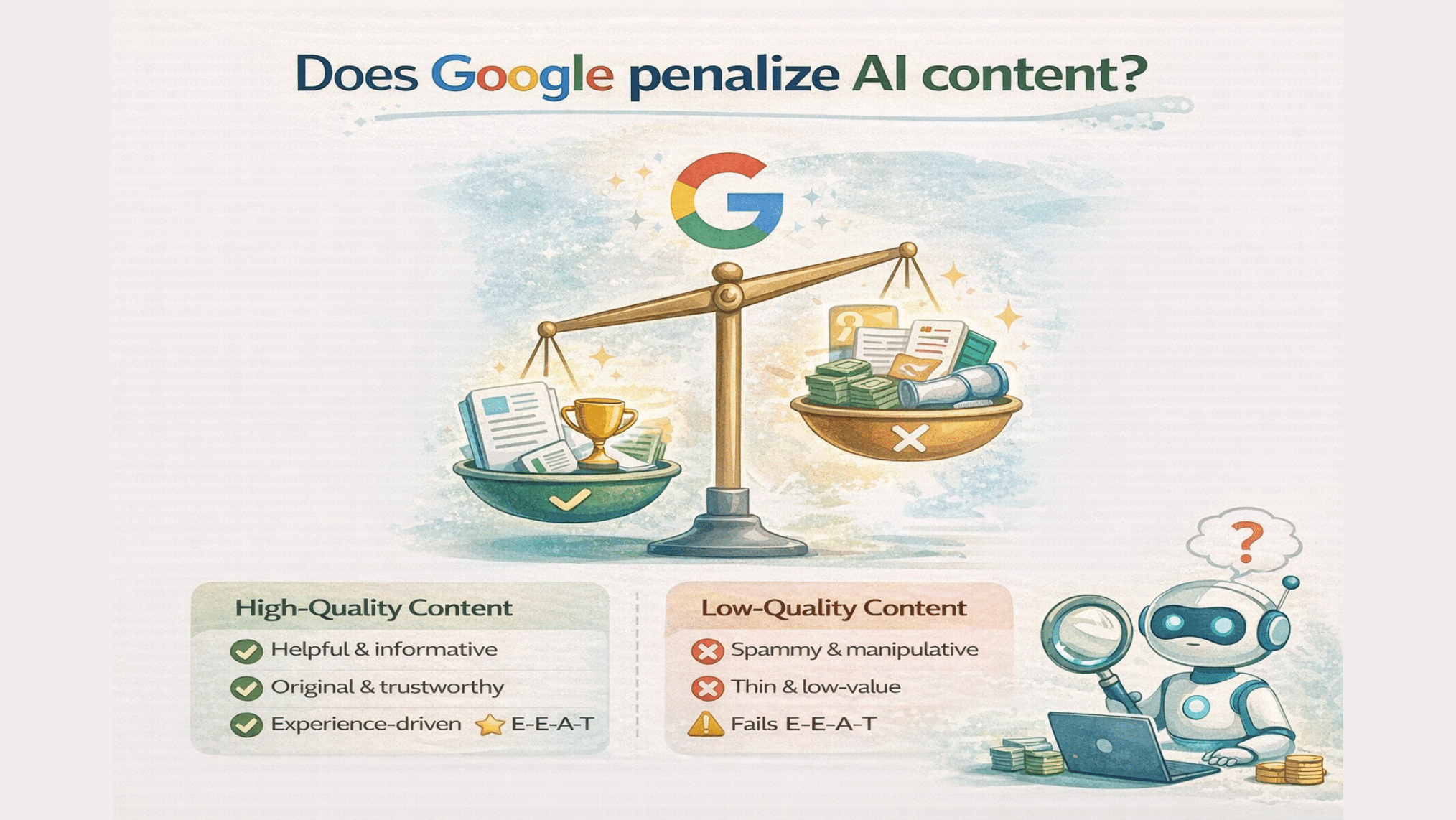
Google does not penalise AI content itself, but it prioritises high-quality content over anything that feels spammy or unhelpful.
Google does not penalise AI content by default
From my experience managing multiple content sites, I’ve never seen rankings drop just because AI was used. Google has been quite clear on this. It evaluates content based on usefulness, relevance, and credibility, not whether a human or AI wrote it.
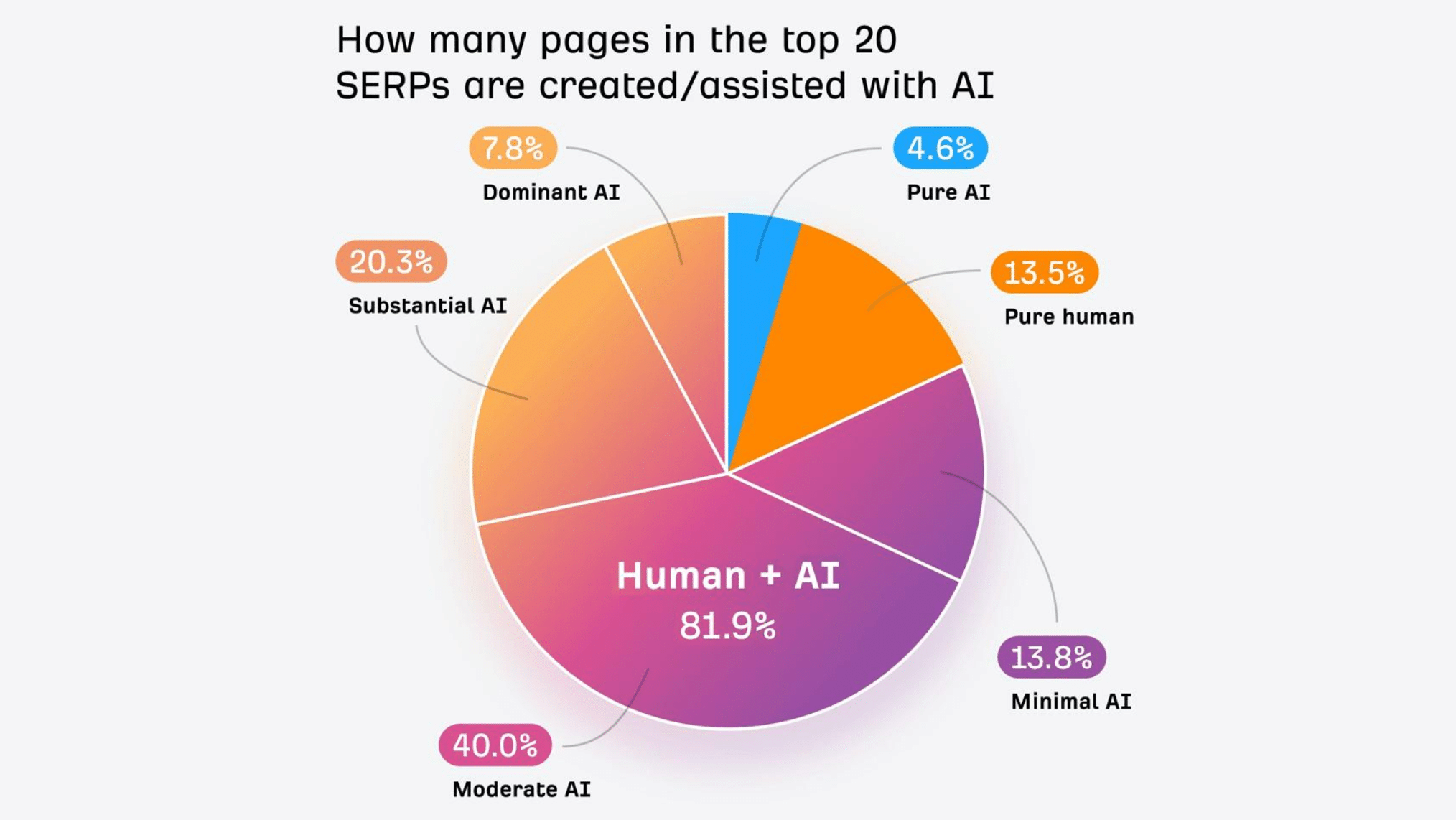
This aligns with industry data. According to Ahrefs, AI-generated content does not negatively impact rankings when it meets quality standards. In fact, many top-ranking pages already use some level of AI assistance.
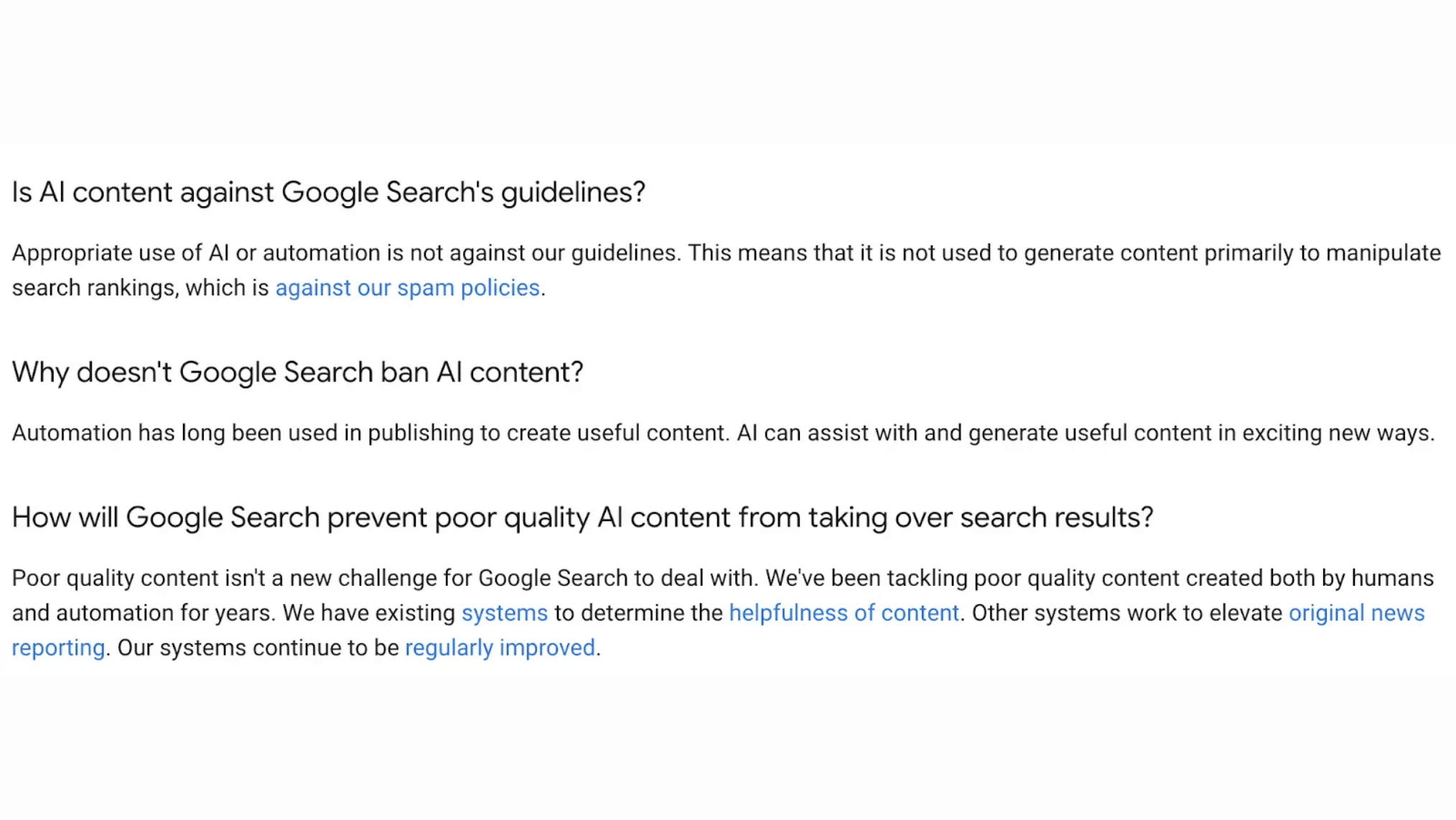
In practice, I’ve published AI-assisted articles that ranked on page one, especially when I layered in real insights, examples, and internal linking. As long as the content demonstrates experience and adds value, it performs like any well-written piece.
What actually triggers ranking drops instead
Ranking drops usually happen when the content is thin, generic, or clearly created at scale without proper review. I’ve audited sites where hundreds of AI-generated pages were pushed live with no editing, and traffic dropped not because of AI, but because the content didn’t help users.
According to a study conducted by Semrush, low-quality or unhelpful content is far more likely to lose rankings regardless of whether AI was used. The issue isn’t the tool. It’s the execution.
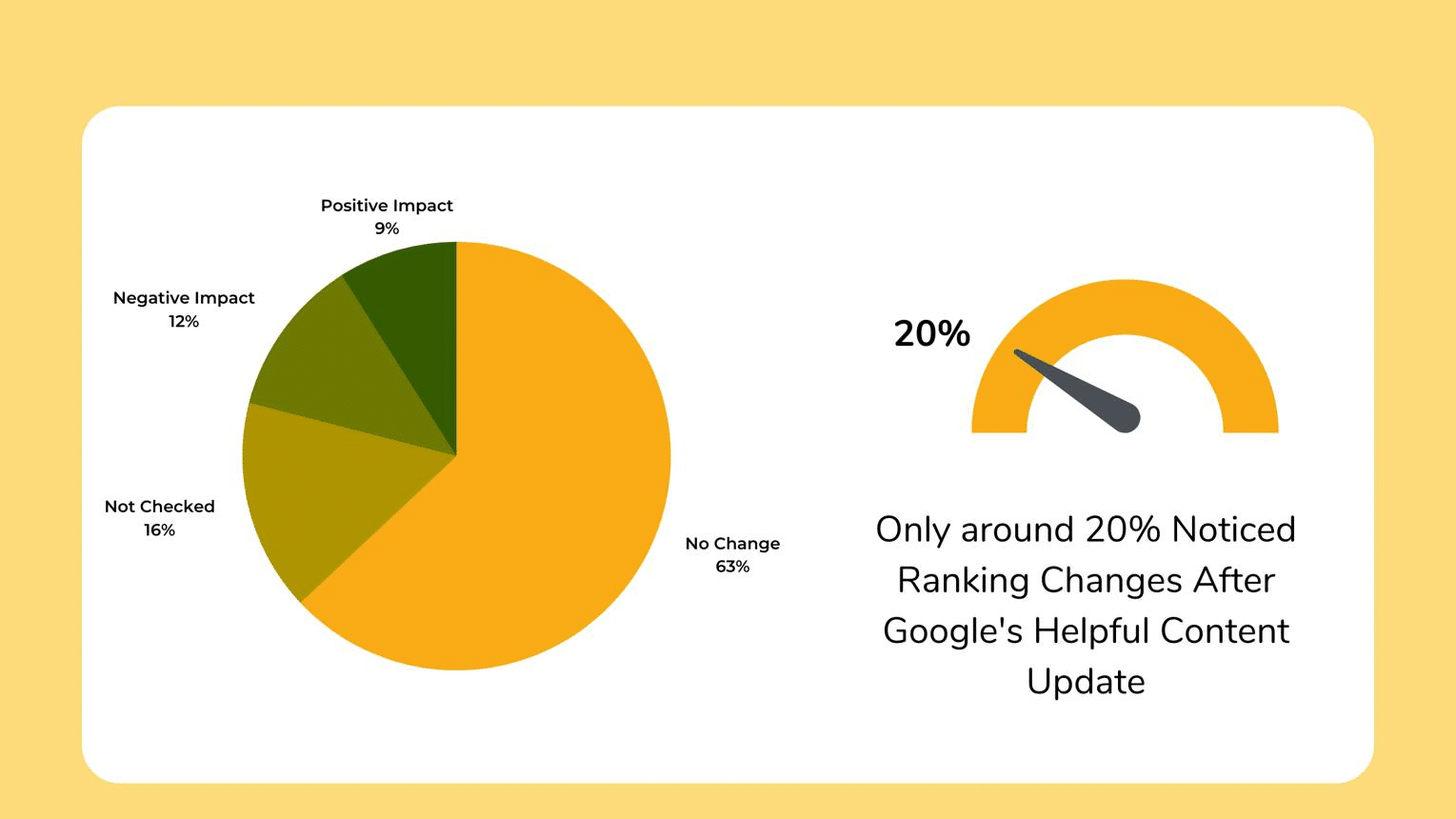
Another common issue I see is a lack of trust signals. If the content touches on sensitive areas like finance or health, what we call YMYL, Google expects strong expertise and accuracy. When AI content lacks depth, real experience, or factual reliability, that’s when rankings start to slip.
Does AI content rank in Google?
Yes, AI content can rank in Google when it delivers genuine value, satisfies search intent, and meets the same quality benchmarks as human-written content.
AI content can rank when it meets quality standards
I’ve seen AI-assisted pages rank competitively once they’re properly refined. The key is not the tool, but how the content is shaped. When I take AI drafts and layer in real examples, internal data, and clear structure, the content performs just as well as anything written manually.
According to Rankability’s research, AI content can perform equally well in search rankings when it is edited and aligned with user intent. That matches what I’ve observed across multiple campaigns.
Quality signals still matter. If the content demonstrates experience, answers the query clearly, and avoids fluff, it stands a strong chance of ranking. On the flip side, raw AI output without editing rarely holds its position because it tends to lack depth and originality.
Real examples of AI-assisted content performing well
In several campaigns I’ve handled, we used AI to speed up first drafts, especially for informational keywords. After adding first-hand insights, case observations, and proper on-page optimisation, some of these pages started ranking within weeks and brought in consistent organic traffic.
This lines up with findings reported by Search Engine Land, where AI-assisted content experiments showed strong ranking potential when combined with human editing and optimisation.
I’ve also audited sites where AI content was ranking across hundreds of keywords. The difference was clear. These weren’t mass-produced articles. They were carefully reviewed, fact-checked, and aligned with user intent. That combination, from what I’ve observed, is what makes AI content actually work in Google.
What does Google actually say about AI-generated content?
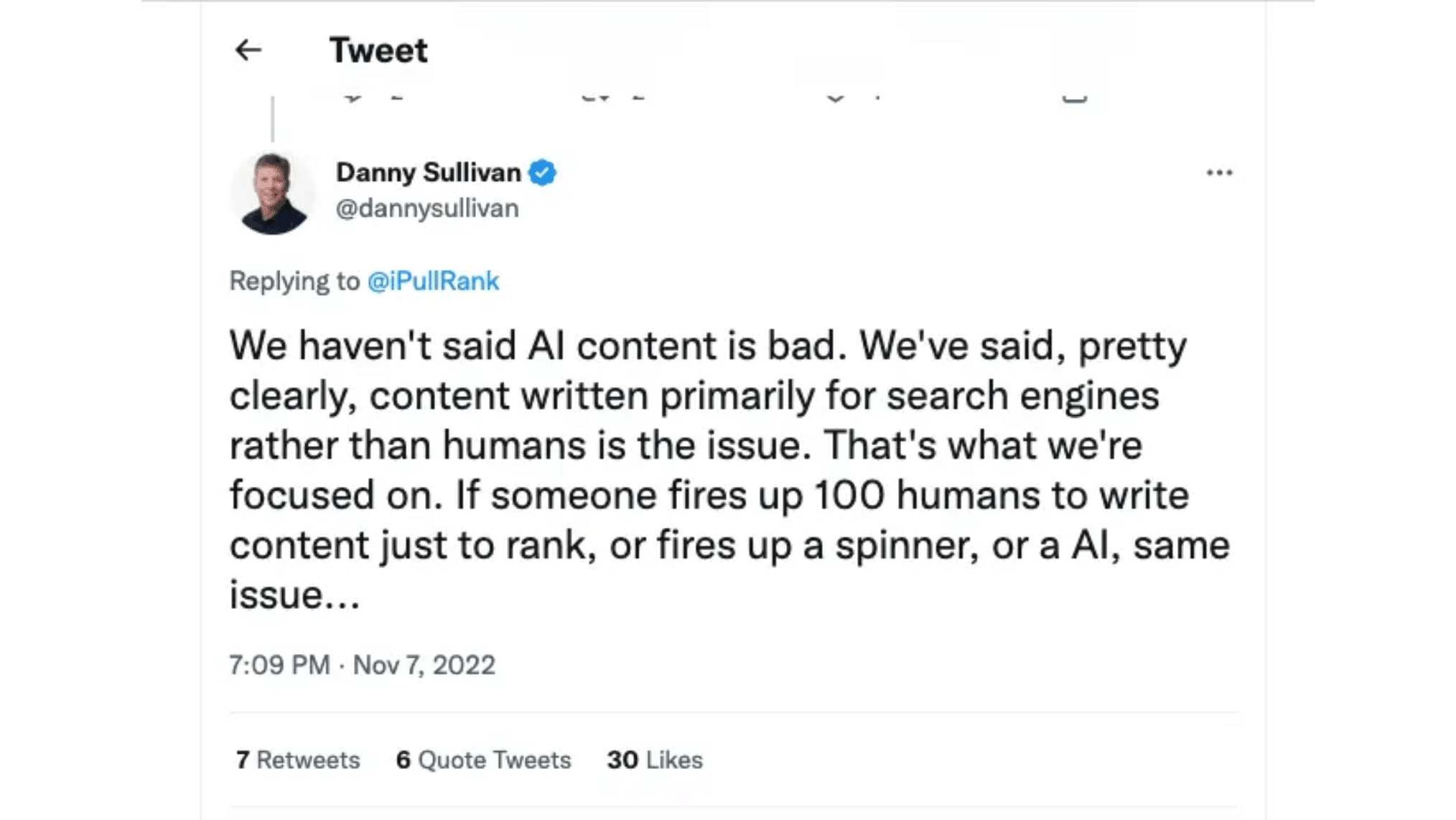
Google states clearly that it evaluates content based on quality and usefulness, not whether it is written by AI or humans.
Google focuses on content quality, not how it is created
From what I’ve seen across multiple updates, Google’s stance has been consistent. It doesn’t care about the tool you use. What matters is whether the content helps the user, answers the query properly, and shows credibility.
When I review content that performs well, there’s always a common pattern. It’s clearly structured, backed by some experience, and written with intent. AI can support that process, but it cannot replace the thinking behind it. That’s the part Google is actually evaluating.
Insights from official Google guidance and statements
Based on official guidance, Google is focused on rewarding people-first content. That means content created to genuinely help users, not content produced just to manipulate rankings. I’ve applied this across client sites, and the difference is obvious when the intent is right.
Another point I always keep in mind is accountability. Google expects content to demonstrate trust, especially in sensitive niches. Even with AI, it still needs human oversight to ensure accuracy and reliability. Without that layer, even well-written content can struggle to maintain rankings.
Is Google blocking AI content?
Google is not blocking AI content, but it filters out pages that do not meet its quality and usefulness standards.
Google is not blocking AI content outright
From everything I’ve tested across different sites, AI content still gets indexed and ranked when it’s done properly. There’s no blanket restriction or filter that prevents AI-generated pages from appearing in search results.
I’ve launched AI-assisted content on new and aged domains, and as long as the content is useful and well-optimised, Google crawls and indexes it without issue. The system simply doesn’t treat AI as a disqualifying factor.
Why low-quality AI content may fail to appear in search
What usually happens is that poor AI content never gains visibility in the first place. If the page is shallow, repetitive, or lacks clear intent, Google may still index it, but it won’t rank for meaningful queries.
In audits I’ve done, I often see large batches of AI content sitting unranked because they offer nothing new. No original insights, no experience, and no strong signals of trust. Once those gaps are fixed, even previously ignored pages can start picking up impressions and traffic.
Does using AI hurt SEO performance?
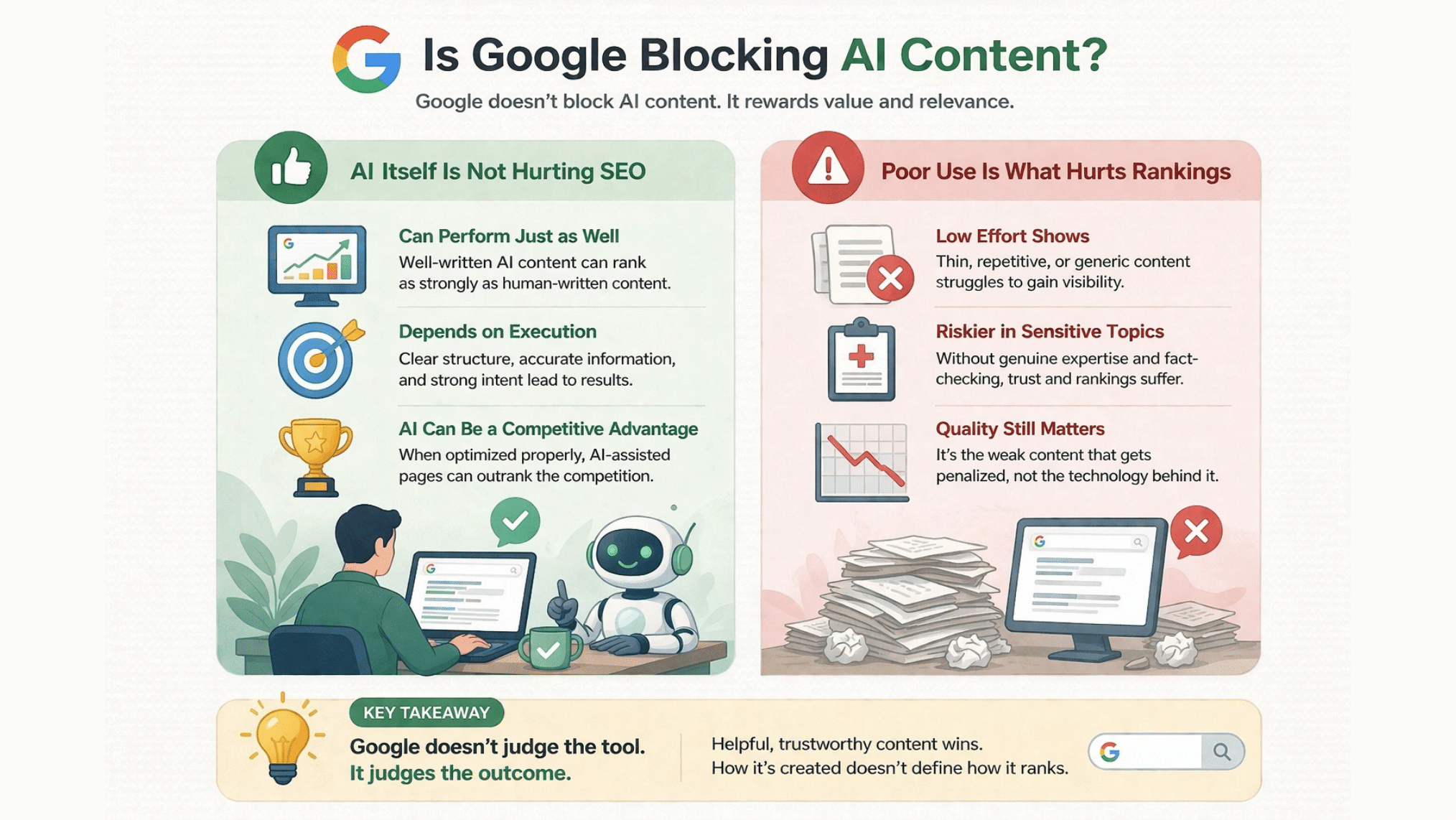
Google is not blocking AI content, and it does not treat AI as a negative ranking factor in and of itself.
AI itself is not hurting SEO performance
From my own campaigns, I’ve used AI across content production without seeing any inherent drop in rankings. When the content is well-structured, accurate, and aligned with search intent, it performs just as well as manually written content.
What matters more is how the content reads and whether it genuinely helps the user. I’ve had AI-assisted pages outrank competitors simply because they were clearer, more useful, and better optimised. The tool itself isn’t the issue.
Misuse of AI is what leads to poor results
Problems start when AI is used without proper oversight. I’ve come across sites pushing out large volumes of content that are repetitive, surface-level, or factually weak, and those pages rarely gain traction.
In more sensitive niches, especially those tied to finance or health, this becomes even more obvious. Without real expertise or verification, the content struggles to build trust. That’s where rankings drop, not because of AI, but because the content fails to meet the standard Google expects.
What makes AI content rank well in Google?
AI content ranks well when it demonstrates real expertise, satisfies search intent, and consistently delivers useful, trustworthy information.
Aligning with E-E-A-T principles in AI-assisted content (including YMYL niches)
In my day-to-day work, I treat AI as a drafting tool, not the final voice. To get results, I always layer in experience, whether it’s from campaign data, link building outcomes, or actual client scenarios. That’s what strengthens E-E-A-T signals and makes the content credible.
In more sensitive niches like finance or health, this becomes even more critical. Based on what I’ve seen, content that lacks verified expertise or accuracy tends to struggle, regardless of how well it’s written. AI can assist, but it cannot replace authority.
Creating helpful, people-first content consistently
Content only performs when it genuinely helps someone solve a problem. I focus heavily on intent. Before writing or editing, I ask what the user is actually trying to achieve, then shape the content around that outcome.
According to industry studies, pages that align closely with search intent consistently outperform those that don’t, even when both use AI. That’s something I’ve validated repeatedly in my own SEO work.
Common mistakes when using AI for SEO content
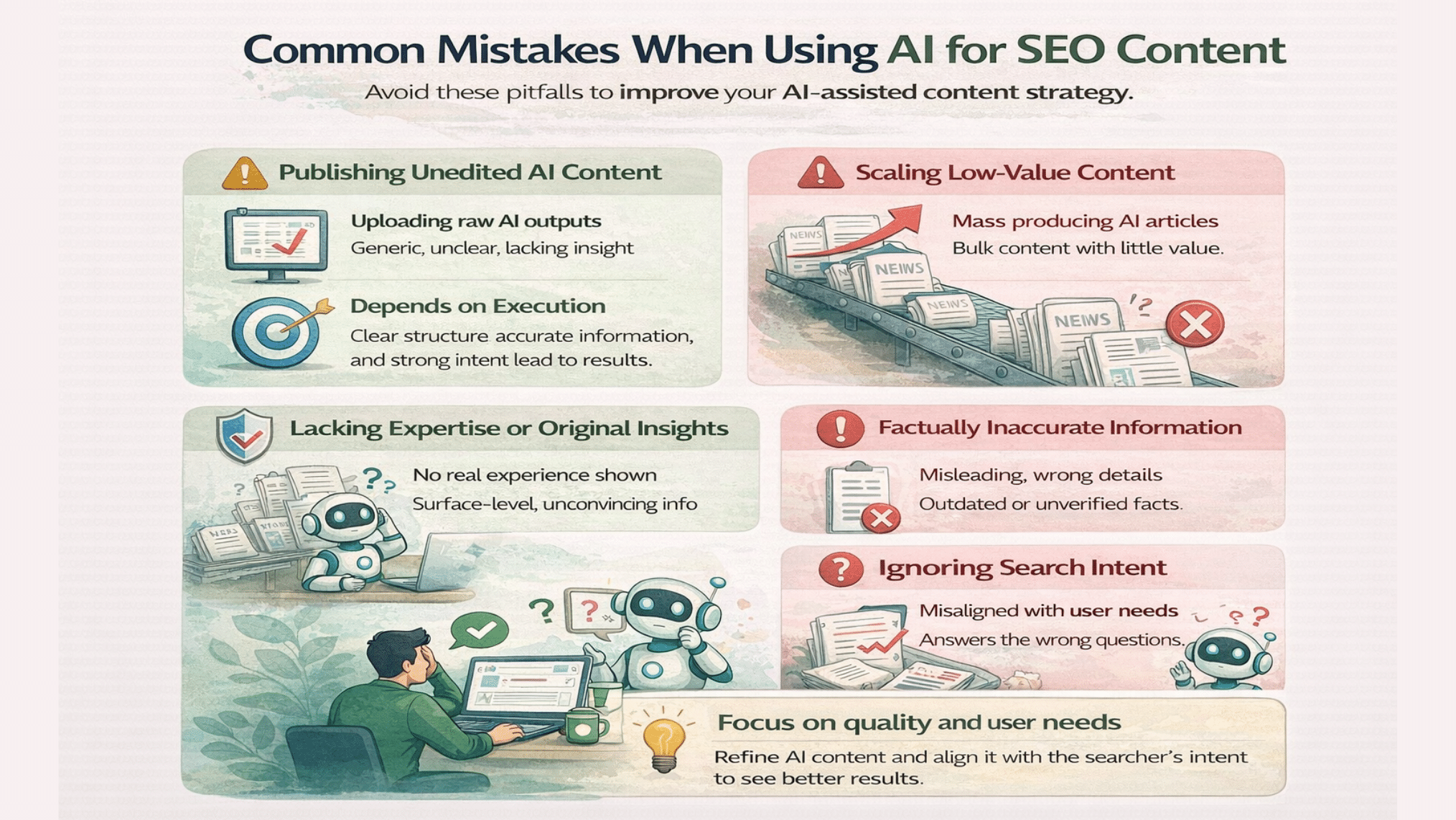
Most issues I see with AI content don’t come from the tool itself, but from how it’s used without proper strategy or oversight.
Publishing unedited or generic AI output
One mistake I often encounter is teams publishing AI drafts as-is. These articles usually sound acceptable on the surface, but once you read closely, they lack depth, clarity, and any real point of view.
Over-scaling content without adding real value
Scaling content with AI is tempting, but pushing out large volumes without improving quality usually backfires. I’ve worked on sites where hundreds of pages were generated quickly, yet none gained traction.
Lacking first-hand experience or expertise signals
AI can summarise information, but it cannot replace real experience. Without that layer, content feels generic and struggles to build trust.
Creating factually inaccurate or outdated content
AI can produce confident-sounding content, but accuracy isn’t guaranteed. I always verify key points before publishing.
Ignoring search intent and user needs
Even well-written content fails if it doesn’t match what the user is looking for. Intent always comes first in my workflow.
How I use AI content safely for SEO
To optimise AI content for Google rankings, I focus on strengthening quality signals and aligning every piece with clear user intent.
My workflow for combining AI with human expertise
When I start a piece, I first map out the search intent and structure based on what’s already ranking. Only after that do I bring in AI to help generate a rough draft. This keeps the content aligned with what users are actually searching for, rather than letting the tool dictate direction.
From there, I step in to refine everything. I rewrite sections, add real examples from past campaigns, and adjust the tone to sound natural. In many cases, the final version looks quite different from the initial draft, because that’s where the real value is added.
Practical steps to ensure content quality and originality
I make it a habit to review every article for accuracy, clarity, and usefulness before publishing. If something feels generic or vague, I rework it until it reflects actual insights or practical takeaways. This is especially important for topics that require trust.
Originality also comes from perspective. Even when covering common topics, I include observations from my own SEO work, whether it’s link building strategies or content performance trends. That’s what helps the content stand out and meet the quality standards Google expects.
How to optimise AI content for Google rankings
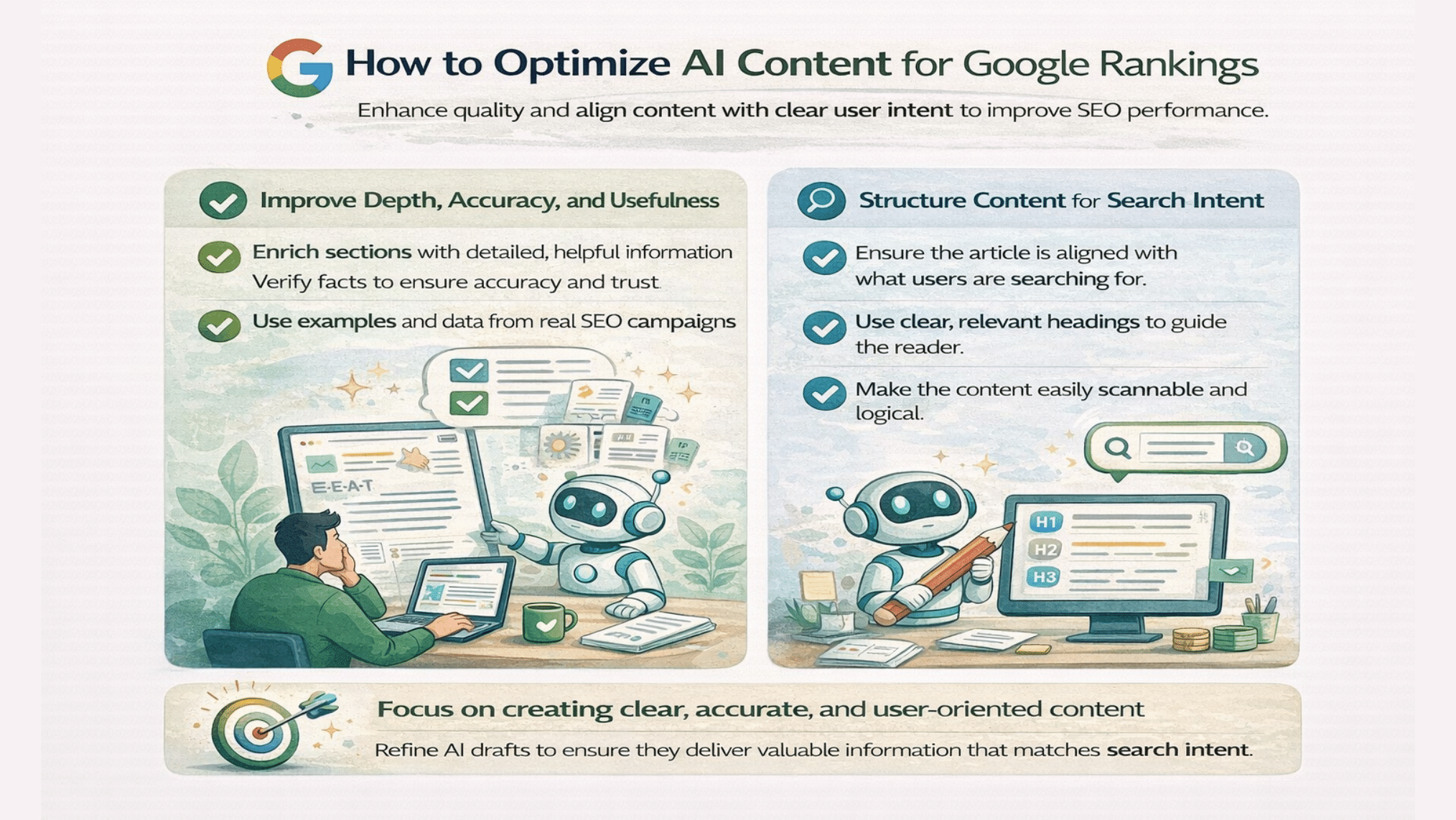
To optimise AI content for Google rankings, I focus on strengthening quality signals and aligning every piece with clear user intent.
Improving depth, accuracy, and usefulness
Whenever I work with AI-generated drafts, I treat them as a starting point, not the final product. I expand on key sections by adding context, real examples, and insights from actual SEO work, which helps the content go beyond surface-level explanations.
Accuracy is just as important. I cross-check key details and refine any vague statements to make the content feel reliable and trustworthy. Over time, I’ve noticed that pages with stronger depth and clearer value tend to sustain rankings much better.
Structuring content for search intent and readability
Before finalising any article, I review how well it matches the user’s intent. If the structure doesn’t answer the query directly or flows poorly, I reorganise it so the key points are easy to find and understand.
Readability also plays a big role. I keep paragraphs concise, use clear headings, and ensure each section serves a purpose. When content is easy to scan and delivers answers quickly, it performs more consistently in search results.
Should you worry about Google penalising AI content?
You don’t need to worry about Google penalising AI content if it’s created with quality, intent, and proper oversight. From my experience, the sites that struggle aren’t using AI wrongly, they’re publishing content that lacks depth, accuracy, and real value. When AI is used as a support tool and combined with genuine expertise, it can absolutely help you scale content that ranks and converts.
Let AI content skyrocket your organic growth with First Page Digital
If you’re unsure how to do this properly, that’s where working with the right team makes a difference. At First Page Digital, we specialise in building AI-assisted SEO strategies that are aligned with Google’s expectations and backed by real performance. If you want a clear, actionable plan, you can book a free strategy call worth $2000, and I’ll walk you through exactly how to make AI work for your SEO.
FAQs
Can Google detect AI-generated content?
Google can detect patterns in AI-generated content, but from what I’ve seen, it doesn’t rely on detection alone to rank or penalise pages. What matters more is whether the content is useful, accurate, and trustworthy.
Should I avoid using AI for SEO content?
You shouldn’t avoid AI, but you also shouldn’t depend on it blindly. I use AI regularly, but I always refine the output with real insights and proper editing to ensure the content meets quality expectations.
How much AI content is safe to use on a website?
There’s no fixed limit, because safety depends on quality, not volume. I’ve successfully scaled AI-assisted content, but only when each page is reviewed, improved, and aligned with user intent.