If you’ve ever wondered what role search volume plays in keyword research, you’re not alone.
It’s one of the most commonly referenced metrics in SEO, yet also one of the most misunderstood.
After years of working with clients across different industries, I’ve seen how chasing high-volume keywords without context often leads to wasted effort.
In this article, I’ll explain what search volume really represents, how it’s calculated, and why it matters.
You’ll learn:
- How to find the search volume for a keyword using popular tools
- How to measure search volume more accurately
- How to determine keyword search volume in a way that actually supports your SEO goals
- Limitations of relying solely on average monthly searches for keywords
- Other factors you should be considering alongside volume to build a smarter, more effective keyword strategy
Let’s dive right in!
What is Search Volume in SEO?
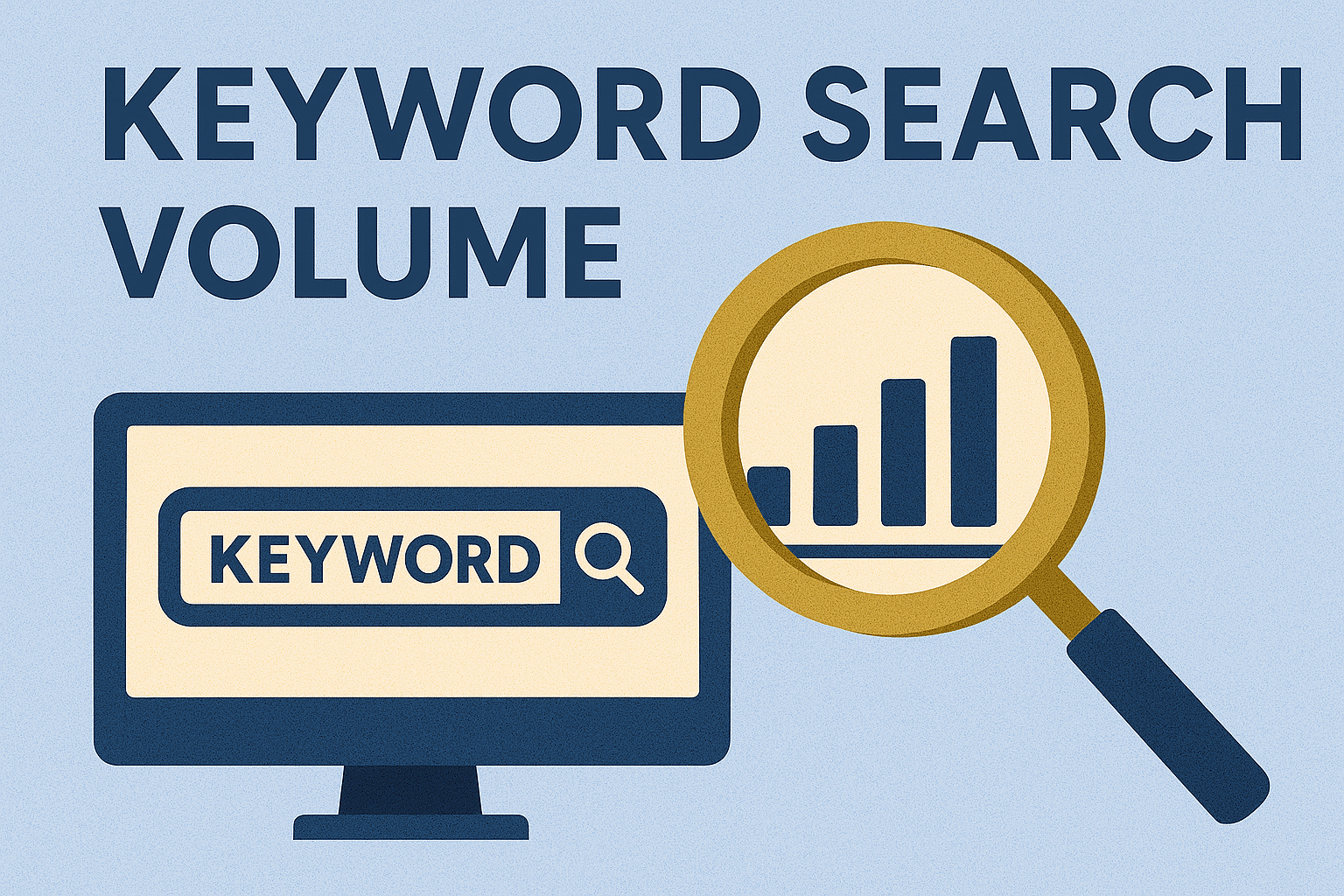
Search volume is the average number of monthly searches for a specific keyword and is a key indicator of demand in SEO.
It’s derived from data sources like Google Keyword Planner and refined with models such as clickstream analysis used by tools like Ahrefs and SEMrush.
Global vs. local search volume breakdown
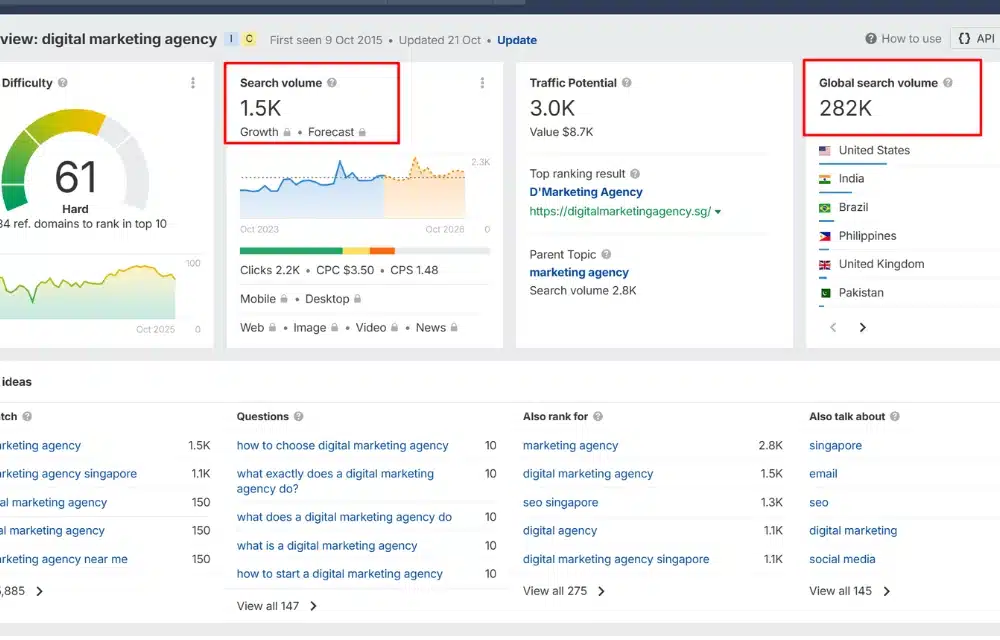
Global search volume shows total searches for a keyword across all countries, while local search volume focuses on specific regions.
The distinction is crucial because a term that performs well globally might have little traction in your target market. And the reverse can be true too.
Tools like SEMrush and Ahrefs allow you to compare both views, helping you identify where your audience truly is.
More often than not, the local search volume metric is the one you look at.
Why Search Volume Matters in Keyword Research
Search volume helps us understand:
- If there is demand for answers to a particular topic, product, or service
- What people are actively searching for
This makes it one of the best indicators of real-world demand.
I’ve worked with clients across industries, and every time I start a new campaign, I begin by checking if there’s actual interest in the topic we’re targeting.
If no one’s looking for it, even the most well-written content will not drive results.
By analysing search volume, I can map out what the market cares about, identify new trends, and uncover gaps in competitor content.
There are caveats, though. But I’ll get to that later in the article.
How Search Volume is Calculated
How Ahrefs Calculates Search Volume
Ahrefs calculates search volume by combining data from Google Keyword Planner with third-party clickstream data.
This blended approach allows the platform to estimate how many times a keyword is searched each month with greater accuracy than relying on a single source.
The process uses a 30‑day rolling average to smooth out short-term fluctuations, which gives a more stable sense of demand over time.
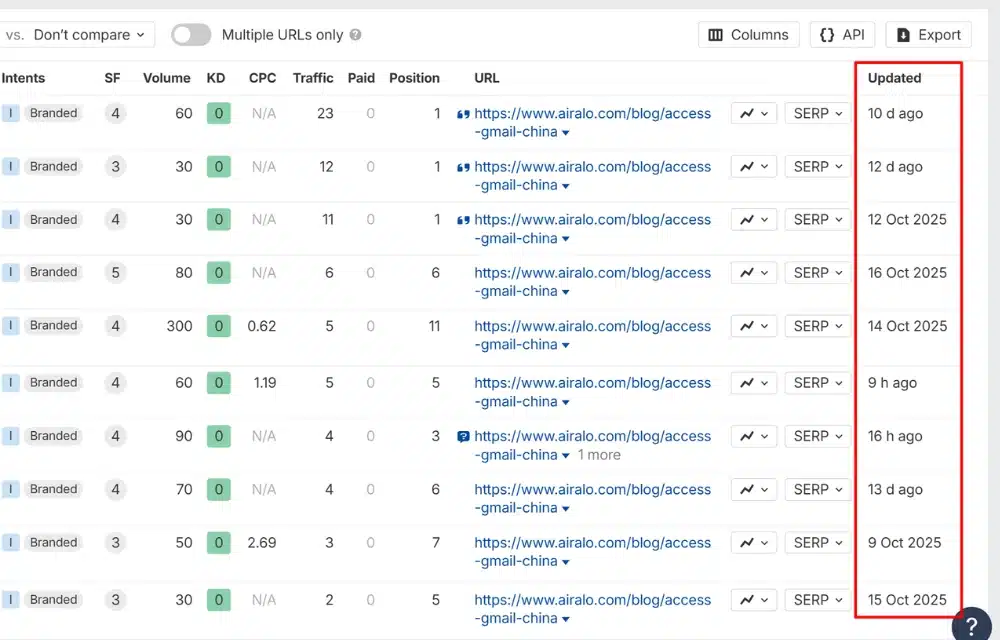
However, Ahrefs’ system isn’t perfect. Its data refresh rate can lag slightly behind real-time shifts, and regional keyword variations are sometimes underrepresented.
The platform also accounts for anomalies by using predictive models to even out irregular patterns, which can occasionally overcorrect in niche industries where interest naturally fluctuates.
Still, as someone who’s compared Ahrefs’ data to live Search Console results, I find their numbers reliable for gauging broad interest trends.
It’s not about precision to the decimal but about getting a realistic picture of what users are actively searching for over time.
How SEMrush Calculates Search Volume
SEMrush uses a similar foundation but adds more machine learning to its process.
It pulls keyword data from Google and multiple third-party providers, feeding that information into a constantly updating model that refines estimates as new data becomes available.
The goal is to track monthly search volume changes with higher precision and capture emerging trends earlier than traditional tools.
One of the key differences between SEMrush and Ahrefs lies in their data cadence and granularity.
SEMrush refreshes its keyword database every month and weighs historical performance more heavily to identify seasonal cycles or long-term growth patterns.
This means it’s often better at picking up early signals of rising keywords before they peak.
That said, SEMrush’s reliance on aggregated data can lead to broader estimates for less common keywords.
In my experience, pairing SEMrush’s predictive trends with Ahrefs’ steady baselines gives me the best of both worlds.
Caveats of Using Search Volume as a Metric
LLMs take click traffic away from your web pages
Search volume data was built for a search landscape where users clicked through to websites to get their answers. Well, at least they used to for all query types.
But with large language models (LLMs) now embedded in search engines like Google’s AI Overviews (AIO) and AI tools (ChatGPT, Perplexity, Gemini, and Claude), that’s changing fast. This is particularly true for informational queries.
These models scrape and synthesise content from multiple sites, answering user queries directly on the SERP or inside the AI tool itself. Users are increasingly getting full, helpful responses without needing to click at all.

Afterall, why click into an article to skim through a bunch of fluff before getting to the section of a 2,000-word article that answers your queries.
Even when you rank well, fewer people actually visit the page because their question gets answered in the AI snapshot or sidebar.
This shift isn’t fully reflected in traditional keyword tools yet, which means that the average monthly searches for keywords may no longer translate into the same level of traffic they once did.
That’s why I’ve started treating search volume more like a ceiling than a promise. It shows how many people are interested in a topic, but it no longer guarantees those users will land on your page.
Search Volume is an Estimate, Not a Fact
Just because SEO tools indicate that a keyword’s traffic potential is, say, 5,000 per month, ranking top for said keyword won’t necessarily bring in 5,000 clicks.
Search volume figures are best viewed as informed estimates rather than hard data.
Keyword tools rely on algorithms that model trends using samples from Google Keyword Planner, clickstream data, and machine learning projections, meaning the numbers are never perfectly accurate.
I’ve often seen noticeable differences between Ahrefs, SEMrush, and Google’s own Keyword Planner, even for the same keyword.
These discrepancies happen because each tool processes data differently and updates at varying intervals.
Over the years, I’ve learned to treat search volume as a benchmark to guide strategy, not as an exact prediction of how many people are typing that term into Google every month.
High Volume does not equate to High Click Potential
A keyword can have thousands of monthly searches and still deliver little traffic if most users never click through to a website.

This is common for queries that get direct answers from Google, like “weather in London”, “currency conversion”, or “who is the ceo of first page digital singapore”.
When I first started tracking performance metrics, it surprised me how often these zero‑click searches inflated keyword potential.
That’s why I now rely on metrics like Ahrefs’ “Clicks” data, which estimates how many users actually click after searching.
It’s a far better reflection of real-world opportunities and helps avoid wasting effort on keywords that look big on paper but lead nowhere.
Seasonality Can Skew Relevance
Search volume isn’t static; it fluctuates with time, trends, and cultural moments.

Seasonal keywords like “Christmas recipes” or “Valentine’s gifts” spike during specific months, then drop sharply afterwards.
Brands sometimes panic when those numbers fall, assuming interest has vanished, when it’s simply the off‑season.
The best way to understand these patterns is by comparing historical data across months or years using tools like Google Trends.
That broader view helps me decide whether a keyword deserves evergreen content or a time‑sensitive campaign.
Keyword Cannibalization and Internal Competition
Targeting too many similar keywords can cause your own pages to compete against each other, a problem known as keyword cannibalisation.
It’s a subtle but common issue, especially on larger sites with overlapping blog topics.
I’ve audited many websites where multiple pages shared nearly identical keywords, splitting their authority and lowering overall rankings.
Alt text: Using site: search to find pages on your site ranking well
Caption: See how the First Page Digital Singapore blog has no content targeting “keyword search volume”?
While keyword search volume is an important metric to consider when it comes to choosing keywords to target, always do a quick check to see if you already have a web page targeting that keyword.
I personally use the site: google search operator to help me find pages on my clients’ sites already ranking for the keyword.
What to Consider Alongside Search Volume When Choosing Keywords
URL Rating (UR), Domain Rating (DR) and Competition Analysis
UR is an Ahrefs metric that serves as an indicator of a page’s backlink profile strength. This is different from domain rating (DR) that assesses the backlink profile of the entire domain.
For the uninitiated, a strong backlink profile, meaning a page or domain with a large number of high-quality links pointing to it, tends to indicate how hard it is for you to outrank them on SERPs. The stronger the backlink profile as indicated by a high DR and UR score, the more competitive the keyword is.
When I pick keywords I never look at search volume in isolation; UR gives me the context I need to judge whether that volume is actually attainable.
Because a high‑volume term buried under big, authoritative sites with strong backlink profiles will usually eat up your time and budget without delivering results.
After years of doing this, I’ve learned to not rely on a keyword difficulty (KD) score and also take into consideration backlink profiles and the strength of current top‑ranking pages.
Search intent alignment with your content type
Volume should never be used as the definitive metric when choosing keywords.
Volume without intent is misleading. I always ask two things:
- What the searcher actually wants when they type that phrase into Google
- What is the goal of this SEO campaign
There’s no point in picking high-volume keywords if there is a misalignment with the overall SEO goal.
Expert Tips for Using Search Volume in SEO Strategy
Blend volume, backlink profile strength, and intent—not just one metric.
Focusing on search volume alone can paint a misleading picture, so I always layer in keyword difficulty and search intent before making any decisions.
Volume might show potential, but backlink profile strength (DR and UR) tells me how much effort it’ll take to rank, and intent reveals whether that traffic will actually convert.
I’ve found that combining these three factors creates a more complete and actionable keyword strategy.
This blended approach helps me prioritise keywords that are not just popular, but achievable and commercially meaningful for the client.
Don’t ignore long-tail keywords with low volume but high ROI.
Some of my best-performing content has targeted long-tail keywords that barely showed up in most tools.
These low-volume terms often have much clearer intent, whether it’s someone ready to buy, book, or sign up.
I’ve learned to treat long-tail keywords like hidden gems—especially in competitive industries—because they attract users who know exactly what they’re looking for.
While they might not flood your site with traffic, they often bring in visitors who are far more likely to take action.
Always cross-check multiple tools for better accuracy.
No keyword tool is perfect on its own.
That’s why I always check search volume and trends across platforms like SEMrush, Ahrefs, and Google Keyword Planner before trusting a number.
I’ve seen the same keyword show wildly different volumes depending on the tool, which can really skew your planning if you’re relying on a single source.
Cross-referencing lets me catch inconsistencies early and make smarter, more informed decisions for both content and SEO investment.
Search Volume is a Compass, Not a Map
Search volume can absolutely steer your SEO strategy in the right direction, but only if you know how to read between the numbers.
After years in the game, I’ve learned that average monthly searches for keywords is just one piece of the puzzle.
The real wins come from combining that data with intent, competition, and what your audience actually needs.
If you’re still figuring out how to determine keyword search volume or want a second pair of eyes on your strategy, you don’t have to go it alone.
Book a free strategy call with the team at First Page Digital and we’ll help you uncover the keywords that actually move the needle for your business.