Even after years of updates to ranking systems, backlinks are still among the most misunderstood aspects of off-page SEO,
I’ve had clients thinking it’s just about getting as many links as possible through a link-building agency, chasing free backlinks, or stuffing outbound links everywhere. In reality, backlinks are less about quantity and more about context, trust, and relevance.
Over the past five years working in content SEO, I’ve seen firsthand how the right backlinks can lift rankings, while the wrong ones do nothing or even hold a site back.
In this guide, I’ll break down:
- How backlinking actually works
- Examples of SEO backlinks
- How to get backlinks to your site
- The key role backlinks play in modern SEO (including their growing importance in AI and brand visibility)
What Is a Backlink in SEO?
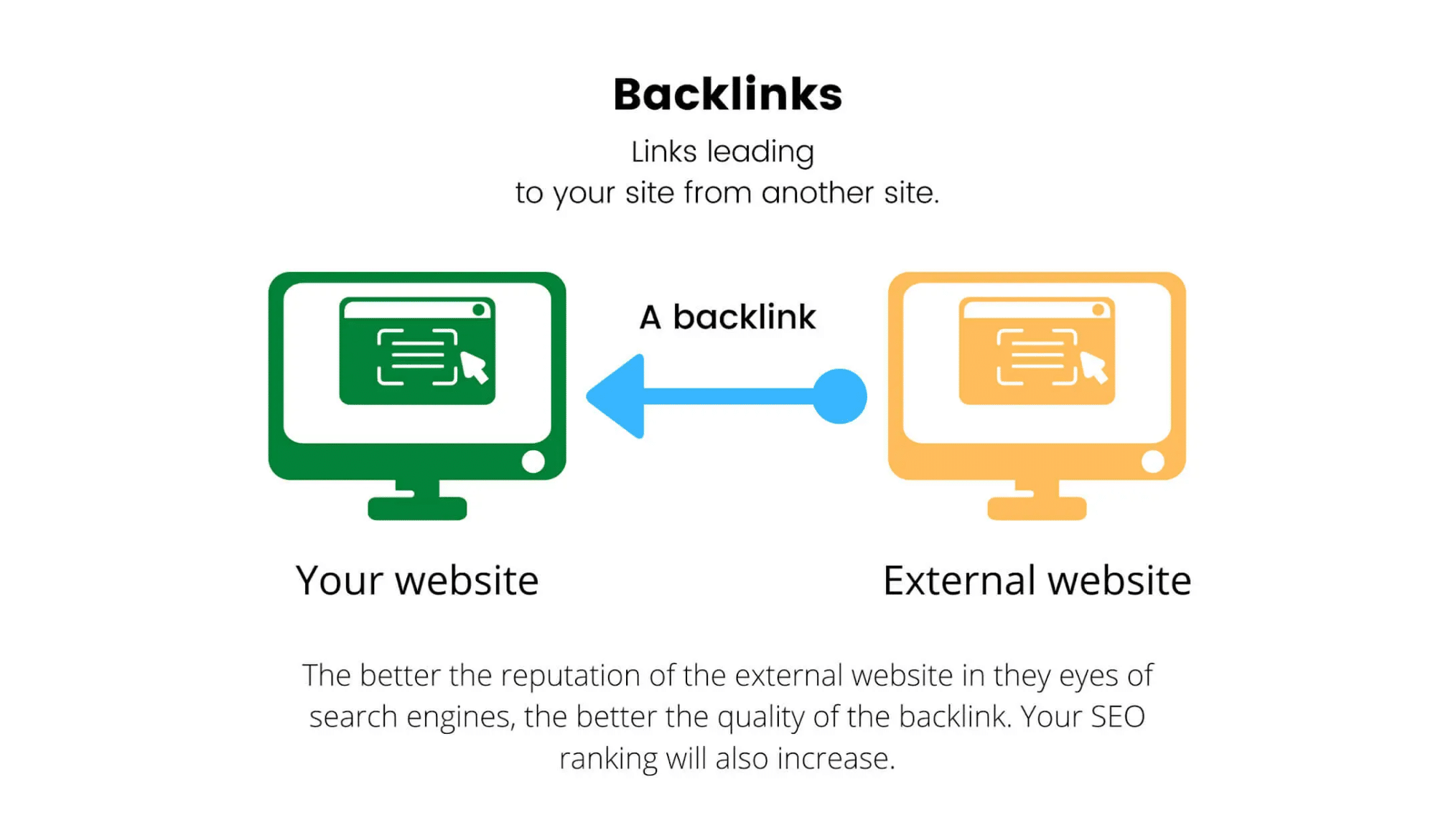
A backlink is a hyperlink from one website to another, typically used by search engines to assess credibility and relevance. In simple terms, if another site links to your content, that’s considered a backlink. It’s one of the foundational elements behind how search engines rank pages.
In real SEO work, not all backlinks carry the same weight. A mention from an industry site or a well-established publication can move rankings, while random links from low-quality directories often do nothing. That’s why, when clients ask me for SEO backlink examples, I always point them to editorial mentions, guest posts, or citations from relevant sites.
How Does Backlinking Work?
Backlinking works by passing signals between websites, where search engines interpret links as votes of confidence. When one site links to another, it suggests that the linked content has value, and over time, these signals help determine which pages deserve to rank higher.
The process is not as straightforward as just getting more links.
Search engines look at relevance, context, and authority. For example, a single backlink from a niche industry blog can outperform dozens of generic links.
Why Backlinks Are a Core Ranking Signal in SEO
Backlinks are a core ranking signal because they help search engines measure trust, authority, and topical relevance across the web.
When multiple credible sites link to the same page, it reinforces that the content is worth surfacing in search results. This is still one of the strongest signals alongside content quality and technical SEO.
Say I were to run a gym business in Singapore. Here are some sites I’d try to get a backlink from:
- Lifestyle publications like The Smart Local
- Government-related healthcare bodies such as the Health Promotion Board (HPB) and Active SG
- Other known fitness brands like Kydra
A single relevant link can lift rankings, increase organic traffic, and improve visibility in both traditional search and newer AI-driven results.
That’s also where the importance of backlinks for AI search comes in, too. Large Language Models (LLMs) rely heavily on trusted sources, and backlinks remain one of the clearest indicators of that trust.
What Is the Importance of Backlinks?
The importance of backlinks lies in how they signal trust, relevance, and authority to search engines, directly influencing how content ranks and performs. They remain one of the clearest ways search engines validate whether your content deserves visibility.
Why Backlinks Still Matter for Rankings in 2026
Backlinks still matter for rankings in 2026 because they remain a core signal of authority, even as search algorithms evolve.
While content quality and user experience have become more important, I’ve consistently seen that strong backlink profiles separate pages that rank from those that don’t. It’s not about having the most links, but having the right ones.
In real scenarios, two pages with similar content can perform very differently depending on their backlinks.
One has mentions from credible industry sites, the other doesn’t. The result is predictable.
Impact of Backlinks From Industry Sites on Content SEO
Backlinks from industry sites have a disproportionate impact on content SEO because they combine relevance with authority. When a recognized site in your niche links to you, it sends a much stronger signal than a generic or unrelated link. I’ve worked on campaigns where a single niche-relevant backlink outperformed dozens of low-quality ones.
There’s also a trust factor that goes beyond rankings. When users see your content referenced by credible sources, it reinforces your expertise.
That’s why the impact of backlinks from industry sites on content SEO is not just about rankings, but about positioning your brand as a reliable source in your space.
Importance of Backlinks for AI Search
Backlinks are important for AI search because they help define which sources are considered trustworthy and authoritative. As search engines integrate more AI-driven results, they rely heavily on patterns of credibility across the web, and backlinks remain one of the strongest indicators of that.
From what I’ve observed, AI-generated answers tend to favor content that is widely referenced and cited. So even if the interface changes, the underlying signals haven’t disappeared. The importance of backlinks for AI search is simply an extension of how authority has always been evaluated.
How AI Search Uses Authority Signals
AI search uses authority signals by analyzing how often and how credibly a piece of content is referenced across the web. Backlinks act as a structured way to identify which sources are consistently trusted within a topic.
Why Trusted Domains Influence AI Results
Trusted domains influence AI results because they have established credibility over time through consistent, high-quality backlinks and content. When these domains link out, that trust is often passed along to the referenced pages.
The Role of Backlinks in Generative Search Visibility
Backlinks play a role in generative search visibility by increasing the likelihood that your content is selected as a reference point for AI-generated answers. If your content is not cited or linked to by other authoritative sources, it becomes less likely to appear in those outputs.
Types of Backlinks You Need to Know

Understanding the different types of backlinks is essential if you want to build links that actually move rankings, not just inflate numbers. When people ask me what is a backlink SEO, they often assume all links work the same way, but in practice, the type of backlink you earn can completely change its impact.
DoFollow vs NoFollow Backlinks
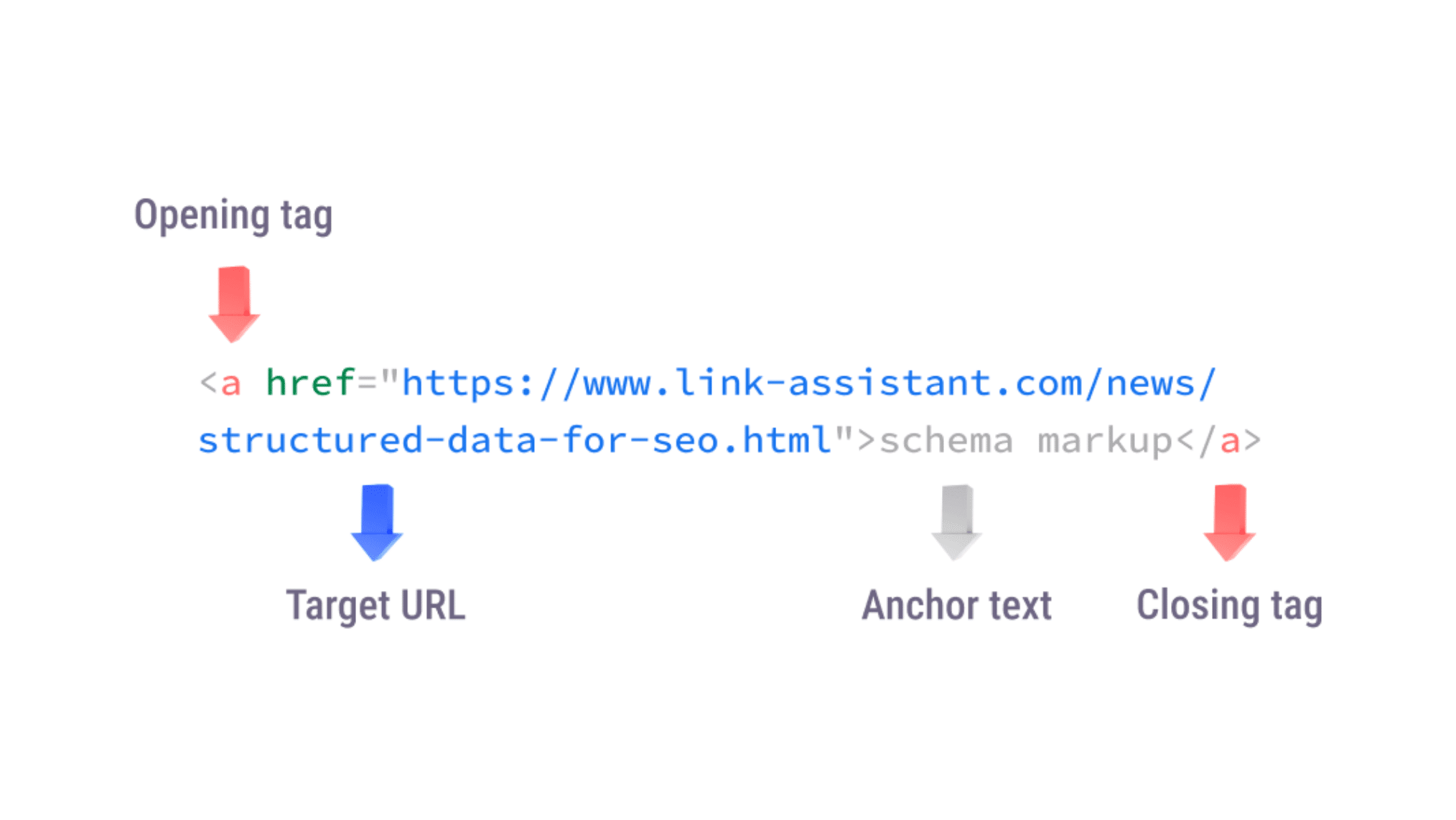
In HTML, a DoFollow link is a standard hyperlink that allows search engine crawlers to follow it and pass “link equity” (also known as authority or “link juice”) to the destination page.
Technically, “DoFollow” is not a real HTML attribute. It is simply the default state of any link that lacks a restrictive attribute, such as rel=”nofollow”.
Here’s an example:
-
<a href="https://www.firstpagedigital.sg/">Best Digital Marketing Agency</a>
Meanwhile, NoFollow backlinks do not pass the same level of ranking value but still contribute to visibility and traffic. Both types play a role in a natural backlink profile, even though DoFollow links are usually prioritized in SEO strategies.
Focusing only on DoFollow links is a mistake. A healthy link profile includes both, especially since NoFollow links from high-traffic platforms can still drive real users.
When analyzing backlinks using any backlink analysis tool, I always look at the balance rather than just the quantity of DoFollow links.
Editorial vs Paid vs User-Generated Links
Editorial backlinks are earned naturally when another website references your content; paid backlinks are acquired through financial exchange; and user-generated links come from forums, comments, or community platforms. Among these, editorial links consistently carry the strongest SEO value because they reflect genuine endorsement.
In real-world campaigns, I’ve seen clients try to shortcut the process with paid links, but these often lack relevance and long-term impact. On the other hand, earning editorial links through useful content aligns much better with how backlinking works today. If someone asks how to get backlinks to your site, this is usually where I point them first.
High-Authority vs Low-Quality Backlinks
High-authority backlinks come from trusted, reputable websites within your niche, while low-quality backlinks typically originate from irrelevant, spammy, or low-value domains.
I’ve audited sites where hundreds of low-quality links made no difference, yet a few strong links from industry-relevant sites significantly improved performance.
This is where the impact of backlinks from industry sites on content SEO becomes obvious. Quality, context, and relevance matter far more than volume, especially as search engines become more selective in evaluating trust signals.
Examples of SEO Backlinks
Editorial Links From Blog Content
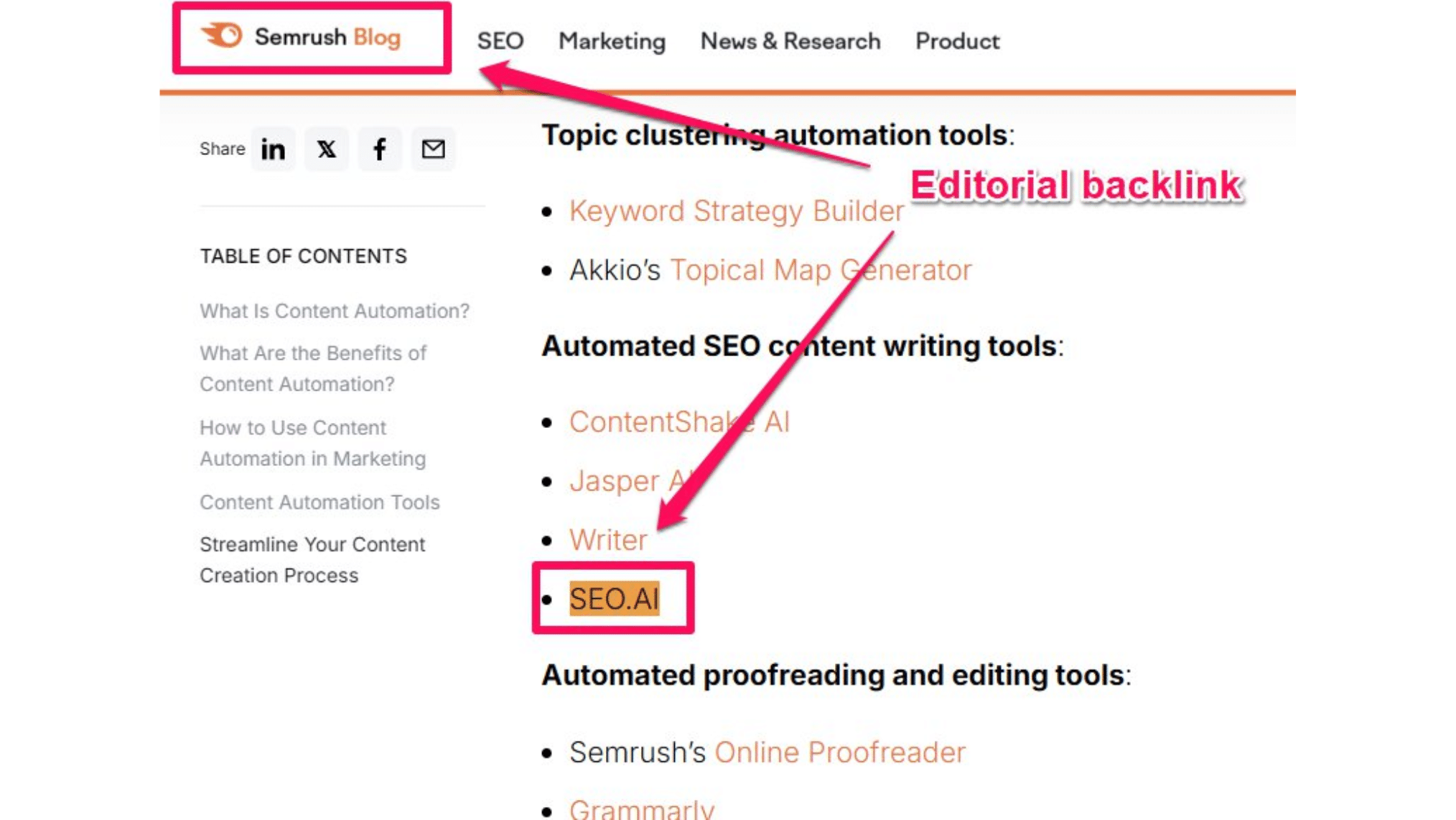
Editorial backlinks are links placed naturally within blog content when another site references your page as a useful resource. These are typically DoFollow links and are the most effective type of backlink because they combine relevance, authority, and intent.
In real campaigns, this is where the biggest SEO gains happen. When a credible site in your niche links to you within context, it directly strengthens your rankings and authority.
Directory and Citation Links
Directory and citation backlinks come from business listings, local directories, or profile-based sites. These are usually NoFollow links, although some directories still provide DoFollow links depending on the platform.
In terms of effectiveness, these links are foundational rather than powerful. They help establish legitimacy and consistency, especially for local SEO, but they rarely drive ranking improvements on their own. I treat them as a baseline rather than a growth strategy.
Guest Post Backlinks
Guest post backlinks are links you earn by contributing content to another website, typically within your industry. These are often DoFollow links if the site allows it, which makes them a controlled and scalable way to build authority.
That said, effectiveness depends entirely on quality. A guest post on a reputable, relevant site can significantly improve rankings, while low-quality placements do very little. Over the years, I’ve seen this method work well when combined with strong content, but not when used purely as a link-placement tactic.
Forum and Community Links
Forum and community backlinks come from platforms such as discussion boards, Q&A sites, and comment sections. These are almost always NoFollow links, as platforms limit direct ranking influence to prevent spam.
From an SEO standpoint, these links are low-impact for rankings but still useful for traffic and brand visibility. If used properly, they can support overall link diversity, but they won’t replace higher-quality backlinks.
How to Get Backlinks to Your Site
Conduct Outreach to Other Websites in Your Niche
Conducting outreach means reaching out to relevant websites, editors, or content owners and suggesting your content as a resource worth linking to. This works best when your content genuinely fills a gap or adds value to what they’ve already published.
In practice, cold outreach only works when it’s targeted. Sending generic emails rarely gets results. I’ve seen better success when the outreach references a specific article and explains clearly why your content fits. That level of relevance is what increases the chances of earning a backlink.
Create Backlink-Worthy Content
Creating backlink-worthy content means producing something others actually want to reference, such as original insights, data-driven articles, or practical guides. If the content doesn’t stand out, no amount of outreach will make it linkable.
From experience, the pages that attract links naturally are usually the ones that solve a specific problem better than existing content. When someone searches for SEO backlinks examples, they often land on these types of resources because they are structured to be cited.
Use Digital PR and Content Promotion
Digital PR involves promoting your content through media outreach, press mentions, or campaigns designed to gain visibility. Unlike traditional link building, this approach focuses on getting your content in front of the right audience first, which then leads to backlinks.
I’ve worked on campaigns where a single well-placed mention on a recognized site generated multiple backlinks over time. Promotion amplifies reach, and reach increases the chances of being referenced. Without visibility, even strong content can go unnoticed.
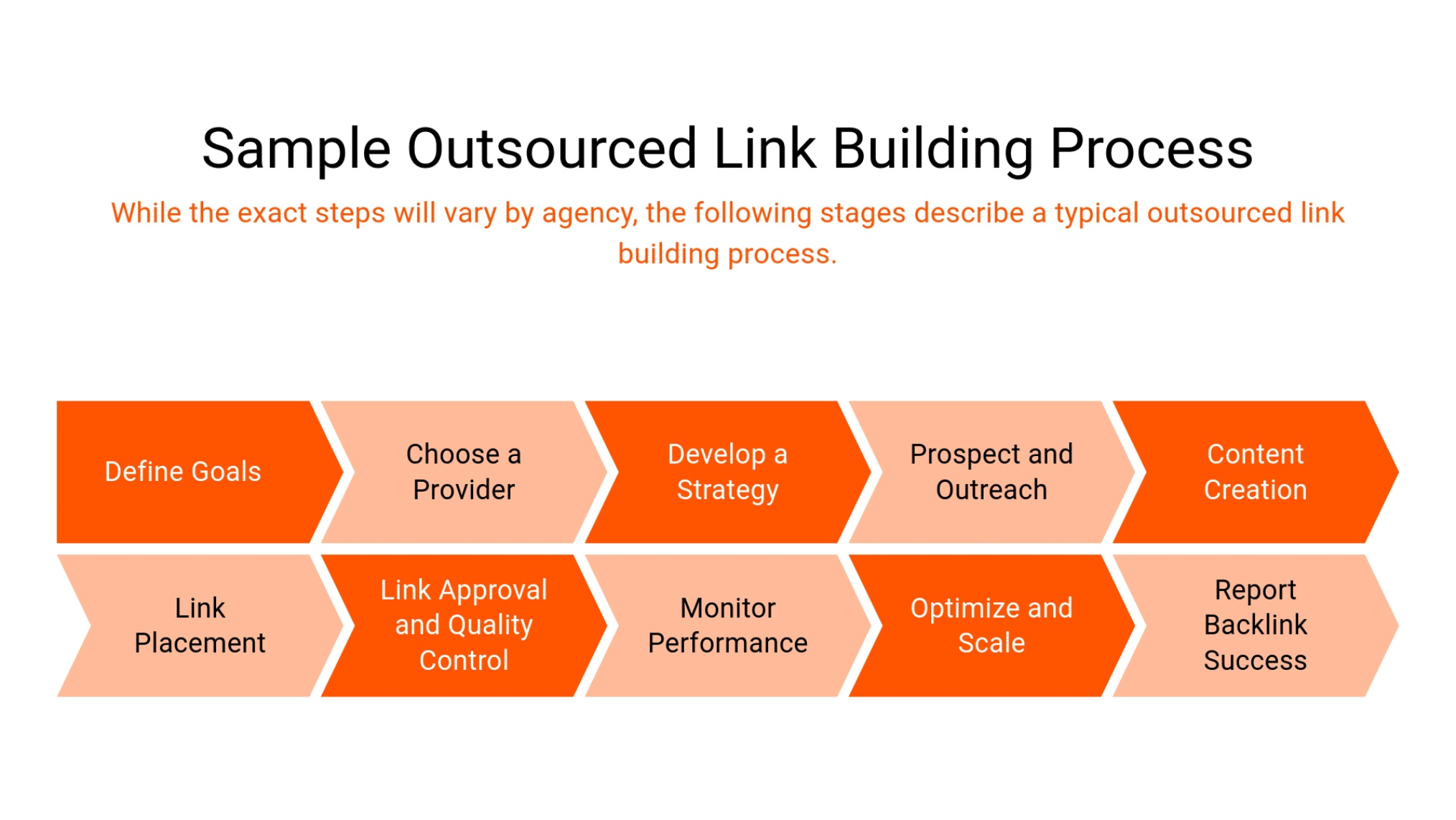
Work With Link Building Agencies
Working with link-building agencies can accelerate the process, especially if you lack the time or network to do it in-house. These agencies typically handle outreach, placements, and relationship building at scale.
However, results vary significantly across agencies. Some focus on volume rather than quality, which can weaken your overall backlink profile. I usually advise clients to prioritize agencies that focus on relevance and editorial placements rather than quick wins.
Leverage Existing Relationships and Partnerships
Leveraging existing relationships means tapping into partners, clients, or collaborators who already know your business. These links are often easier to secure because trust is already established.
In many cases, this is the most overlooked method. I’ve seen companies invest heavily in outreach while ignoring partners who are willing to feature them. When done properly, these backlinks tend to be highly relevant, which strengthens their impact on content SEO.
What Makes a Backlink Valuable?

A valuable backlink is one that improves your site’s authority, relevance, and visibility in a meaningful way, not just for the sake of numbers.
Topical Relevance
Topical relevance means the linking site and the content surrounding the link are closely related to your niche or subject matter. Search engines use this context to decide whether the backlink makes sense, and in my experience, this is often the most important factor.
When I review backlink profiles with a backlink analysis tool, I check whether the linking page actually discusses a related topic.
A relevant link from a niche site usually carries more weight than a high-authority link from an unrelated domain, especially when evaluating the impact of backlinks from industry sites on content SEO.
Domain & Page Authority
Domain and page authority reflect how strong and trusted a website or specific page is based on its own backlink profile. While these are third-party metrics, they remain useful indicators for comparing potential link opportunities.
In practice, I don’t rely on these scores alone. I use tools like Ahrefs, SEMrush, or Moz to get a general sense of authority, then cross-check whether the site is genuinely active and relevant. A high score doesn’t always mean high value if the content itself lacks credibility.
Traffic Potential
Traffic potential refers to whether the backlink can drive real users to your site, not just pass SEO signals. This is often overlooked, but it matters more than people think.
I’ve worked on campaigns where a single backlink from a high-traffic page consistently drove referral traffic, even if the page’s authority wasn’t the highest.
When building backlinks, I like to look at the amount of traffic a particular page I’m interested in getting a link from is driving and ask a simple question: Will anyone actually click this link?
DoFollow vs Nofollow
As mentioned, only DoFollow links pass on link equity and contribute more directly to rankings. But both types play important roles.
NoFollow links help create a natural and diverse backlink profile. They also help with discoverability.
When building links, I always prioritize DoFollow links. But I will not give up the opportunity to secure more links just because they’re NoFollow ones.
Natural Anchor Text
Natural anchor text means the clickable text of the link fits naturally within the sentence and context, rather than being forced or overly optimized. This is something search engines pay close attention to.
In audits, I’ve seen over-optimized anchor text trigger issues where too many links use the exact same keyword. A more natural mix, including branded and generic anchors, tends to perform better and avoids unnecessary risk.
Link Position
Link position refers to where the backlink appears within the page, whether it’s embedded in the main content, placed in a sidebar, or buried in a footer. Links within the main body of content usually carry more value because they are contextually relevant.
According to the Reasonable Surfer Model patent filed by Google, links are not equal.
Their value depends on the probability that a user will click them, which is influenced by position, visibility, and context.
Links placed higher up in the main content, and designed to be prominent (font, color), pass more authority than footer or sidebar links.
Best Backlink Analysis Tools
Ahrefs
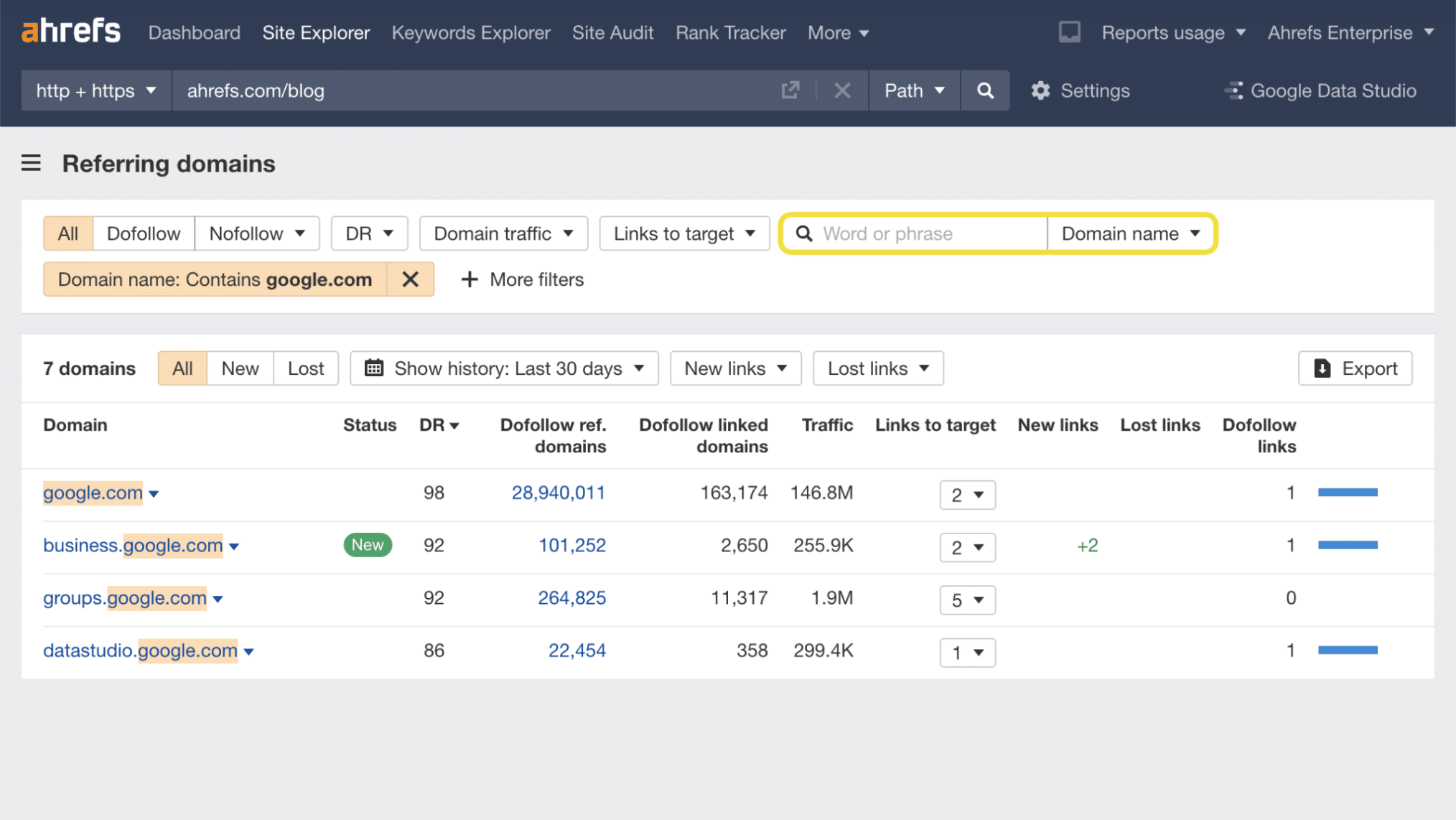
Ahrefs is one of the most widely used tools for backlink analysis because of its large index and detailed link data. I use it to evaluate referring domains, anchor text distribution, and link growth over time, especially when diagnosing ranking changes.
In practical terms, Ahrefs is useful for identifying high-quality backlinks and spotting gaps in your profile compared to competitors.
SEMrush
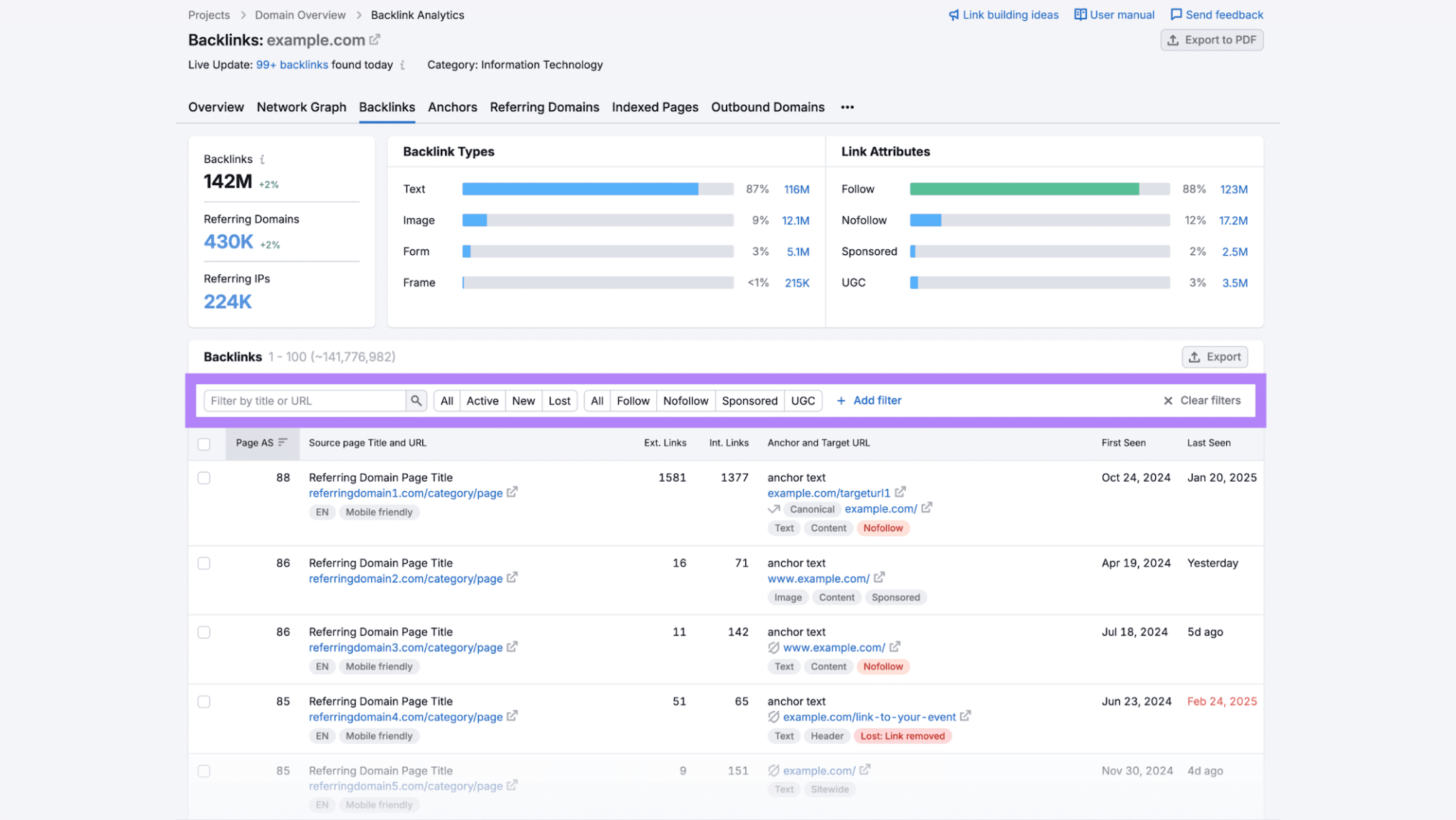
SEMRuh Backlink analysis tool dashboard showing metrics
SEMrush provides a comprehensive view of your backlink profile alongside other SEO metrics, which makes it useful for integrated analysis. I often use it to assess link toxicity and monitor overall domain health in relation to backlinks.
What stands out for me is its ability to flag potentially harmful links. While not every flagged link is a real issue, it gives a starting point for investigation. This is especially helpful when dealing with sudden ranking drops or unexplained performance changes.
Google Search Console
Google Search Console offers direct insight into how Google sees your backlinks, making it one of the most reliable data sources available. Although it’s not as detailed as third-party tools, it reflects actual Google data.
I usually use it to validate findings from other tools. If a backlink shows up here, it confirms that Google has recognized it. It’s also useful for tracking new links and understanding which pages are receiving the most external references.
Screaming Frog
Screaming Frog is primarily known as a technical SEO crawler, but it also plays a role in backlink analysis when combined with external data sources. I use it to map how backlinks connect to specific pages and how link equity flows through a site.
In more complex audits, this helps uncover structural issues that affect how backlinks contribute to rankings. For example, a strong backlink pointing to a page with poor internal linking may not deliver its full value.
Moz Pro
Moz Pro provides backlink insights focused on domain authority and link quality metrics. While its index may not be as large as some competitors’, it offers a straightforward way to evaluate link strength and track improvements over time.
I’ve found it useful for quick assessments, especially when comparing domain authority across competitors. It provides a clear snapshot of a site’s standing, which is helpful for planning link-building strategies and evaluating progress.
Common Backlink Mistakes to Avoid
Common backlink mistakes often stem from chasing shortcuts rather than building links that actually support long-term SEO performance.
When I review backlink profiles, most issues don’t come from a lack of effort, but from focusing on the wrong type of links or misunderstanding how backlinking works.
Buying Low-Quality Links
Buying low-quality links is one of the most common mistakes because it prioritizes volume over value. These links often come from irrelevant sites, link farms, or networks that exist purely to sell backlinks, and they rarely contribute to meaningful ranking improvements.
In audits, I’ve seen sites with hundreds of purchased links that show no progress in rankings. In some cases, they even create risk. Buying cheap links might seem like a shortcut, but it usually results in wasted budget rather than actual results.
Over-Optimized Anchor Text
Over-optimized anchor text happens when too many backlinks use the exact same keyword, making the link profile look unnatural. While it might seem logical to repeat target keywords, search engines are quick to pick up patterns that don’t reflect organic linking behavior.
From experience, a natural mix works better. Branded terms, generic phrases, and partial matches tend to create a more balanced profile. When analyzing backlinks with any backlink analysis tool, I check the anchor text distribution for signs of over-optimization.
Ignoring Link Relevance
Ignoring link relevance is a mistake because not all backlinks carry equal value. A link from an unrelated site may exist technically, but it doesn’t reinforce topical authority in the same way a relevant link does.
I’ve worked on projects where improving relevance alone led to better performance without increasing the number of backlinks. This ties directly to the impact of backlinks from industry sites on content SEO, where context often matters more than raw authority.
Focusing on Quantity Over Quality
Ignoring link relevance is a mistake because not all backlinks carry equal value. A link from an unrelated site may exist technically, but it doesn’t reinforce topical authority in the same way a relevant link does.
I’ve worked on projects where improving relevance alone led to better performance without increasing the number of backlinks. This ties directly to the impact of backlinks from industry sites on content SEO, where context often matters more than raw authority.
How Backlinks Fit Into Modern SEO Strategy
Backlinks fit into modern SEO strategy as one of the core signals that support content quality and technical performance, rather than working in isolation. When clients ask me what is a backlink SEO in today’s context is, I explain that backlinks amplify what’s already strong, not fix what’s weak.
Backlinks vs Content vs Technical SEO
Backlinks, content, and technical SEO each play different roles, but they are interdependent for rankings. Content gives you something worth ranking, technical SEO ensures it can be crawled and loaded properly, and backlinks validate that the content deserves visibility.
In practice, I’ve seen sites invest heavily in link building without fixing content gaps, and the results rarely last. On the flip side, strong content without backlinks often struggles to break through competitive search results. The balance between all three is what drives consistent performance.
How Link Building Supports Long-Term Growth
Link building supports long-term growth by strengthening domain authority and increasing the likelihood that new content will rank faster over time. Unlike short-term tactics, backlinks continue to provide value as long as they remain active and relevant.
From experience, once a site builds a solid backlink foundation, every new piece of content performs better with less effort. This is why understanding how to get backlinks to your site is not just about immediate rankings, but about building momentum that compounds over time.
The Role of Backlinks in AI SEO
Backlinks play a role in AI SEO by acting as credibility signals that help determine which sources are trusted enough to be referenced in AI-generated results. Even as search evolves, the underlying need to identify reliable information remains the same.
I’ve noticed that content frequently cited by other authoritative sources is more likely to appear in AI-generated outputs. This reinforces the importance of backlinks for AI search, where visibility depends not just on what you publish, but on who acknowledges and links to it.
Build Links That Actually Move Rankings
Backlinks still come down to one thing — trust.
The goal isn’t to chase numbers, but to earn links that actually strengthen your authority. From everything I’ve seen, the sites that win focus on relevance, build relationships within their industry, and consistently create content worth referencing.
That’s where the real impact of backlinks from industry sites on content SEO shows up, and why the importance of backlinks continues to hold even as search evolves into AI-driven results.
If you’re trying to figure out how to get backlinks to your site or why your current efforts aren’t moving rankings, First Page Digital can help.
We’re offering a FREE SEO strategy call (worth $2000) where we’ll break down your backlink profile, identify gaps, and show you what’s actually holding your rankings back.
Frequently Asked Questions About Backlinks
How Do Backlinks Affect Rankings?
Backlinks affect rankings by signaling to search engines that your content is trustworthy and relevant, increasing the likelihood of higher rankings compared to similar pages. In competitive niches, backlinks from relevant industry sites are often what set top-ranking pages apart.
How Many Backlinks Do You Need to Rank?
There is no fixed number of backlinks needed to rank, as it depends on your niche, competition, and content quality. In practice, I evaluate this using a backlink analysis tool by comparing against top-ranking pages rather than aiming for a specific number. The goal is to build a profile that is more relevant and authoritative than what’s already ranking, not just larger.