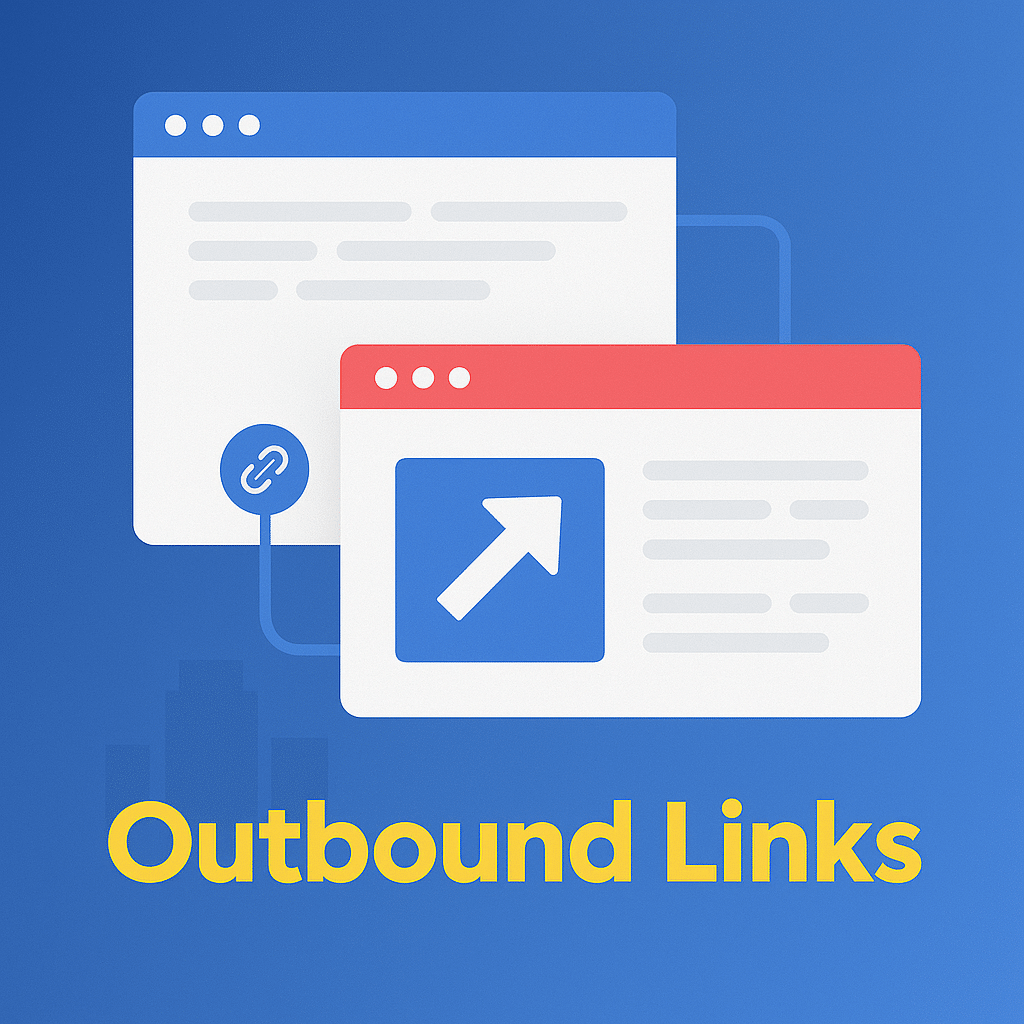
An outbound link is a hyperlink on your page that points to a different website. By contrast, an internal link keeps users within your own domain, while a backlink is a link from another site that points to you. In practice, outbound links show up as citations to studies, further-reading resources, or links to official product specs. Consequently, they help readers verify a claim, learn more, or complete a task that sits just beyond your page.
Why add outbound links?
You add outbound links to cite sources, provide deeper context, support specific claims, and guide users to official documentation that you do not own. As a result, your content becomes more trustworthy and more useful. Moreover, clear attributions make it easier for both readers and search engines to understand where facts come from and how your page fits within the broader information landscape.
Do Outbound Links Help SEO?
The consensus view
Most practitioners agree that outbound links can support SEO when they add clear value. When you point to credible, relevant sources, you strengthen topical context and user trust, which can help pages perform better. That said, outbound links are not a direct ranking switch on their own; they work as part of a broader quality signal that includes relevance, clarity, and usefulness.
User-first benefits that correlate with better outcomes
Linking out improves the reading experience. When you reference reputable sources, you increase credibility and make it easier for readers to verify claims. In turn, search engines can interpret your topic with more confidence because your page sits within a trustworthy web of references. Likewise, helpful destinations reduce friction for users who need official docs, original studies, or deeper explanations, which often correlates with stronger engagement.
Industry debate snapshot
There is ongoing debate about how much outbound links influence rankings. Some SEOs see uplift when they add well-chosen references, while others notice little change unless the overall content quality also improves. Even so, one throughline stands out: quality over quantity. In practice, teams who vet sources, link sparingly, and add information gain tend to report better results than those who add many low-value links just to “do SEO.”
Myths vs Reality
Myth: Outbound links drain authority
Reality: Linking out does not “leak SEO” by default. Instead, it can strengthen your page when the destination adds context, backs up a claim, or completes a task. For example, a comparison guide that cites the original benchmark study, the vendor’s docs, and a government standard reads as credible and helpful. Consequently, readers stay longer, bounce less, and are more likely to share or return. Search engines also get clearer topical signals because your page sits among authoritative references rather than a closed loop of internal links.
How to apply it:
- Link to the canonical source: the original study, the official documentation, or the primary data set.
- Add a brief cue around the link so readers know why it is relevant.
- Avoid thin, ad-heavy, or off-topic destinations that dilute trust.
- Review outbound links during QA to keep them current and working.
Edge cases to watch
- Do not link to low-trust sites when you are making health, legal, or financial claims.
- If you must cite a questionable source for completeness, add a clarifying note and consider nofollow.
Myth: All outbound links should be nofollow
Reality: The attribute depends on context and intent. Editorial links that you stand behind can be followed because they act as genuine citations. Meanwhile, links that are paid, incentivised, or user-generated should carry the correct qualifiers so you do not imply endorsement.
When to use which attribute:
- follow: You cite an authoritative, relevant source that you trust and want to endorse.
- nofollow: You reference a site you do not want to vouch for, or you link for completeness without editorial endorsement.
- sponsored: You received compensation, a fee, or other value for the placement.
- UGC: The link appears in comments, forums, or other user-submitted areas.
Quick decision path:
- Is the link editorial and useful to the reader? If yes, keep it follow.
- Was value exchanged for the placement? If yes, mark sponsored.
- Is it user-submitted content? If yes, mark UGC.
- Are you uncertain about the site’s trustworthiness? If yes, consider nofollow and provide context.
Anchor and placement tips
- Use descriptive anchors that match the destination, for example “SOC 2 controls overview” or “original 2024 benchmark study.”
- Place links near the claim or instruction they support rather than dumping them into a footnote list.
- Keep the number of links proportional to the length and purpose of the section so readers do not feel pushed off the page.
Best Practices For Outbound Links
Relevance and authority first
Link only when the destination clearly adds value and you trust the source. Start by preferring canonical or original materials such as published studies, official documentation, or recognised standards. This way, readers can verify claims at the root, and search engines can place your page within a reliable context. If you are unsure about a source, look for author credentials, publication reputation, recency, and methodological transparency before you link.
Cite, don’t copy
Use outbound links to attribute statistics, quotes, and definitions, then summarise the insight in your own voice. Next, add information gain with commentary, examples, or a short calculation so your page stands on its own even if the reader never clicks out. When you quote, keep excerpts short, credit the source, and avoid duplicating large blocks of text. The goal is to inform, not to mirror.
Anchor text that sets expectations
Choose descriptive, natural anchors that match the destination’s intent, for example “original 2025 benchmark study” or “official API limits.” Consequently, readers know exactly what they will get, and crawlers gain clearer signals about the relationship between your page and the cited resource. Avoid vague anchors like “click here” and avoid manipulative phrasing that overpromises or misleads.
Keep links fresh
Because sources change and pages disappear, schedule periodic link checks. Replace broken or redirected links with the best available canonical version, and remove outdated references that no longer reflect current facts. When a newer edition or standard exists, update both the link and the surrounding sentence so context remains accurate. Over time, this simple habit preserves trust and keeps your content useful.
Technical Implementation Of Outbound Links
Link attributes and when to use them
Choose the right attribute based on intent. Use follow for trusted editorial references that you endorse. Use nofollow for links you mention but do not vouch for, or when you include a source only for completeness. Use sponsored for any paid placement or compensated inclusion. Use UGC for links that appear in comments, forums, or other user-submitted areas.
Quick decision tree: First, ask if you stand behind the destination. If yes, keep it follow. If value changed hands, mark it sponsored. If users supplied the link, mark it UGC. If you are unsure about trust or do not want to confer endorsement, choose nofollow.
Open in new tab?
Decide with the user journey in mind. Opening in a new tab can keep readers on your page while they verify a claim; however, it also adds cognitive load for some users and assistive technologies. If you choose to open a new tab, signal it with an icon or brief note such as “opens in new tab,” and ensure the focus state is clear for keyboard and screen reader users. Otherwise, allow standard same-tab navigation so the back button behaves as expected.
Markup and context cues
Help people and crawlers understand why a link is present. Surround each citation with a short cue that explains what the reader will find, then place the link close to the claim it supports. Where it fits, use lists for references and include publication name and year. Additionally, consider structured data such as CreativeWork or Citation references when you publish formal source lists. This combination of clear prose, sensible placement, and optional markup creates honest, machine-readable signals that reinforce trust.
Vetting Outbound Links
Source vetting checklist
Before you link, pause for a quick quality check. Start with publication credibility and author expertise. Then confirm date and recency so the facts reflect the current state. Next, prefer original sources over derivative summaries whenever possible. Finally, ensure alignment with your claim by asking whether the destination directly supports the statement you make and whether the methodology is transparent.
Quick pass-fail list
- Is the publisher reputable and independent enough for the topic?
- Does the author show credentials, data access, or first-hand experience?
- Is the piece recent or still authoritative for evergreen facts?
- Is it the canonical source, not just a rewrite?
- Does it actually support your sentence, table, or stat?
Outbound link policy
Because consistency builds trust, write down a simple policy and follow it. Define when to link (for stats, definitions, standards, official docs), and set a sensible cap on how many links per section so readers are not overwhelmed. Specify anchor style that is descriptive and honest, and set attribute defaults such as follow for editorial citations, nofollow for unendorsed references, sponsored for paid placements, and UGC for user submissions. Lastly, schedule a review cadence so editors check links during draft, pre-publish QA, and quarterly refresh.
Lightweight template
- Purpose of linking: attribution, context, task completion
- Allowed destinations: canonical studies, official docs, government or university research, major standards bodies
- Anchor rules: describe the destination plainly, avoid “click here”
- Attribute defaults: follow for editorial, nofollow for unvetted, sponsored for paid, UGC for comments
- Maintenance: link checks at draft, publish, and quarterly reviews
Tools
To keep your link hygiene high, use crawlers to spot issues early. Ahrefs, Semrush, and Screaming Frog can audit outbound links by page, export link lists for review, and flag redirects or 404s that appear after publication. In addition, log fixes in a shared spreadsheet or ticketing system so the team can see what changed and why. Over time, this simple loop prevents rot and preserves the credibility your citations provide.
Examples & Patterns
Good
When you cite, link to the original study rather than a second-hand summary, since this lets readers verify methods and numbers. Likewise, point to official documentation for APIs or standards so developers can act without guessing. In addition, prefer government or university research when you need neutral, high-quality evidence. Together, these choices raise credibility, improve context for search engines, and help users complete their task.
Bad
Avoid linking to thin affiliate pages, off-topic destinations, or low-trust blogs, because these weaken confidence and distract readers. Likewise, do not over-link sections just to “do SEO.” If a link does not clarify a claim or move the user forward, leave it out. By keeping links selective and useful, you maintain focus and preserve trust.
Frequently Asked Questions
Do outbound links pass PageRank away from my site?
Yes, they pass equity to the destination, and that is by design. However, your aim should be overall usefulness and authority. When you cite the right sources, you strengthen trust and context, which can help performance more than hoarding signals.
How many outbound links per page?
There is no fixed number. Instead, prioritise relevance and readability. If a link helps the reader verify a claim, learn more, or complete a task, include it. If not, leave it out.
Should I link to competitors?
If it serves the reader, especially in comparisons or alternatives pages, then yes. Use honest framing, add information gain such as criteria and proof, and make the decision easier rather than defensive.
Conclusion
Outbound links are not a liability, they are a service to your reader. When you cite original sources, point to official documentation, and keep references current, you improve clarity, trust, and the overall usefulness of your page. In turn, search engines can interpret your topic with more confidence because your content sits within a reliable web of evidence. Therefore, link with intent, use the right attributes, and maintain a simple workflow that keeps citations accurate over time.
If you want guidance on when and how to link out, First Page Digital can be consulted on the appropriate and strategic use of outbound links for SEO. Explore our SEO services and our Technical SEO solutions to build content that is trustworthy for readers and clear for crawlers.
Unsure if First Page Digital’s SEO is for you? Check out our compiled list of the best SEO agencies in Singapore to find and compare other SEO services.