If you’ve been doing blog SEO, you’ll realize quite quickly that publishing more content doesn’t automatically lead to better rankings.
I’ve worked on content SEO strategies where everything looked right on paper ( solid keyword research for blog posts, consistent publishing), but the content still struggled to earn backlinks or stand out. That’s usually where most teams hit a ceiling, and it’s exactly why understanding what skyscraper content is becomes important.
In this guide, I’ll break down:
- What the skyscraper technique is
- How it actually works in SEO
- How to apply it to support real growth (especially in skyscraper SEO link building)
Because at the end of the day, it’s not just about creating more content. Instead, it’s about creating something that genuinely outperforms what’s already ranking.
What Is Skyscraper Content?

What is Skyscraper Content in SEO?
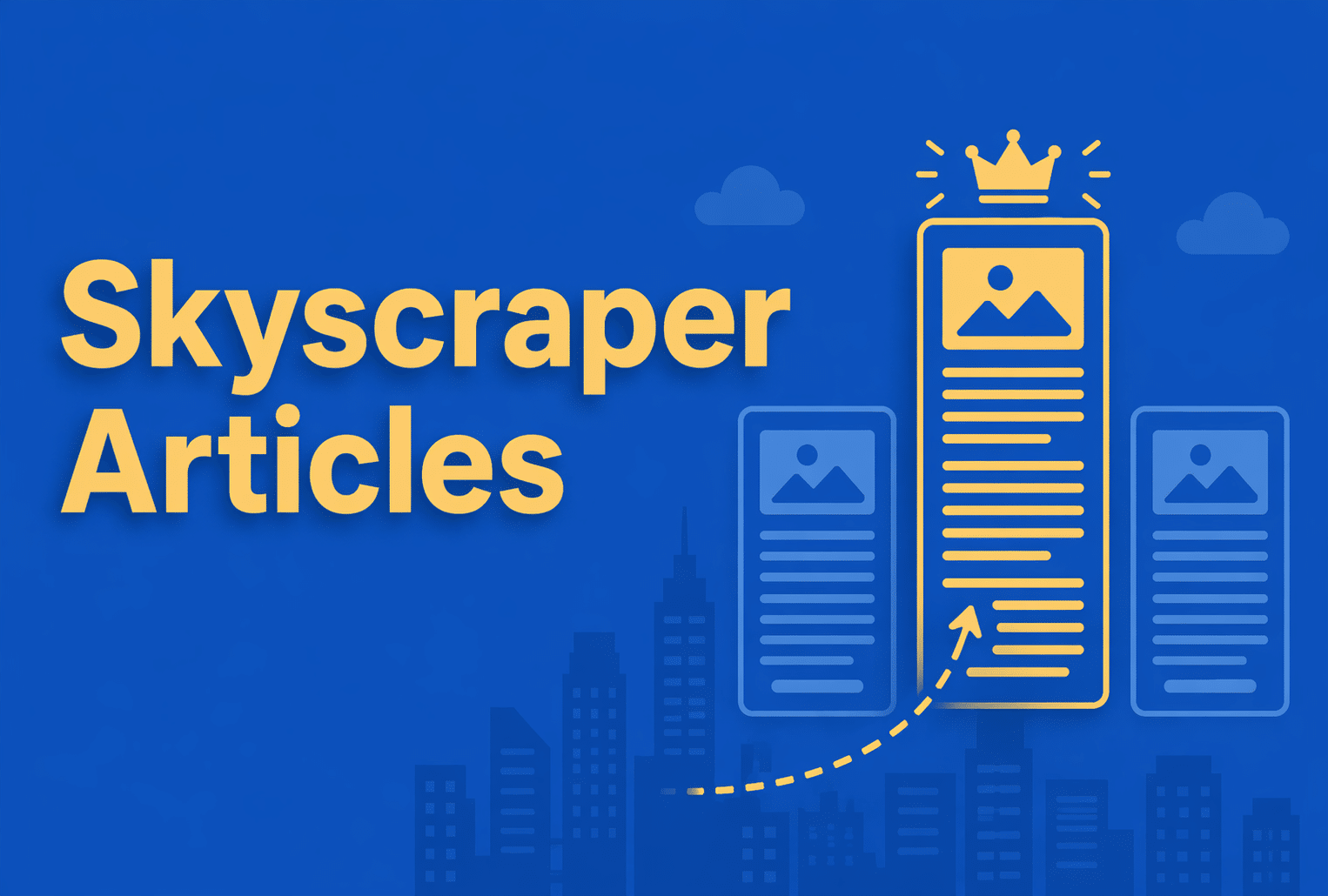
Skyscraper content is a content strategy in which you identify high-performing content in your niche, then create a significantly better version that is more comprehensive, up-to-date, and useful to readers.
Why Skyscraper Content Works in SEO?
Skyscraper content works well in SEO because it builds on existing demand rather than guessing what might perform.
Implementing a skyscraper content strategy begins with analyzing SERPs to identify the top-performing pages. This should already give you a clear insight into what type of content structures and outlines Google favors.
And when you start “skyscraping” your content, meaning you enhance your content with information your competitors did not include, you naturally add more value to your content and make it more linkable.
When your content is genuinely more useful (e.g. clearer explanations, better examples, updated data), outreach becomes easier because you’re offering real value, not just asking for links.
In my experience, the difference between average and high-performing skyscraper content isn’t length; it’s whether the improvement is obvious the moment someone lands on the page.
How the Skyscraper Technique Actually Works in Practice
Skyscraper Technique for SEO Growth
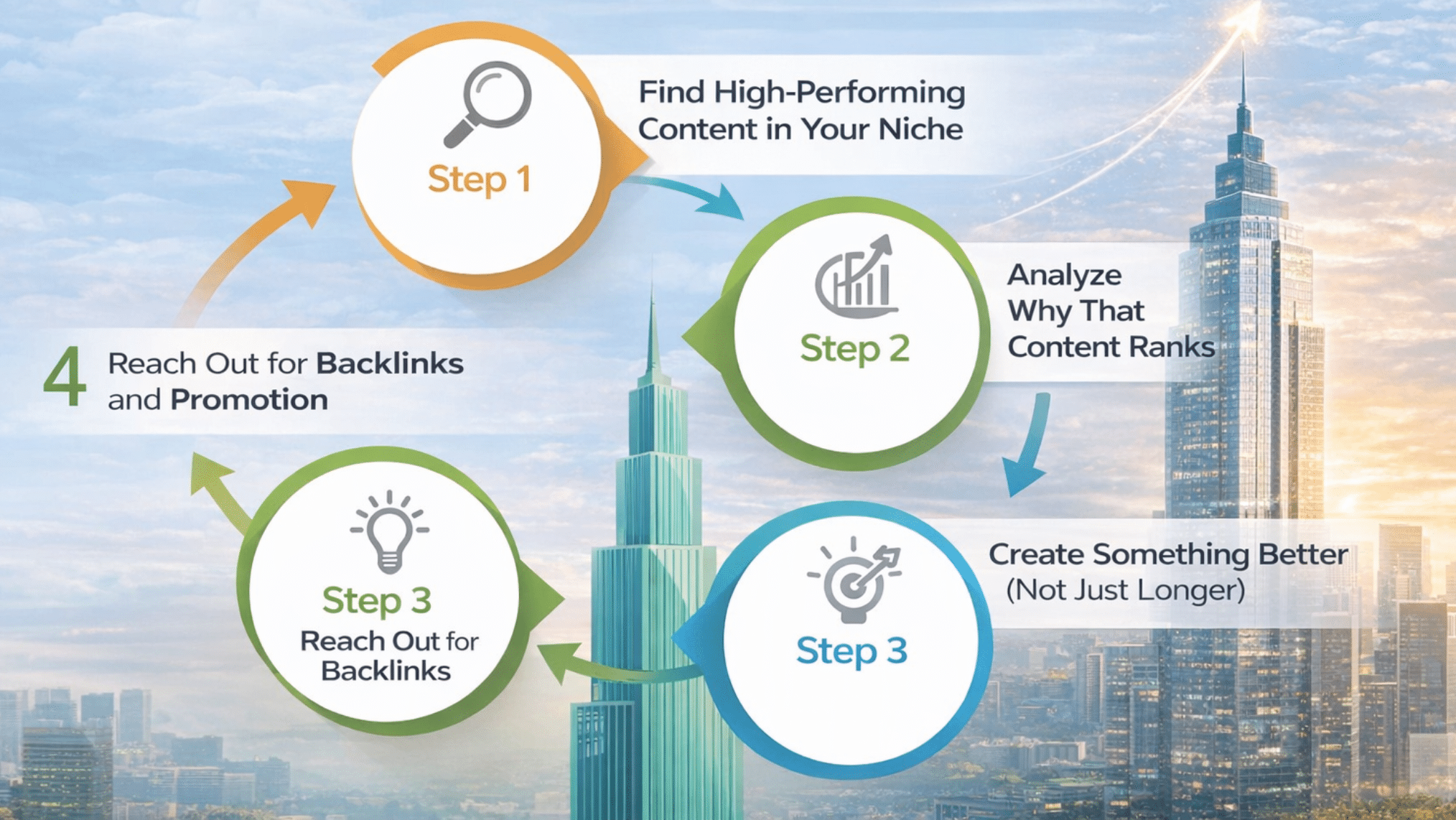
In real-world SEO work, the skyscraper technique isn’t just a theory — it’s a structured process I use to turn existing high-performing content into something that can outperform it. Once you understand what is the skyscraper technique in SEO, the execution becomes very practical: identify what already works, improve it meaningfully, then promote it with intent.
Step 1 — Find High-Performing Content in Your Niche
The first step is finding content that already ranks well and attracts backlinks, because that tells you there’s proven demand. I usually start by looking at top-ranking pages for target keywords and checking which ones have strong backlink profiles.
If a piece of content consistently earns links, it’s a clear signal that people find it worth referencing.
What matters here isn’t just traffic; it’s linkability. Some content pieces rank but don’t attract links, which makes them poor candidates. I focus on content that others have already linked to, because that’s where skyscraper SEO link building becomes realistic.
Step 2 — Analyze Why That Content Ranks
Once I’ve identified a strong piece, I break it down. Why is it ranking? Is it comprehensive, well-structured, or simply the first mover in that topic? Sometimes it ranks because it covers everything in one place. Other times, it’s ranking despite being outdated, which creates an opportunity.
I pay attention to gaps. Missing examples, shallow explanations, and outdated data — these are all areas for improvement. This step is where experience matters. You’re not guessing what to improve; you’re identifying what’s lacking from both a search and user perspective.
Step 3 — Create Something Better (Not Just Longer)
Creating better content doesn’t mean adding more words. It means making the value immediately obvious.
When I rewrite or build skyscraper content, I focus on clarity, depth, and usefulness. If a competitor explains something in five steps, I’ll clarify those steps, add context, and include real scenarios to make it easier to understand.
In many cases, I also update outdated insights or add sections that directly answer related questions users are searching for. This is where skyscraper content becomes clear about its focus, quality, and usefulness, not just its length.

Unique example in my article based on my SEO experience
Take my article on search intent, for example. If you take a look at it, I included:
- Examples my SERP competitors did not include
- Case studies taken from my own SEO experience
Step 4 — Reach Out for Backlinks and Promotion
Even the best content won’t perform if no one sees it. After publishing, I reach out to sites that linked to the original content and show them why this updated version is more valuable.
This is the core of skyscraper SEO link building. You’re offering an improved resource, not asking for a favor.
The difference between successful and failed outreach usually comes down to relevance and clarity. If the improvement is obvious and genuinely helpful, replies come naturally. If not, even the best email template won’t make a difference.
What Makes Skyscraper Content Successful

Skyscraper content success factors showing depth search intent and real examples
From my experience, what separates average content from high-performing skyscraper content isn’t effort is whether the improvement is obvious the moment someone lands on the page.
Once you understand what the skyscraper technique in SEO is, success comes down to how clearly your content outperforms what already exists, not just how much you add.
Depth vs Length — What “Better Content” Really Means
Better content means deeper, not longer. I’ve seen articles double the word count of competitors and still underperform because they added fluff instead of clarity.
When I approach skyscraper content in practice, I focus on sharpening explanations, filling real gaps, and structuring information so it’s easier to follow.
For example, if an existing article lists steps without context, I’ll add short scenarios that show how those steps apply in real situations. That kind of depth makes the content more useful immediately, which is what both users and search engines respond to.
Matching Search Intent More Accurately
Matching search intent more accurately means understanding what the user actually expects when they land on the page.
I don’t just look at keywords; I study the top-ranking results to see whether the intent is educational, comparative, or action-driven. That shapes how the content is structured.
In many cases, skyscraper content fails because it focuses on surface-level details while missing the intent.
If the top results are practical guides and your content stays theoretical, it won’t compete. Getting this right is often more important than adding more sections.
Using Real Examples, Data, and Experience (E-E-A-T Alignment)
Using real examples and experience is what makes content credible. In my audits, the pages that earn backlinks consistently are the ones that show how something works in practice, not just what it is.
This is especially important for skyscraper SEO link building, where other sites are deciding whether your content is worth referencing.
I make it a point to include practical scenarios, observations from past projects, and updated insights instead of repeating generic advice. That’s what aligns my content with E-E-A-T because I demonstrated my expertise in a way that readers can actually trust and apply.
Skyscraper SEO Link Building Explained
Alt text: Example of skyscraper SEO link-building outreach email to request backlinks
Skyscraper SEO link building is the process of earning backlinks by creating content that is clearly better than existing content, then promoting it to sites that have linked to similar resources.
In the context of the skyscraper technique in SEO, this is the step where your improved content becomes an actual authority, because links signal to search engines that your version is worth ranking.
How Skyscraper SEO Link Building Works
Skyscraper SEO link building leverages existing link demand rather than creating it from scratch. When a piece of content has already attracted backlinks, it means other sites have found it useful enough to reference. The goal is to present a stronger version of that resource and give those same sites a better option for linking.
In my experience, the effectiveness comes down to how obvious the improvement is. If your content genuinely adds clarity, depth, or updated insights, outreach becomes a natural extension of value rather than a cold request. That’s what makes this approach sustainable compared to generic link-building tactics.
Finding Link Opportunities from Competitor Content
Finding link opportunities starts by analyzing which pages link to your competitor’s content. I usually review backlink profiles to identify sites that have already shown interest in that topic. These are the most relevant prospects because they’ve already decided to link out.
Once identified, I look at the context of those links. Are they referencing a statistic, a guide, or an example? That tells me what angle resonated. This step is less about collecting emails and more about understanding why the original content earned links in the first place.
Outreach Strategies That Actually Get Replies
Outreach works when it feels relevant. I don’t send generic templates asking for links.
Instead, I reference the exact content they linked to and explain clearly why the updated version is more useful. When the value is specific, the message doesn’t feel like a pitch.
I’ve also found that timing and context matter. If your content fills a clear gap, such as outdated data, missing steps, or better explanations, replies tend to come more naturally. The mistake most people make isn’t poor writing; it’s reaching out before the content is strong enough to justify the ask.
Common Mistakes When Using the Skyscraper Technique
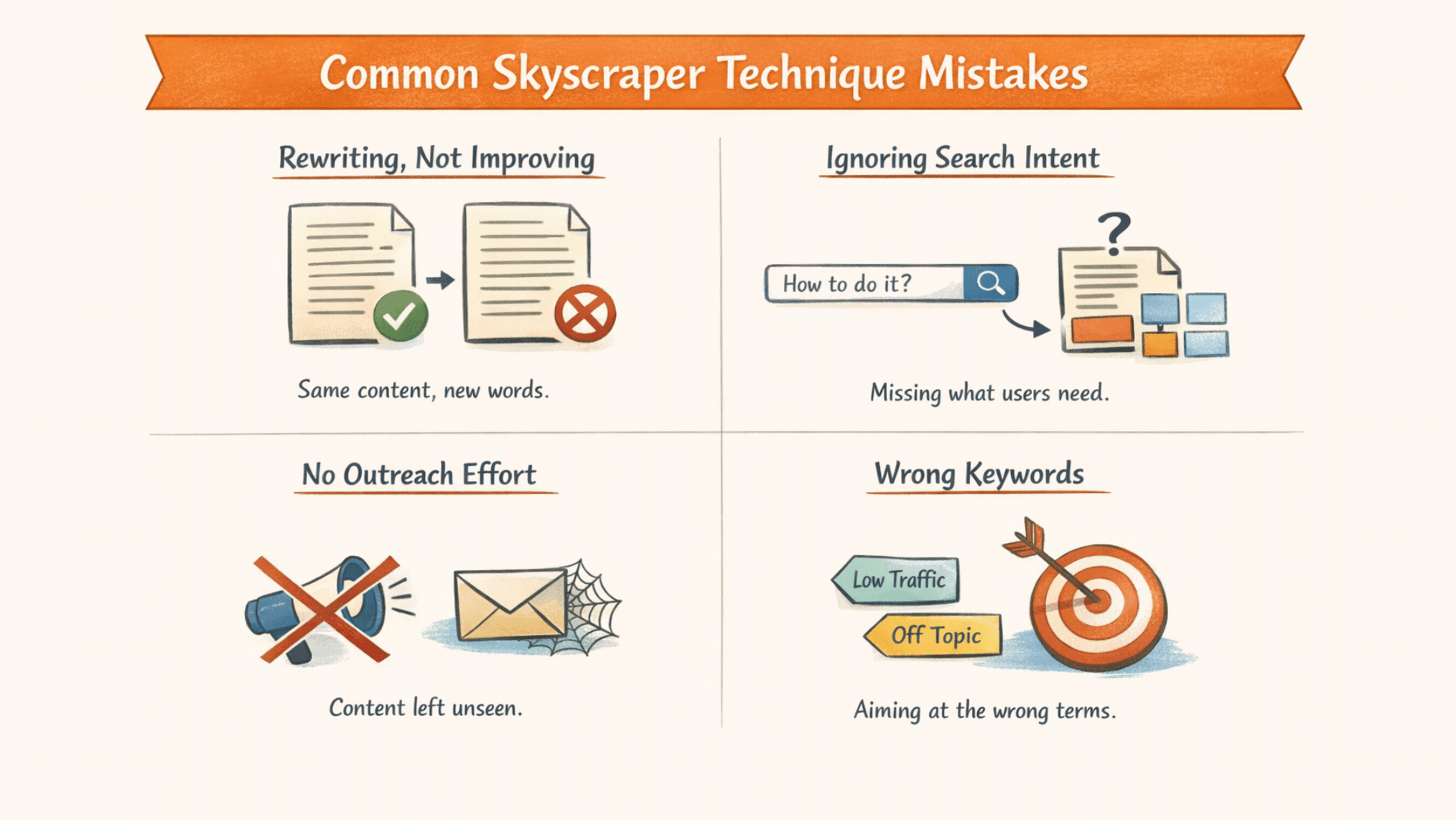
Common Skyscraper technique mistakes
Rewriting Instead of Improving
Rewriting instead of improving is one of the most common mistakes. I’ve reviewed content where the structure and points are almost identical to the original, just phrased differently. That doesn’t give anyone a reason to link to it, and it doesn’t stand out to users either.
Real improvement means adding something new. This includes clearer explanations, better structure, updated insights, or practical examples that weren’t there before.
If someone reads both versions and can’t immediately tell which is better, the strategy hasn’t worked.
Ignoring Search Intent
Ignoring search intent usually results in content that appears comprehensive but doesn’t actually satisfy users’ needs. I’ve seen articles expand into multiple sections, yet still miss the core question the reader came to solve.
When I approach what is skyscraper content in practice, I always study the top-ranking pages first. If they focus on actionable steps, your content needs to do the same. Adding more information won’t help if it doesn’t align with users’ expectations.
Skipping Outreach and Promotion
Skipping outreach is what causes many skyscraper campaigns to fail completely. Even strong content won’t attract backlinks on its own, especially in competitive niches. This is where skyscraper SEO link building comes into play. You need to include promotion as part of the process.
Targeting the Wrong Keywords
Targeting the wrong keywords makes the entire effort ineffective from the start. If the topic doesn’t attract links or isn’t competitive enough to benefit from improvement, even a strong piece won’t gain traction.
In my experience, the best results come from topics with proven link demand. That’s why the first step matters so much. If the foundation is weak, no amount of optimization or outreach will compensate.
When the Skyscraper Technique Works (and When It Doesn’t)
The skyscraper technique works best when there’s already proven demand for content and backlinks in a topic, and struggles when that foundation doesn’t exist. From what I’ve seen across multiple SEO campaigns, understanding where this strategy fits is just as important as knowing what is the skyscraper technique in SEO.
Best Use Cases for Skyscraper Content
Skyscraper content performs well in competitive niches where content already attracts links and rankings are driven by authority. When a topic has multiple strong articles with backlinks, that’s a clear signal that there’s room to compete by creating something better. In these cases, improving structure, clarity, and usefulness can make a noticeable difference.
I’ve also found it works particularly well for evergreen topics that don’t change drastically over time. This allows you to build on existing content while adding updated insights and real-world examples. Combined with strong skyscraper SEO link building, this creates a reliable path to earning links rather than chasing them.
Situations Where It Fails to Deliver Results
The skyscraper technique tends to fail when there’s no initial link demand. If no one is linking to existing content on the topic, creating a better version won’t suddenly change that. I’ve seen teams invest heavily in improving content that was never meant to attract backlinks in the first place.
It also struggles in niches where content is already saturated with minimal differentiation. If every top-ranking page is already comprehensive and up to date, the improvement has to be significantly better to stand out. In those cases, simply following what skyscraper content is isn’t enough — you need a unique angle or insight that competitors haven’t covered.
How to Apply Skyscraper Content to Your SEO Strategy

Skyscraper SEO strategy showing topic selection, content updates & performance tracking
Choosing the Right Topics to Target
Choosing the right topics starts with identifying content that already has proven demand and backlinks. I don’t pick topics based on assumptions. I look for keywords where existing pages have earned links and visibility, because that’s what makes skyscraper SEO link building viable in the first place.
For example, if you’re working on a guide that already has multiple referring domains, that’s a strong signal that the topic is worth improving. On the other hand, if no one is linking to similar content, even a better version may struggle to gain traction.
Integrating with Your Existing Content Strategy
Integrating skyscraper content into your strategy means aligning it with what you’ve already published instead of treating it as standalone content. I usually review existing articles to identify opportunities for improvement, whether by updating outdated sections or expanding on high-performing topics.
This approach helps avoid content overlap and strengthens topical authority. Rather than creating new content unnecessarily, you’re improving what already exists and making it more competitive in search results.
Measuring Results Beyond Rankings
Measuring results beyond rankings is essential because rankings alone don’t tell the full story. I look at backlink growth, engagement metrics, and how often the content is referenced externally. These signals indicate whether the content is actually valuable, not just visible.
In my experience, successful skyscraper content leads to steady link acquisition and consistent traffic over time. If rankings improve but no links are earned, that’s usually a sign the content isn’t strong enough to support long-term performance.
Build Content That Actually Outperforms Competitors
At its core, skyscraper content comes down to one simple idea: create something that is clearly better than what already exists, then make sure the right people see it.
Once you understand that, the process becomes straightforward: identify proven content, improve it meaningfully, and support it with proper skyscraper SEO link building.
If you’re looking to apply this properly without wasting time on trial and error, this is where First Page Digital can make a difference.
We’ve helped businesses in Singapore turn content strategies into measurable growth by focusing on what actually drives rankings and backlinks.
If you want a clearer direction, you can sign up for a FREE strategy call (worth $2000) where we break down your current content, identify gaps, and show you exactly how to outperform competitors using the right SEO approach.
Frequently Asked Questions About Skyscraper Content
What Is Skyscraper Content in SEO?
Skyscraper content in SEO is content that improves on existing high-ranking pages by making them more useful, complete, and easier to understand, rather than just longer. In practice, it works when your version clearly solves the user’s problem better than competing content.
What Is the Skyscraper Technique Used For?
The skyscraper technique is used to improve rankings and earn backlinks by creating content that stands out in competitive topics, making skyscraper SEO link building more effective by targeting content that already attracts links.
Is the Skyscraper Technique Still Effective Today?
The skyscraper technique is still effective today when the improvement is meaningful, but in a more competitive landscape, it only works if your content clearly outperforms what’s already ranking, rather than just adding more information.