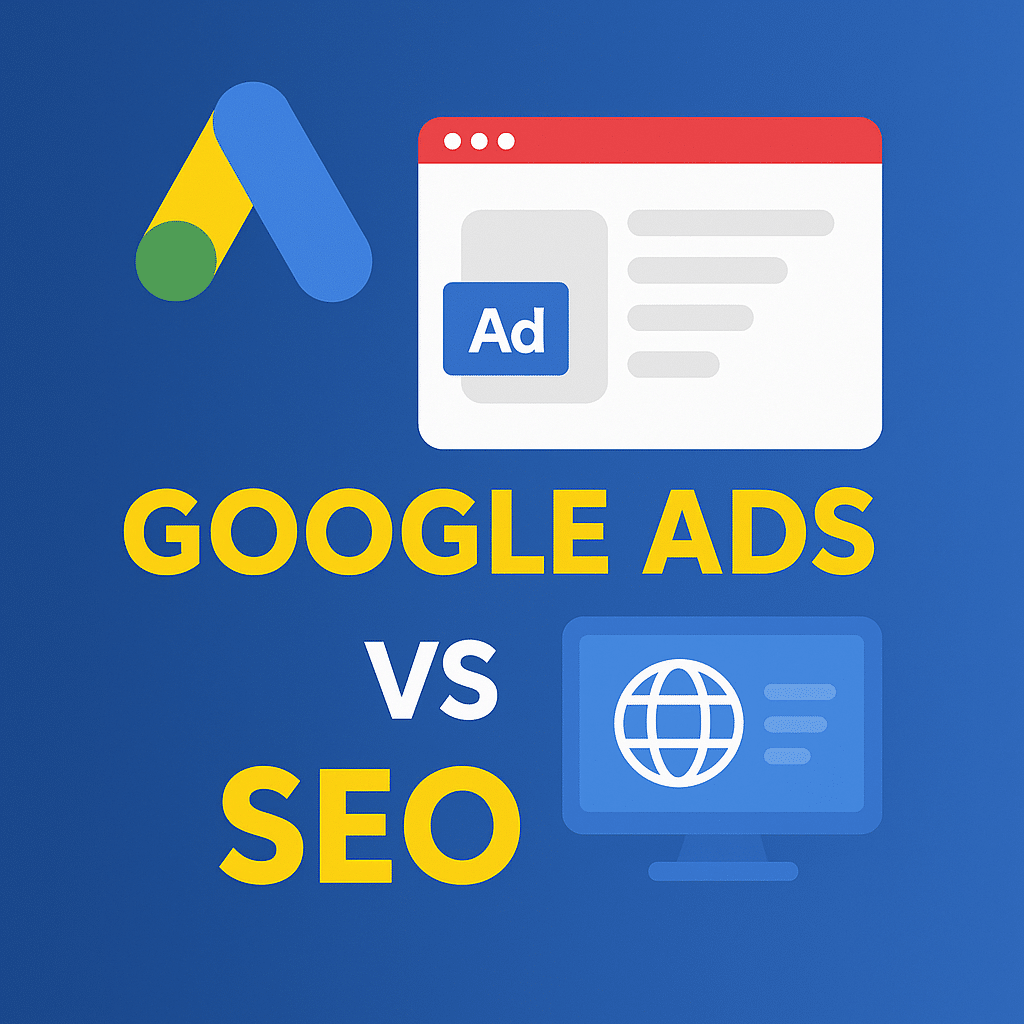
If you’re deciding between investing in SEO or Google Ads, the truth is simple: they solve different problems on different timelines. SEO builds a durable, compounding traffic engine; Google Ads buys precise attention right now. The best-performing programs combine both, using paid to accelerate learnings and demand capture while SEO compounds value over time.
At a Glance
- Use Google Ads when you need visibility or revenue fast: for launches, seasonal campaigns, or validating demand before committing to a longer-term strategy.
- Use SEO when you want compounding, sustainable growth: ideal when CPCs are high, buying cycles are long, or brand authority is a strategic goal rather than a quarterly target.
- Use both when budget allows: paid insights accelerate SEO strategy, and SEO improvements lower your cost per click through better Quality Scores.
- A typical starting split for a new site: 60% Ads / 40% SEO, inverting as organic traction grows and your cost per acquisition from search stabilises.
What each channel actually does
SEO (Search Engine Optimization)
Improves your site’s relevance, authority, and technical quality so you earn unpaid rankings and clicks from search engines. It takes time to build but can persist even when you slow down spend.
Google Ads (PPC)
You pay per click to appear in Google’s Search, Shopping, YouTube, Display, Gmail, and Discover. You can launch fast and target with precision, but traffic stops when your budget does
Key Differences Between Google Ads And SEO
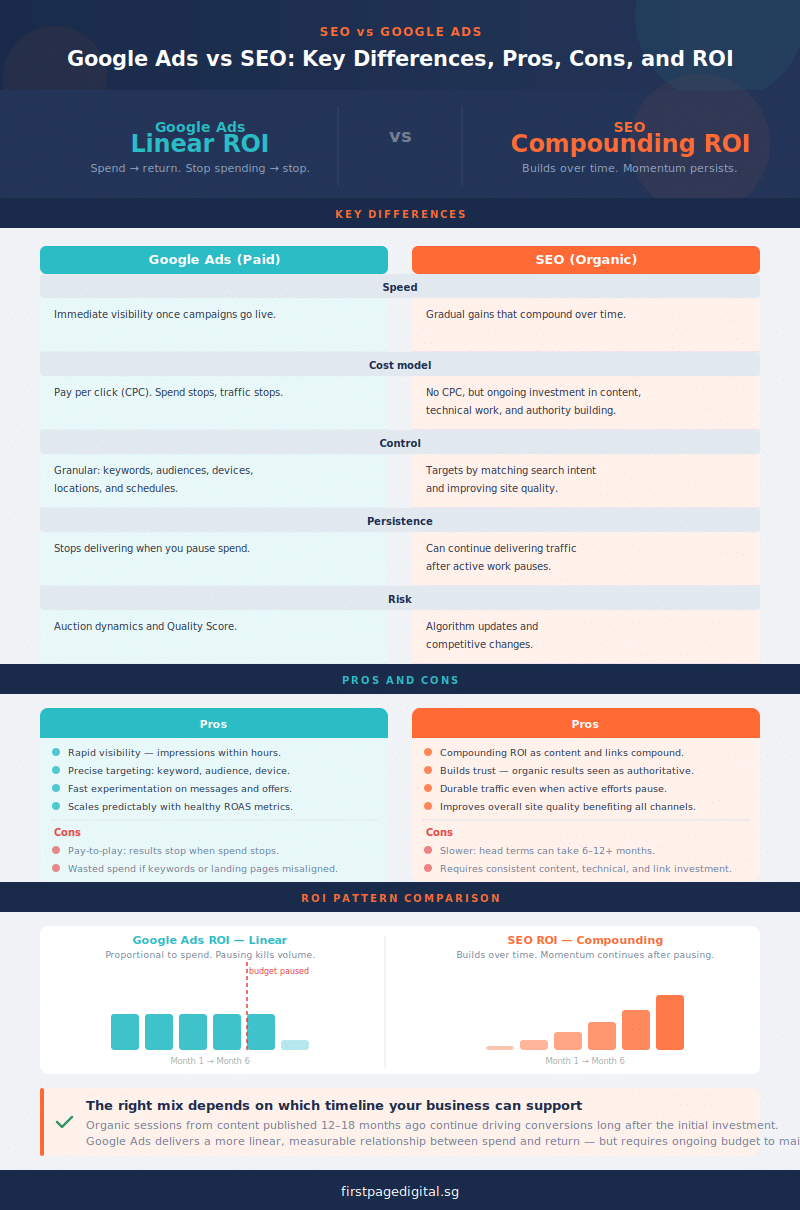
| Dimension | Google Ads (Paid Search) | SEO (Organic Search) |
|---|---|---|
| Speed | Immediate visibility once campaigns go live | Gradual gains that compound over time |
| Cost model | Pay per click (CPC); spend stops → traffic stops | No CPC, but requires ongoing investment in content, technical work, and authority |
| Control / targeting | Granular control of keywords, audiences, devices, locations, schedules | Targets via matching search intent and improving site quality |
| Persistence | Stops delivering when you pause spend | Can continue delivering traffic after active work pauses |
| Risk profile | Affected by auction dynamics and Quality Score | Affected by algorithm updates and competitive changes |
Pros And Cons Of Each Channel
| Platform | Pros | Cons |
|---|---|---|
| SEO | Compounding ROI as content and links continue to generate value over time. Builds trust and credibility since users perceive organic results as more authoritative. Delivers durable traffic even when active efforts pause. Improves overall site quality — including speed, structure, and user experience — which benefits other channels too. |
Slower to produce measurable results. Competing for head terms can take 6–12+ months. Requires consistent investment in content creation, technical upkeep, and link building. |
| Google Ads | Provides rapid visibility and measurable results within hours or days. Enables precise targeting by keyword, audience, device, location, and intent stage. Ideal for experimentation — allows quick testing of messages, offers, and landing pages. Scales predictably when cost-per-lead or return-on-ad-spend metrics remain healthy. |
Operates on a “pay-to-play” model where results stop as soon as spending stops. Risks wasted spend if keywords, negatives, and landing pages are poorly managed or misaligned with user intent. |
Cost, ROI, and timeline realities
| Parameter | Google Ads (Paid Search) | SEO (Organic Search) |
|---|---|---|
| Timelines | Drives impressions and conversions immediately once campaigns go live. | Needs months for meaningful ranking and traffic gains, especially in competitive niches. |
| Cost drivers | CPC varies widely by industry and intent; legal and medical niches often have higher CPCs. Validate local CPCs before budgeting (vendor estimates can vary). | Costs are people/time for content, technical fixes, tools, and authority development. No CPC, but requires ongoing investment. |
| ROI pattern | More linear and tied to spend plus optimization; pause spend and volume stops. | Compounding returns as content footprint and authority grow; momentum can continue even if you pause briefly. |
The compounding nature of SEO ROI is a pattern we see consistently across multi-touch attribution data from client campaigns. Organic sessions that began from content published twelve to eighteen months ago continue to drive conversions long after the initial investment in that content was made. Google Ads, by contrast, delivers a more linear and immediate relationship between spend and return, which makes it easier to measure in the short term but more dependent on ongoing budget to maintain. The right channel mix depends less on which delivers better ROI in isolation and more on which timeline your business can support.
When to Lead with Google Ads
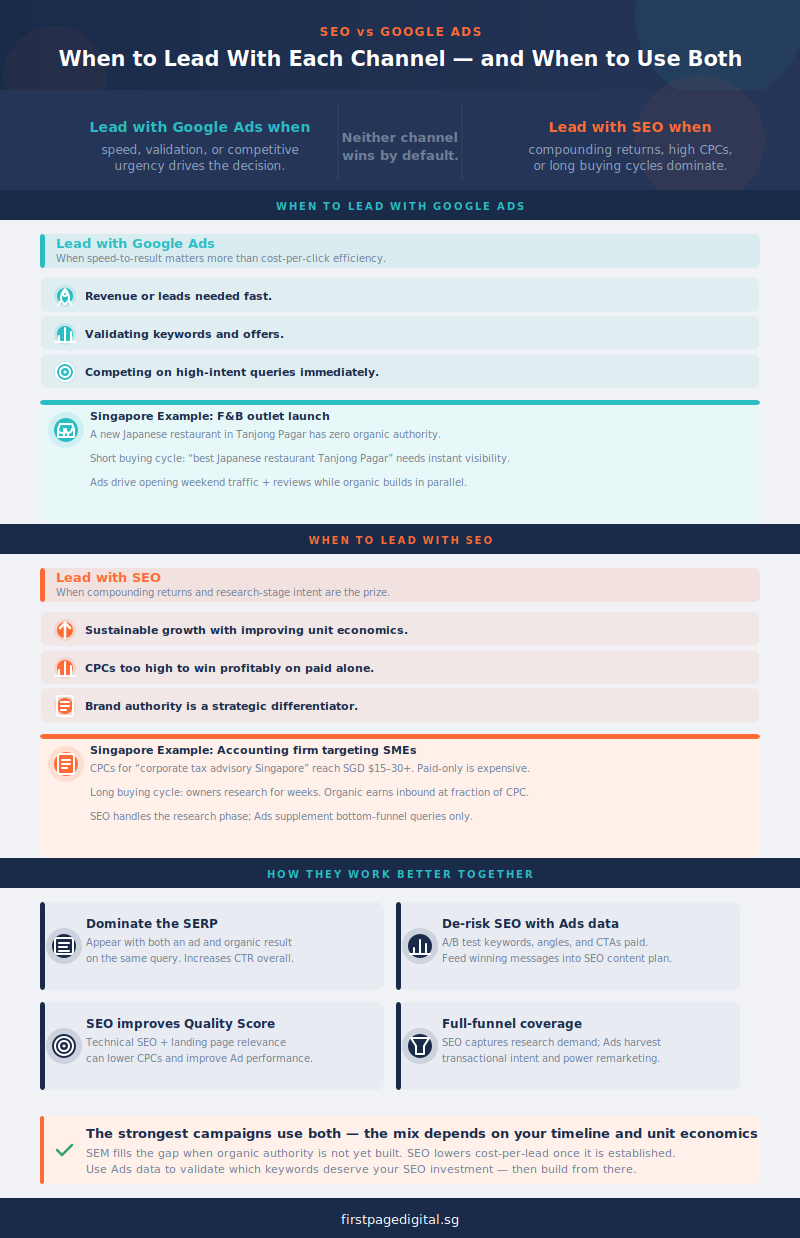
- You need revenue or leads fast (launches, seasonal spikes, cash‑flow goals).
- You want to validate keywords, offers, and landing pages before scaling.
- You must participate on competitive queries immediately.
For example, a Singapore F&B business opening a new outlet in a competitive neighbourhood would typically lead with Google Ads. The customer decision cycle is short. Someone searching “best Japanese restaurant Tanjong Pagar” or “dim sum near me” is ready to act. A new restaurant has no organic authority yet, and building it takes months the business does not have before its opening weekend. Google Ads gets the outlet in front of high-intent local searches immediately, generating early reviews and foot traffic while organic presence builds in parallel. Once the Google Business Profile gains traction and the site begins ranking for relevant local terms, paid spend can be scaled back selectively.
When to Lead with SEO
- You need sustainable growth with improving unit economics over time.
- CPCs are too high to win profitably on paid alone.
- Brand authority and trust are strategic differentiators.
- You seek to capture top/mid‑funnel informational intent
For example, a Singapore accounting or professional services firm advising SMEs on corporate tax would typically lead with SEO. The buying cycle is long. A business owner researching corporate tax advisors may spend weeks reading comparison guides, industry commentary, and firm profiles before making contact. CPCs for terms like “corporate tax advisory Singapore” or “GST registration Singapore” can reach SGD $15 to $30 or more, making a paid-only strategy expensive relative to the eventual contract value. Organic rankings for these research-stage queries, earned through quality content and domain authority, generate consistent inbound enquiries at a fraction of the per-lead cost once established. A modest Google Ads presence can supplement for bottom-funnel queries while SEO handles the research phase.
How they work better together
- Dominate the SERP: Appear with both an ad and an organic result on the same high‑value queries to increase overall CTR and conversions.
- Use Ads to de‑risk SEO bets: Rapidly A/B test keywords, angles, and CTAs via paid. Feed winning terms and messages into your SEO content plan.
- Feed Ads with SEO improvements: Technical SEO and better landing relevance can improve Quality Score and lower CPCs.
- Full‑funnel coverage: SEO captures research‑stage demand; Ads harvest transactional intent and power remarketing to nudge users back to purchase
Metrics that matter
| Platform | Key Metrics |
|---|---|
| Google Ads | Cost per conversion, ROAS, conversion rate, CTR, Quality Score, search impression share, customer LTV. |
| SEO | Non-brand organic sessions, rankings for target terms, organic conversion rate and assisted conversions, share of clicks on target SERPs, content efficiency (traffic or leads per page). |
Common Myths
Running Google Ads boosts organic rankings
There is no direct SEO boost from paying for ads.
Google Ads and organic search are separate systems with different datasets and scoring methods. Buying clicks does not increase your Domain Authority, keyword rankings, or crawl priority.
Where they do work together is operationally: ads can validate messaging, headlines, and offers quickly, which you can then apply to title tags and meta descriptions to lift organic CTR. Ads can also fill gaps while SEO ramps up, and they generate branded search demand that your organic listings can capture later.
In short, they complement each other in workflow and insight sharing, not in the ranking algorithm.
SEO is free
SEO does not charge per click, but it is not costless.
Results come from steady investment in content creation, editing, and updates; technical work that keeps pages fast, crawlable, and indexable; and authority building through PR, partnerships, and genuinely useful resources that earn mentions. You will likely pay for tools, analytics, and occasional developer time.
The upside is that SEO returns can compound over time. A well built guide that ranks can keep generating traffic and leads long after the initial work, but it still needs periodic maintenance to stay accurate and competitive.
What This Looks Like in Singapore
Singapore’s market has specific characteristics that shape how SEO and Google Ads should be weighted relative to the general frameworks above. Understanding these helps Singapore businesses calibrate the strategic logic for their own situation.
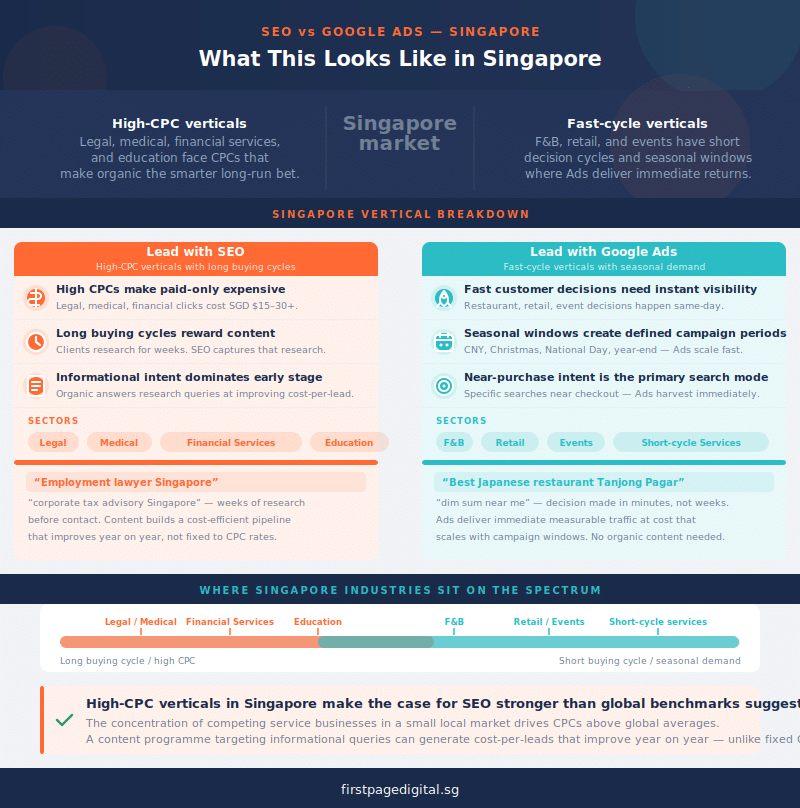
In high-CPC verticals (legal, medical, financial services, and education), Google Ads costs in Singapore are substantial. A click from a prospective client searching “employment lawyer Singapore” or “aesthetic clinic Orchard Road” can cost significantly more than in most other markets, reflecting the concentration of high-value service businesses competing for a limited local search audience. For businesses in these categories, where buying cycles are also longer and decisions involve significant research before contact, organic content that answers research-stage queries builds a more cost-efficient pipeline over time. A well-structured content programme targeting informational queries in these verticals can generate consistent inbound interest at a cost-per-lead that improves year on year, rather than remaining fixed to CPC rates.
In contrast, Singapore’s F&B, retail, and event sectors are naturally suited to Google Ads as the primary channel. Customer decisions in these categories happen fast, seasonal demand creates specific campaign windows (Chinese New Year, Christmas, National Day long weekend, year-end events), and the short-cycle nature of the purchase means there is limited value in building organic research-stage content. Google Ads targeting users searching for specific restaurant types, products, or event venues close to purchase delivers immediate, measurable traffic at a cost that scales with campaign periods.
Singapore’s relatively compact geographic market is also worth noting. For many service categories, the pool of ranking competitors is smaller than in larger markets. A well-executed SEO programme for a Singapore-based business may reach competitive organic positions faster than an equivalent effort in a market like the United States or United Kingdom. For Singapore SMEs with the resources to invest consistently, this makes SEO’s unit economics particularly compelling over a twelve to twenty-four month horizon.
A simple decision framework
- If you need conversions this quarter and can afford ongoing media: prioritize Google Ads, invest in CRO, and begin foundational SEO (technical fixes, core pages) immediately.
- If your goal is durable growth with improving CAC: prioritize SEO content and technical work, and use Google Ads tactically for bottom‑funnel capture and testing.
- If budget allows: run both. Use paid insights to guide SEO (keywords, angles, SERPs worth winning). Use SEO improvements to lift Quality Score and reduce CPC. Measure holistically with multi‑touch attribution (sources: HawkSEM, BrightEdge, Google, CFOACC).
Recommended starter split (to be tailored after CPC and baseline audit)
| Scenario | Initial Split (Months 1–4) | After Ramp / Notes |
|---|---|---|
| New or low-authority site | 60% Ads / 40% SEO | Invert as organic traction grows to 40% Ads / 60% SEO after ~3–4 months. Use Ads to capture demand while content and authority build. |
| Established site with content depth | 30–40% Ads / 60–70% SEO | Keep paid focused on bottom-funnel, brand protection, and remarketing. Scale SEO for compounding returns. |
| High-CPC verticals | Start SEO-heavy; keep a paid learning budget | Bias budget to SEO sooner to avoid CPC drag, but retain paid tests to validate messaging and harvest profitable intent. Validate with local CPCs. |
Frequently Asked Questions
Is Google Ads better than SEO?
Neither is categorically better. Google Ads wins on speed and precision: you can appear on competitive queries from day one and target users by keyword, location, device, and audience. SEO wins on long-term compounding value and cost efficiency. Traffic continues after active investment slows, and there is no cost per click once rankings are earned. The strongest digital marketing programmes use both and shift the budget split as organic authority grows and paid data informs content strategy.
What is the difference between SEO and Google Ads?
SEO earns unpaid rankings by improving a site’s content quality, technical infrastructure, and external authority through backlinks and signals. Google Ads pays for placement in Google’s search results on a cost-per-click basis. Both target search engines, but they operate on entirely separate systems. SEO builds slowly and persists; Google Ads delivers immediately but stops when budget does. They have different cost structures, timelines, risk profiles, and measurement frameworks, and are most effective when used together rather than treated as alternatives.
When should I use SEO instead of Google Ads?
Prioritise SEO when CPCs in your category are too high to win profitably through paid search alone, when your goal is sustainable organic growth with improving cost-per-acquisition over time, when brand authority and credibility are strategic priorities for your sales process, or when buying cycles are long and prospects spend significant time researching before making contact. SEO is also the right primary channel when you need to capture informational or research-stage intent that paid ads do not serve as efficiently.
Can you run SEO and Google Ads at the same time?
Yes, and most high-performing programmes do. Running both simultaneously creates a reinforcing loop: Google Ads generates immediate traffic and conversion data that reveals which keywords and messages actually convert, informing which organic content to prioritise. SEO improvements (better page relevance, faster load times, cleaner structure) improve Quality Scores and can reduce cost per click across active campaigns. The two channels are complementary by design, not competing priorities requiring a binary choice between them.
Choosing the Right Mix for Your Business
Choosing between SEO and Google Ads is not an either-or decision. SEO builds a durable engine that compounds, while Google Ads delivers precise attention right now. Used together, they shorten the learning curve, protect high-value queries, and turn insights from paid tests into organic wins. In practice, start by funding bottom-funnel demand capture, then scale SEO to own the conversation across the full journey. Adjust the split as your cost per acquisition stabilises and your organic footprint grows.
If you want a plan tailored to your market, budget, and timelines, we can help. Explore our Google Ads management to capture intent with control and clarity, and our SEO services to build sustainable, compounding organic growth.