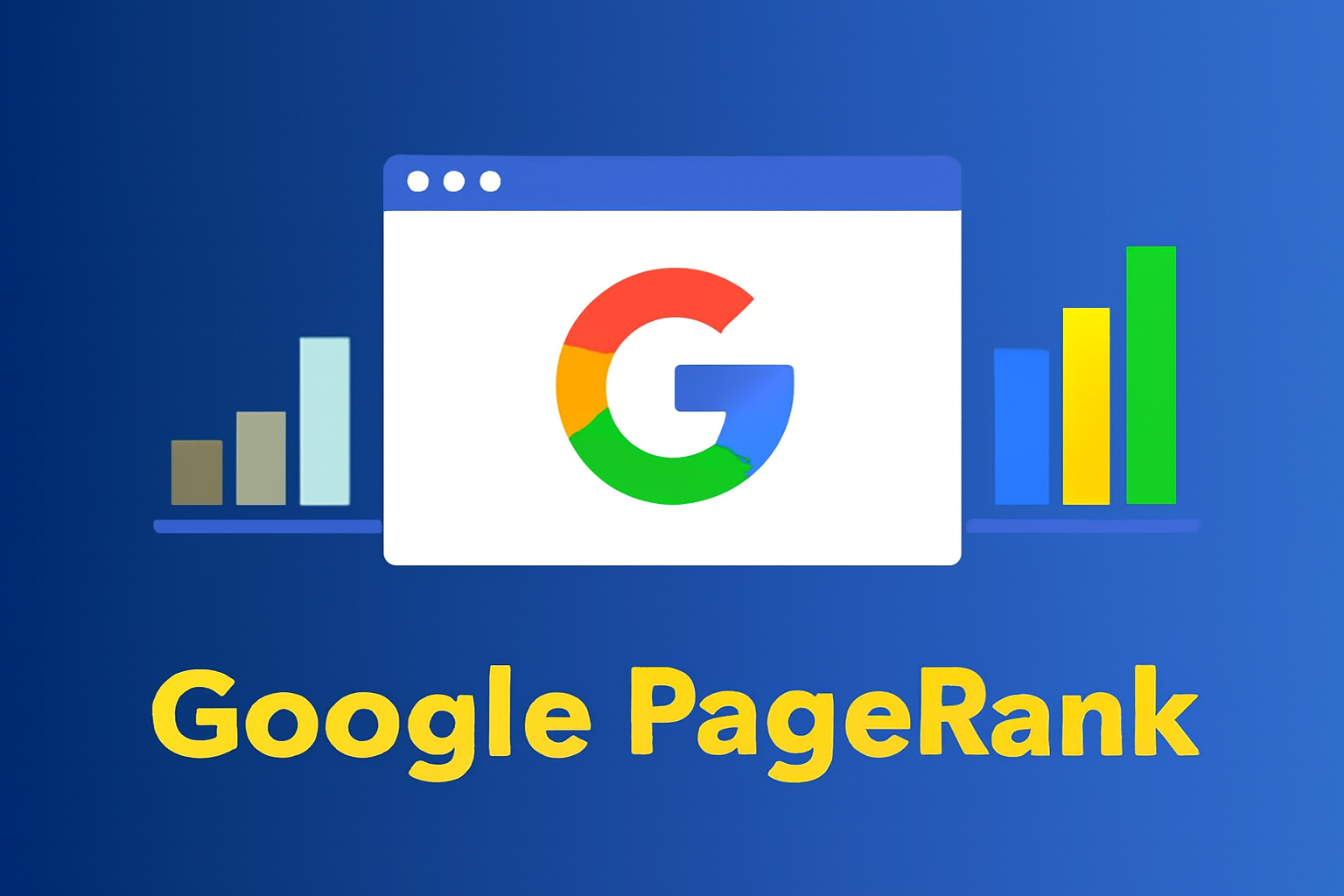
Google PageRank is a pivotal concept in the history of search engine optimization (SEO) and played a key role in how Google revolutionized search results. Introduced in 1996 by Google’s co-founder Larry Page, PageRank was the first algorithm to rank web pages based on the number and quality of links pointing to them. Unlike other search engines of the time that relied heavily on keyword matching, Google’s innovation was to treat each hyperlink as a “vote” for the page it linked to. The more authoritative the page giving the vote, the more valuable it was for the page receiving the link. This algorithm laid the foundation for the search engine rankings we are familiar with today.
PageRank’s core idea is simple but powerful: a webpage’s importance is determined by how many credible and relevant pages link to it. In Google’s early days, PageRank was a revolutionary approach that led to faster, more accurate search results. Websites with high-quality, relevant backlinks tended to rank higher, setting the stage for link-building to become one of the most important SEO strategies.
Importance of PageRank in SEO
While PageRank is no longer as dominant a factor in Google’s ranking algorithm as it once was, it still plays an important role in how Google evaluates the importance of a page. Understanding how PageRank works provides insight into how Google’s search engine evaluates and ranks web pages, making it an essential concept for anyone looking to improve their website’s SEO. In this article, we will explore how PageRank works, its evolution over time, and its continuing influence on modern SEO.
How PageRank Works
The Concept of Links as Votes
Google PageRank is based on the idea that a link from one page to another acts as a “vote” of confidence. This means that when one page links to another, it is essentially casting a vote in favor of the linked page. The more links a page receives from other pages, the more important it is considered by Google.
However, not all votes are equal. Links from high-authority pages, those with established trust and credibility, are more valuable than those from lower-authority websites. For example, a link from a trusted news outlet or a respected blog has much more influence than a link from a personal or low-quality site. This is why the quality of links is just as important, if not more so, than the quantity of links.
The PageRank Algorithm
PageRank works by assigning a score to a webpage based on the number of incoming links it has. The more links pointing to a page, the higher its potential score. However, the algorithm also evaluates the quality of the linking pages. A link from a high-authority page contributes more “link juice” to the linked page, which helps improve its position in search rankings.
“Link juice” refers to the value passed from one page to another through a link. When one page links to another, it shares a portion of its own PageRank score (or link juice). The more authoritative the linking page, the more link juice it transfers. This is why acquiring high-quality backlinks is crucial for improving your SEO.
The PageRank Formula Explained
The original PageRank formula calculates a page’s rank by considering the PageRank of all pages that link to it. The basic formula is as follows:
PR(A) = (1 – d) / N + d * Σ (PR(Ti) / C(Ti))
Here’s what each component of the formula means:
PR(A): This is the PageRank score of page A, which is what the algorithm is trying to calculate. Page A is the page being evaluated.
- d: The damping factor, usually set at 0.85. This value prevents the algorithm from distributing PageRank endlessly and helps simulate the likelihood that some link juice will “decay” as it moves through the web.
- N: The total number of pages being considered in the calculation. It’s used to normalize the PageRank distribution across all pages.
- PR(Ti): The PageRank score of page Ti, which is the page that links to page A. The higher the PageRank of Ti, the more valuable its link.
- C(Ti): The number of outbound links on page Ti. If Ti has many links, the PageRank it passes to each link is diluted. For instance, if Ti has ten outbound links, each link receives one-tenth of the PageRank that would be passed if there were only one outbound link.
This formula is applied iteratively across all pages to calculate their ranks. As it is processed, each page’s rank adjusts based on the links it receives and the authority of the pages linking to it.
Using PageRank’s Formula to Improve Website SEO
- Focus on Acquiring High-Quality Backlinks
Since PageRank is influenced by the number and quality of links pointing to a page, securing backlinks from authoritative and trusted websites is crucial. The PR(Ti) term in the formula represents the PageRank of the linking page. A link from a high-authority site (with a high PR) will pass more link juice to your site, boosting its own PageRank. For example, getting a link from a respected news site or a popular blog in your industry will have a greater impact than obtaining links from less credible sources.
- Prioritize Internal Linking
Internal links also contribute to a website’s PageRank distribution. By creating a logical internal linking structure, you can guide Google’s crawlers to important pages on your site. This boosts their PageRank and helps those pages rank higher in search results. For example, the C(Ti) term in the formula shows that the number of outbound links on a page affects the link juice passed. Therefore, linking to your most important pages internally ensures they benefit from the “vote” of all high-authority pages on your site.
- Minimize Outbound Links
The C(Ti) component of the formula represents the number of outbound links on the linking page. If a page has too many outbound links, the PageRank it passes to each link is diluted. To maximize the link juice passed to your important pages, keep outbound links to a minimum. If you must include external links, make sure they are relevant and from high-authority sources.
- Dampen the Effect of Low-Value Links
While acquiring as many links as possible can seem like a strategy to increase PageRank, the formula’s damping factor (d) ensures that link juice doesn’t flow endlessly. This means that links from irrelevant or low-authority pages will have less impact. Focus on obtaining links from pages within your niche or industry for maximum effectiveness, while filtering out lower-quality links.
Evolution of PageRank
Initial Impact and Dominance
When Google first introduced PageRank in 1996, it transformed how websites were ranked on search engines. Prior to PageRank, most search engines relied heavily on keyword matching to determine rankings. Google’s innovation was to evaluate a page’s importance based on the number and quality of links pointing to it, rather than just its content. This approach allowed Google to deliver more relevant, authoritative search results.
PageRank quickly became the dominant ranking factor for Google’s search algorithm. Websites with high-quality backlinks ranked higher, and PageRank became the foundation of Google’s search engine. For many years, it was considered the primary measure of a site’s authority and relevance on the web. SEO professionals focused heavily on building backlinks as the most effective way to improve rankings.
Integration with Other Google Ranking Algorithms
As the web grew and the landscape of SEO evolved, Google introduced additional algorithms to improve the quality and relevance of its search results. While PageRank remained important, it no longer stood alone.
Over time, Google integrated PageRank with other algorithms like Panda, Penguin, Hummingbird, and RankBrain. These algorithms addressed issues that PageRank alone could not resolve. For example, Panda was introduced to penalize websites with thin or low-quality content, while Penguin targeted sites that used spammy link-building practices to manipulate their PageRank scores. Hummingbird focused on understanding search intent and improving the accuracy of results, and RankBrain, a machine learning algorithm, helped Google better understand complex queries.
Together, these algorithms refined Google’s ability to rank pages not only based on backlinks but also based on the quality of content, user experience, and relevance to search queries. While PageRank still played a role in ranking, it became just one piece of a much larger, more sophisticated ranking system.
Publicly Visible PageRank and Its Removal
For many years, Google made PageRank publicly visible through a toolbar that showed users the PageRank score of any webpage. This visibility allowed website owners, SEO professionals, and users to gauge the authority of a page and make decisions about link-building or improving site quality.
However, in 2016, Google decided to stop updating the public PageRank data and eventually removed the PageRank toolbar. The decision to remove the public display of PageRank scores was driven by several factors. Google recognized that website owners and SEO professionals had begun to misuse PageRank data to manipulate rankings. The public display of scores led to spammy link-building practices, such as link exchanges and buying links, all aimed at boosting a site’s PageRank.
Google’s Reasons for Removing the Public Visibility of PageRank Scores
Google’s primary reason for removing the public display of PageRank was to combat manipulation. When PageRank was visible, many websites focused solely on increasing their scores rather than creating valuable content or building natural, high-quality backlinks. This led to a surge in low-quality link-building practices that violated Google’s guidelines.
Another reason for removing public PageRank was that the algorithm had evolved beyond being the sole determinant of search rankings. While PageRank remains an important factor, Google wanted to shift focus to a more holistic approach to ranking that takes into account content quality, user experience, and relevance, among other factors.
By removing public PageRank visibility, Google aimed to reduce the emphasis on link manipulation and encourage a more balanced approach to SEO, where all aspects of a website’s performance are considered.
The Decline of PageRank’s Visibility
Shift in SEO Focus
As SEO practices have evolved, the focus has shifted beyond PageRank’s visibility. In the early days of Google’s algorithm, PageRank played a central role in determining a page’s relevance and authority. SEO strategies were largely centered around acquiring backlinks to boost PageRank scores and improve rankings. However, over time, search engine optimization has become more nuanced.
Modern SEO practices now consider a broader range of factors, such as user experience (UX), content quality, and mobile optimization. Google has placed a greater emphasis on providing users with the best possible search results, not only by analyzing backlinks but also by evaluating how well a page serves its audience. Factors like page speed, mobile-friendliness, and how engaging the content is have become increasingly important in ranking algorithms. With these new priorities, PageRank has become less visible and less influential in day-to-day SEO practices.
The rise of these other ranking factors signals a shift away from focusing solely on backlinks and PageRank as the primary SEO strategy. Instead, SEO professionals now need to create high-quality, engaging content, ensure an excellent user experience, and optimize for mobile devices, among other things, to rank well on Google.
PageRank Still Plays a Role Internally
Despite its public removal, PageRank remains an important part of Google’s internal ranking processes. While the public display of PageRank data is no longer available, Google continues to use it behind the scenes to help evaluate the quality and relevance of web pages. In particular, PageRank still contributes to understanding the value of links. The basic principle that pages with high-quality backlinks are more authoritative continues to hold true.
PageRank helps Google’s algorithm assess how links pass value from one page to another. It ensures that Google can distinguish between authoritative pages and less valuable ones, even if it no longer displays the PageRank score to the public. This internal use of PageRank contributes to the overall ranking system, but it is just one factor among many that Google now uses to determine page rankings.
While SEO professionals no longer focus solely on improving PageRank scores, understanding its underlying principles remains useful. Link-building strategies still rely on acquiring high-quality backlinks that pass value and authority, helping to boost rankings as part of a larger SEO strategy.
In summary, PageRank’s visibility has declined, but it remains an integral component of Google’s internal ranking system. Modern SEO practices have evolved to include many additional ranking factors, but PageRank still plays a key role in evaluating the authority and value of links. Understanding how PageRank works continues to be important for anyone looking to improve their website’s SEO.
The Importance of Backlinks in Modern SEO
Backlinks as a Signal of Authority
Backlinks continue to be one of the most important factors in modern SEO. Despite the evolution of Google’s ranking algorithms, high-quality backlinks remain a key signal of a website’s authority. When a page receives links from other reputable sites, it essentially inherits some of their authority. This process, known as “link juice,” helps boost the linked page’s credibility and search ranking.
Backlinks are also a strong indicator of trustworthiness. Pages that are frequently linked to by authoritative sources are considered more reliable and trustworthy by Google. For instance, a link from a well-known industry leader or respected news outlet is a powerful vote of confidence in the value and quality of the content. This trustworthiness is essential in maintaining high rankings and driving organic traffic.
Link Building Strategies
To improve your website’s SEO through backlinks, it’s essential to focus on acquiring high-quality links from relevant, authoritative sources. Some of the most effective link-building strategies include:
- Guest Posts: Writing guest articles for reputable websites in your industry can help you secure valuable backlinks. This strategy not only improves your PageRank but also positions you as an authority in your field.
- Outreach: Proactively reaching out to relevant websites or influencers to request backlinks is another powerful method. This could involve pitching content ideas, offering guest posts, or building relationships that lead to natural backlinks.
- Content Marketing: Creating high-quality, shareable content—such as in-depth guides, infographics, and research studies—can naturally attract backlinks. When others find your content valuable, they are more likely to link to it, boosting your site’s SEO.
- Building Relationships: Networking with other industry professionals and creating long-term relationships can result in organic backlinks. These relationships foster trust, making it easier to gain valuable links over time.
Focusing on organic link-building methods ensures that your backlinks are relevant and earned, rather than artificially obtained through tactics like link exchanges or buying links. This helps maintain the integrity of your SEO strategy and ensures sustainable, long-term results.
The Role of Link Quality Over Quantity
While acquiring backlinks is essential, Google’s algorithm places a far greater value on the quality of those links than the sheer number. In the past, it was common to see websites focus on acquiring as many backlinks as possible, regardless of the source. Today, Google values relevance and authority over volume. A single link from a well-established website can carry far more weight than multiple links from low-quality or irrelevant sites.
Focusing on quality ensures that the links you acquire contribute to your website’s overall authority. Google evaluates links based on the authority of the linking page, the context of the link, and whether the linked content is valuable to users. High-quality links provide more “link juice,” which directly contributes to improving your page’s ranking.
The Dangers of Low-Quality Links and Black-Hat SEO Practices
While the temptation to build as many backlinks as possible can be strong, relying on low-quality or spammy links can harm your SEO efforts. Google’s algorithms are designed to detect and penalize websites that engage in manipulative link-building practices, such as buying links or participating in link farms. These tactics are known as black-hat SEO practices and can result in penalties that lower your rankings or even remove your site from Google’s index entirely.
Low-quality links, such as those from irrelevant or untrustworthy sites, can also negatively impact your site’s authority. Google has become increasingly adept at identifying and disregarding these links, meaning they won’t provide any significant value to your site. In the worst case, they can even trigger manual penalties that can be difficult to recover from.
To avoid these risks, it’s crucial to focus on acquiring high-quality, relevant backlinks. A few strong, authoritative links are far more beneficial than a large number of low-quality ones.
PageRank vs Other Ranking Factors
Comparison to Other Google Ranking Factors
While PageRank remains an important element in Google’s ranking algorithm, it is just one of many factors that influence how pages are ranked. Over time, Google has integrated additional ranking signals to provide a more comprehensive and accurate assessment of a page’s relevance. Among these, content relevance and quality have become central to ranking decisions. Google now prioritizes websites that deliver high-quality, informative, and relevant content to users. The better the content answers search queries and meets user intent, the higher it is likely to rank.
Additionally, user engagement metrics, such as click-through rate (CTR) and bounce rate, have gained more importance. A high CTR signals that a page is relevant and appealing to users, while a low bounce rate suggests that users are finding value in the content and engaging with it. These factors play a significant role in determining how well a page performs in search results, alongside traditional metrics like backlinks and PageRank.
Role of On-Page SEO
On-page SEO has always been a fundamental factor in rankings, and it remains critical even in today’s complex SEO landscape. While backlinks and PageRank provide authority, on-page SEO focuses on optimizing the content and structure of the page itself to make it as accessible and relevant to both users and search engines as possible.
Key elements of on-page SEO include keyword optimization, where the target keywords are strategically placed within titles, headers, and throughout the content. Additionally, meta tags, such as title tags and meta descriptions, help Google understand the page’s focus and encourage users to click through. Headers not only structure content for readability but also signal important topics to search engines. Effective internal linking also plays a crucial role in helping Google crawl and index pages, while distributing link equity throughout the site.
Technical SEO Considerations
As SEO has evolved, technical SEO has become an increasingly important factor in rankings. Google’s algorithms assess a website’s technical health, and poor performance in any of these areas can negatively impact rankings, regardless of a site’s PageRank.
Mobile optimization is now a key ranking factor, especially with Google’s mobile-first indexing. Websites that are not mobile-friendly are at a disadvantage in the rankings. Site speed is another critical factor, as Google aims to provide the best possible user experience. Websites that load slowly are penalized because they offer a poor experience to users, which directly impacts engagement and conversion rates.
Security also plays a role in ranking, with HTTPS now a standard for all websites. Google prioritizes secure sites to protect user data. Finally, the implementation of structured data (such as schema markup) helps Google better understand the content of a page, which can lead to enhanced search results, such as rich snippets.
Myths and Misunderstandings About PageRank
PageRank Is the Only SEO Factor
One of the most common myths about SEO is that PageRank alone determines a website’s success in search rankings. While PageRank was once a major ranking factor, it is no longer the only factor that matters. Modern SEO has evolved to include a wide range of ranking signals that Google considers when determining the relevance and authority of a page. Factors like content quality, user engagement, mobile optimization, site speed, and technical SEO all contribute to how a website ranks.
Focusing solely on PageRank overlooks these other essential elements. Even with a high PageRank, a website that has poor content, a slow load time, or a poor user experience is unlikely to rank well. SEO today is about taking a holistic approach that balances backlinks with other ranking factors to deliver the best possible experience for users and search engines alike.
More Backlinks Always Equal Better Rankings
Another common misconception is that more backlinks always lead to better rankings. While backlinks are a critical ranking factor, the quality of those links is far more important than the quantity. In the early days of SEO, websites could achieve high rankings simply by accumulating a large number of links, regardless of the quality of those links. However, Google’s algorithms have become much more sophisticated and now prioritize the relevance and authority of the websites linking to your content.
A single backlink from a highly authoritative and relevant site can be far more valuable than hundreds of low-quality links from irrelevant or spammy sites. Google has refined its algorithms to detect and devalue low-quality links, so focusing on building a few high-quality, relevant backlinks is far more effective than chasing large quantities of links. In short, when it comes to backlinks, quality always outweighs quantity.
PageRank Can Be Easily Manipulated
Many SEO practitioners mistakenly believe they can manipulate PageRank through aggressive or spammy link-building tactics, such as buying links or participating in link schemes. While these tactics may provide short-term gains, they can backfire in the long run. Google’s algorithms are designed to detect unnatural link-building practices, and sites caught engaging in manipulative tactics risk being penalized or even removed from search results.
Instead of trying to artificially inflate PageRank through spammy methods, the best approach is to focus on building natural, organic links by creating high-quality, shareable content and fostering genuine relationships with other websites and influencers in your industry. Google rewards websites that earn their backlinks through valuable, relevant content, not those that attempt to game the system.
The Lasting Impact of PageRank on SEO
Although PageRank is no longer publicly visible, its core concepts continue to influence modern SEO practices. PageRank was one of the original algorithms that helped shape how search engines evaluate websites. The fundamental idea behind PageRank (the value of backlinks) remains crucial in today’s SEO landscape. While Google’s ranking system has grown more complex with the introduction of additional factors, the influence of PageRank can still be seen in how Google assesses the authority and trustworthiness of websites.
The idea that links act as a vote of confidence for a page is still central to SEO. Even with the changes to Google’s algorithms, backlinks continue to play a significant role in determining a website’s ranking. Understanding the impact of PageRank helps SEO professionals focus on the importance of high-quality backlinks and how they contribute to improving search visibility.
The Ongoing Role of Link Building
Link building remains a vital part of SEO strategies. Despite the evolution of Google’s ranking systems, acquiring high-quality backlinks is still one of the most effective ways to enhance a website’s authority and rankings. Strong link-building efforts not only improve PageRank but also help boost other important ranking factors such as content relevance, user engagement, and overall site credibility. Building natural, high-quality links continues to provide long-term results in search rankings.
At First Page Digital, we have a team of experienced SEO professionals who have been in the industry for many years. Our experts stay ahead of the latest SEO trends and can help guide you through the complexities of PageRank, link building, and other off-page SEO activities. If you are seeking advice or want to exchange ideas with our professionals, we are here to assist.
Consult with our SEO experts and learn more about PageRank and link-building strategies:
By understanding the ongoing role of link building and PageRank, you can continue to improve your website’s SEO and achieve long-term success.