Ahrefs Evolve 2024 Day 1 brought together some of the sharpest minds in SEO to dissect the challenges and opportunities shaping our industry right now, especially as AI SEO rapidly changes the rules of the game.
Sitting in the room, I found the focus was refreshingly practical: from the latest strategies for content optimisation and brand building to candid takes on what’s actually working (and what’s getting penalised) in Google’s evolving landscape.
This article recaps the standout tips from leaders like Nick Ranger, Lily Ray, Andy Chadwick, Sam Oh, Amanda King, Bernard Wong, and Cyrus Shepard, and breaks down how you can apply their insights to keep your site visible, valuable, and future-proofed as search keeps shifting.
Whether you’re battling information overload or looking for smart ways to adapt your SEO playbook for the age of AI, you’ll find a roadmap here for staying competitive.
How We Became the Most Popular YouTube Channel in SEO
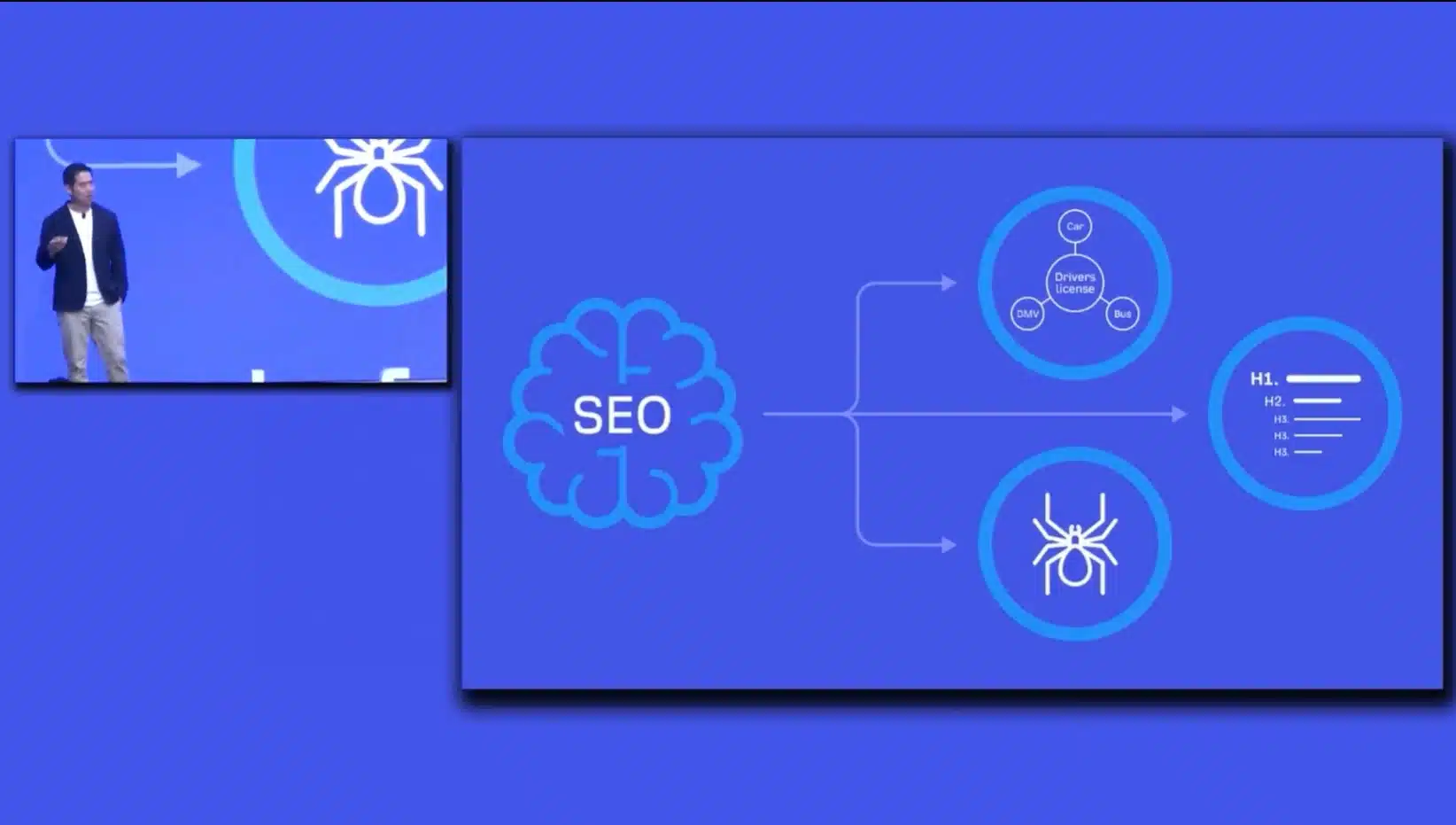
Sam Oh broke down the realities of growing a YouTube channel, grounding it in a four-stage framework that felt refreshingly logical.
He emphasised that starting with an “SEO brain” gives marketers an edge—structuring content around search intent, researching overlapping Google and YouTube keywords, and optimising titles and descriptions for discoverability.
What stood out was his candour about the limits of search-driven growth and the need to shift toward interest-based content and proven video formats to keep expanding your audience once the basics are nailed.
I appreciated Sam’s practical advice around balancing business goals with creative risk. His examples made it clear that a mix of foundational tutorials, shorter repurposed content, and experimental formats is key for both retention and reach.
More importantly, he stressed continuous iteration: learning from analytics, adapting based on feedback, and recognising when to guide new viewers toward your core content.
For anyone managing a brand’s video presence, this is a sustainable roadmap for building an engaged audience.
How to apply this:
- Start with video SEO: research topics that can rank on both Google and YouTube.
- Optimise titles, descriptions, and time codes with relevant keywords and subtopics.
- Analyse retention charts and tweak videos for better engagement at the start, middle, and end.
- Develop in-depth, evergreen “core content” that addresses high-volume queries and naturally demonstrates your product or expertise.
- Break longer courses into shorter clips to increase total views and entry points.
- Build a running list of interest-driven video ideas for a variety of audience types.
- Draw inspiration from successful YouTubers and your own analytics to spot winning formats.
- Continuously publish, experiment, and adapt content based on feedback and results.
- Direct viewers from broad or trending topics to your core, business-focused content.
- Lean into storytelling and personality to foster real connection as the platform—and competition—evolves.
Google Updates, Discover, and Recommendations
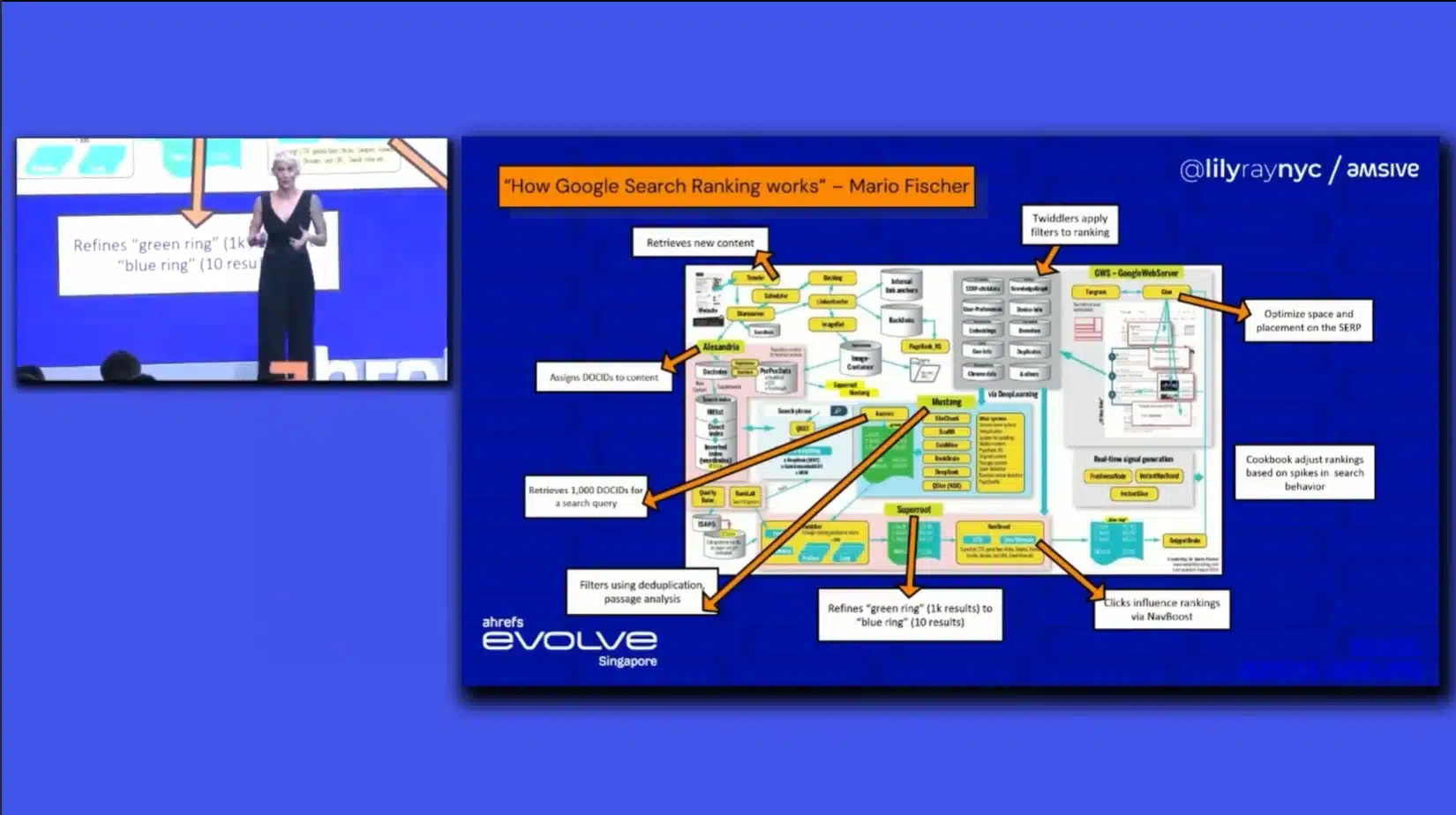
Lily Ray’s talk at Ahrefs Evolve 2024 was a timely deep dive into how Google’s search landscape is shifting this year.
She didn’t just recap the recent leaks and DOJ revelations; she mapped out how these insights are shaping our collective understanding of the ranking ecosystem, from systems like NavBoost and Alexandria to the rise of new search features.
For those of us managing diverse portfolios, her breakdown of how AI overviews, forum dominance, and ever-evolving core and spam updates are affecting various site types—especially informational and affiliate—felt particularly relevant.
While the growing visibility of forums like Reddit has been hard to miss, Lily’s data-driven perspective clarified the scale and speed of that change.
She then demonstrated, through a series of case studies, that recovery is possible—even in volatile times—when you focus on technical clean-up, stronger E-E-A-T signals, and a smarter approach to content and internal linking.
She also shared actionable advice for navigating Google Discover and optimizing for new SERP features, without giving in to the noise or chasing every new trend blindly.
How to apply this:
- Monitor AI overviews with tools like Ahrefs or ZipTie.
- Check your favicon size for proper AI overview display.
- Prune thin, duplicate, or outdated content.
- Audit titles/H1s for repetitive SEO patterns.
- Join forum discussions with real expertise.
- Review your best-performing Discover content for patterns.
- Optimise open graph and headline style for Discover.
- Separate NSFW or controversial material if aiming for Discover.
- Build up EEAT through bios and trust signals.
- Fix technical SEO issues and improve structured data.
Information Gain Factor or Fiction
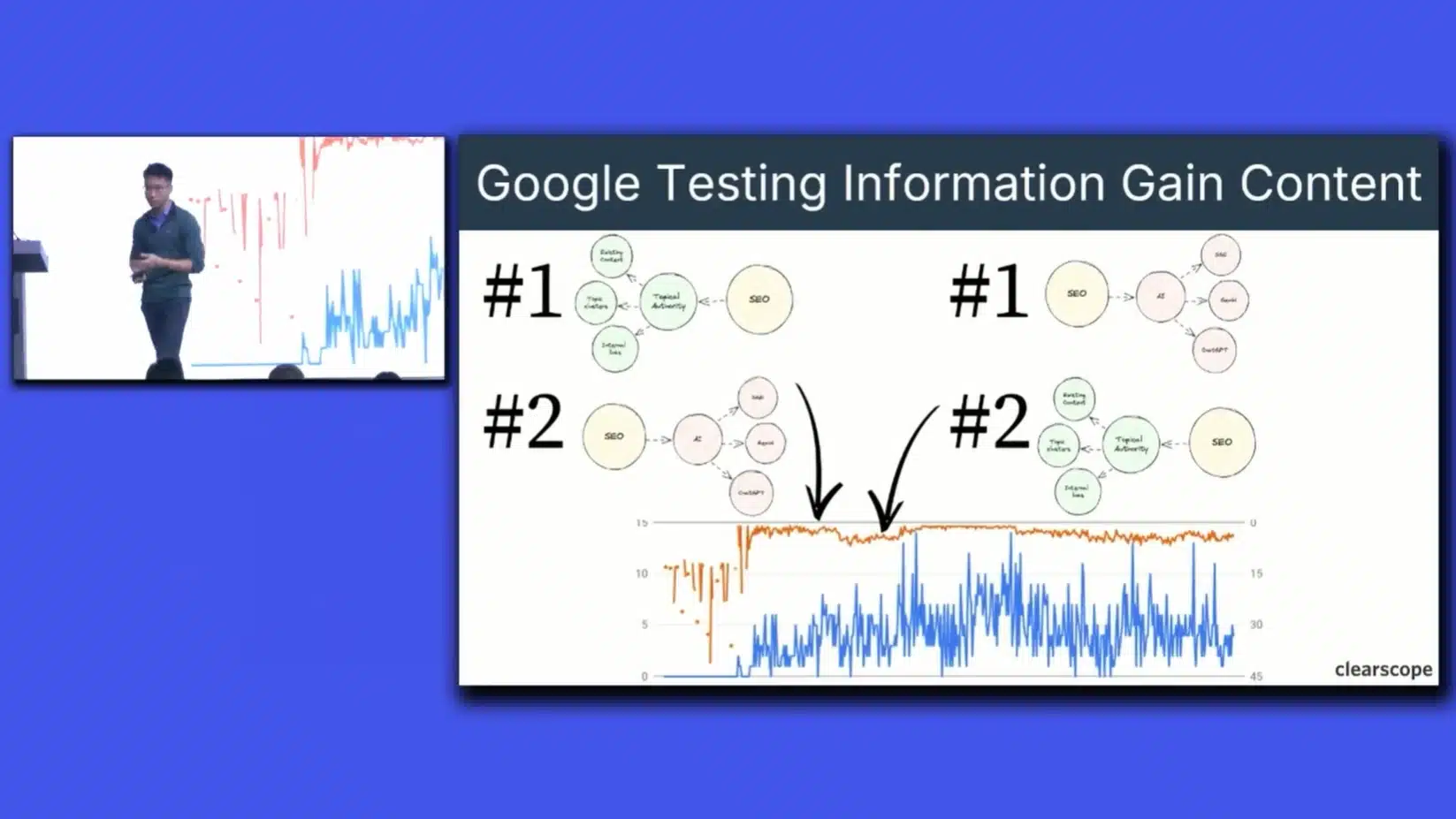
Bernard, founder of Clearscope, made it clear that information gain and content originality are becoming harder to deliver in a world where AI can churn out new sites and articles at scale.
He explained how Google is adapting by using entity analysis, natural language processing, and user engagement data to determine what’s truly unique and valuable—meaning that simply following old best practices or chasing keywords isn’t enough.
The recurring challenge is that authority sites often end up outranking the original sources, even when they’re not the first to contribute new insights.
Bernard’s main takeaway for me was the shift from ticking SEO checkboxes to actually creating value for users and demonstrating it through entity coverage and genuine engagement.
To stay competitive, we need to watch how our content overlaps with others, pay attention to what keeps users engaged, and understand that Google’s definition of relevance is evolving with every update.
How to apply this
- Focus on producing content that adds real value for users, not just ticking off best practices.
- Audit your content for entity coverage to avoid redundancy and improve topic authority.
- Monitor user engagement metrics (like time on page or interaction) to gauge content effectiveness.
- Research which sites are recognised as authority sources in your niche before publishing.
- Analyse your content for entity overlap to identify where you’re offering something new—or just repeating what’s already out there.
How to Evolve your SEO Strategy to Account for AI
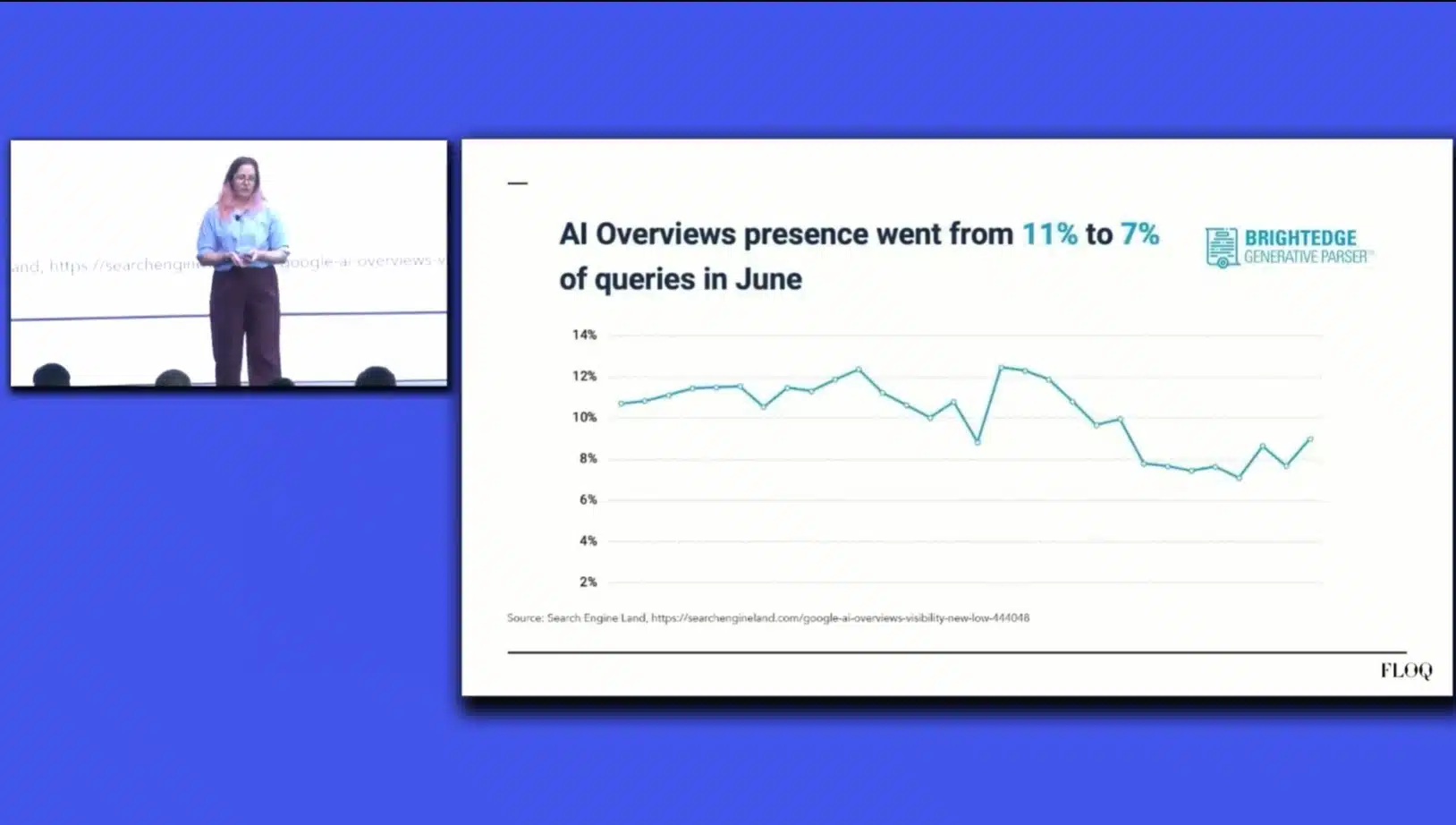
Marketing and SEO Consultant at FLOQ Amanda King gave us a timely reminder that AI is fundamentally changing the rules of search and digital branding.
She urged us to look beyond keyword rankings and traditional “10 blue links” thinking, making it clear that Google’s AI-first direction now prioritises organised, useful information and robust entity recognition across channels.
Her examples—ranging from AI overviews to entity-driven search results—illustrated how Google increasingly evaluates brand sentiment, authority, and the quality of content in ways that extend far past a website’s on-page text.
What stood out was Amanda’s focus on practical adaptation rather than hand-wringing over lost traffic. She stressed the importance of consolidating redundant articles, reorganising content by topic or purpose, and strengthening consistent brand signals everywhere a business is present.
Above all, she argued that SEO professionals must evolve into custodians of digital brands—ensuring content is discoverable, useful, and connected, not just on a single site but wherever audiences (and search engines) may find it.
How to apply this
- Add FAQs to product pages to better match semantic and intent-based queries.
- Consolidate similar keyword-focused articles into unified, stronger content pieces.
- Organise content by purpose—move product-related information under relevant product folders or pages.
- Adapt article length to intent; sometimes short, direct answers beat long-form content.
- Maintain consistent branding and entity signals across all online channels.
- Implement and update schema markup for clearer entity recognition.
- Regularly refresh and diversify content to feed large language models and stay visible in AI-driven results.
WTF is Helpful Content, Google
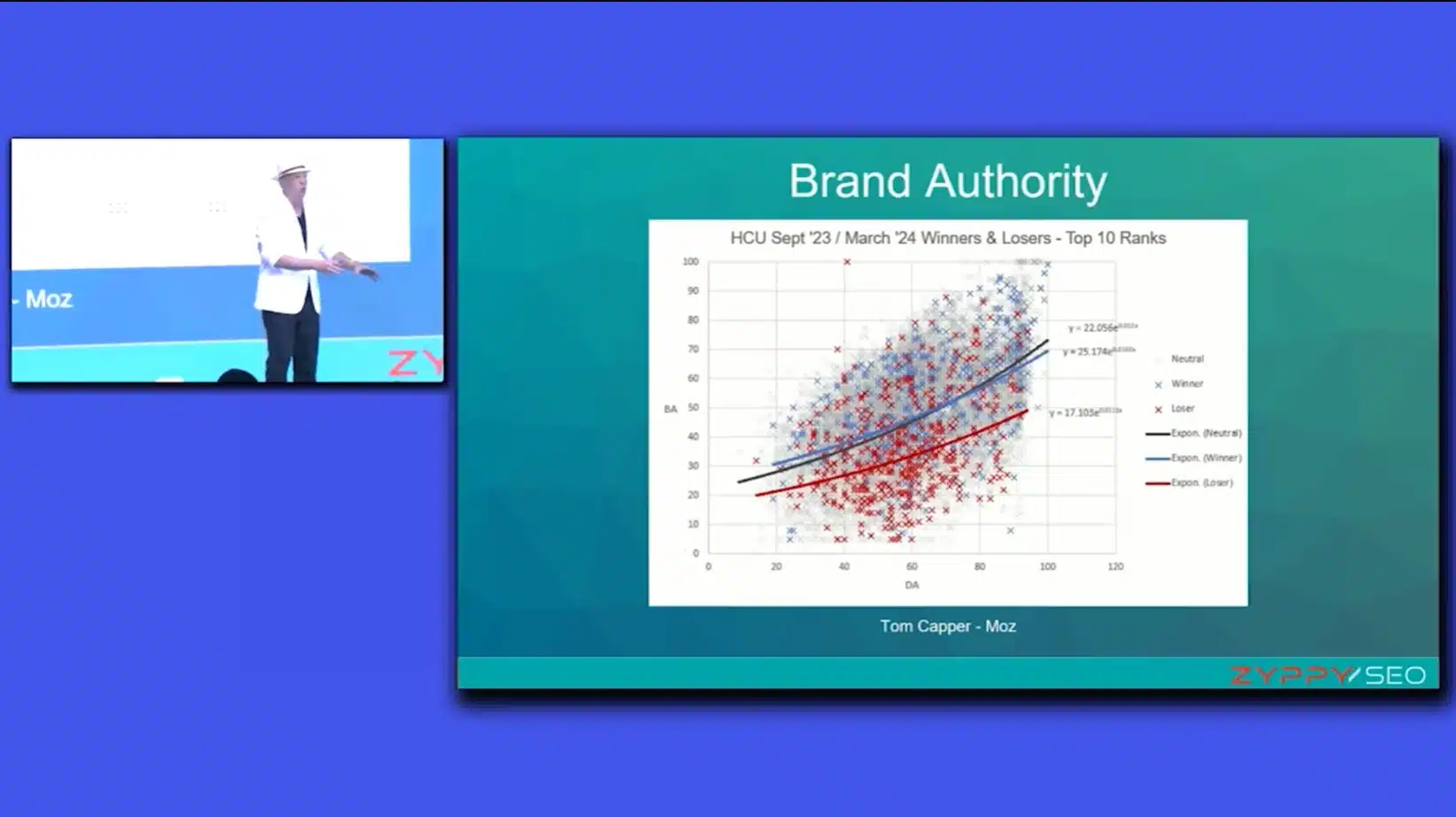
Cyrus Shepard provided a candid analysis of how Google’s content updates have shifted the SEO landscape from technical optimisation to rewarding authentic, experience-based content.
He highlighted the patterns uncovered in his research—sites that survived recent updates consistently showcased real personal perspective, original images, and user-friendly mobile experiences, while those that didn’t relied heavily on over-optimisation and generic, easily replicated content.
It was clear from his findings that simply following the old playbook of keyword targeting, heavy internal linking, and constant date tweaks no longer cuts it.
What resonated most was Cyrus’s focus on long-term brand value and audience relationships rather than short-term monetisation tactics.
He urged content creators to invest more in originality, demonstrate real expertise, and build a recognisable brand presence both on and off-site.
The new reality for SEO is about offering genuine value—content that stands out for its effort, personal touch, and utility, not just ticking SEO boxes.
How to apply this
- Use tools like Screaming Frog to check for personal pronouns and signs of genuine experience in your content.
- Prioritise mobile user experience; assess your site the way quality raters do.
- Cut back on aggressive SEO tactics—avoid keyword stuffing, excessive anchor text, and over-optimised titles or schema.
- Invest in human-focused, original images and avoid stock photo overuse.
- Consolidate your PR and link-building efforts toward brand building, not just chasing backlinks.
- Add value through hands-on product reviews, unique comparisons, and information that is hard for others to replicate.
- Focus on building long-term audience trust and relationships, not just short-term clicks.
Hidden Potential with Keyword Clustering
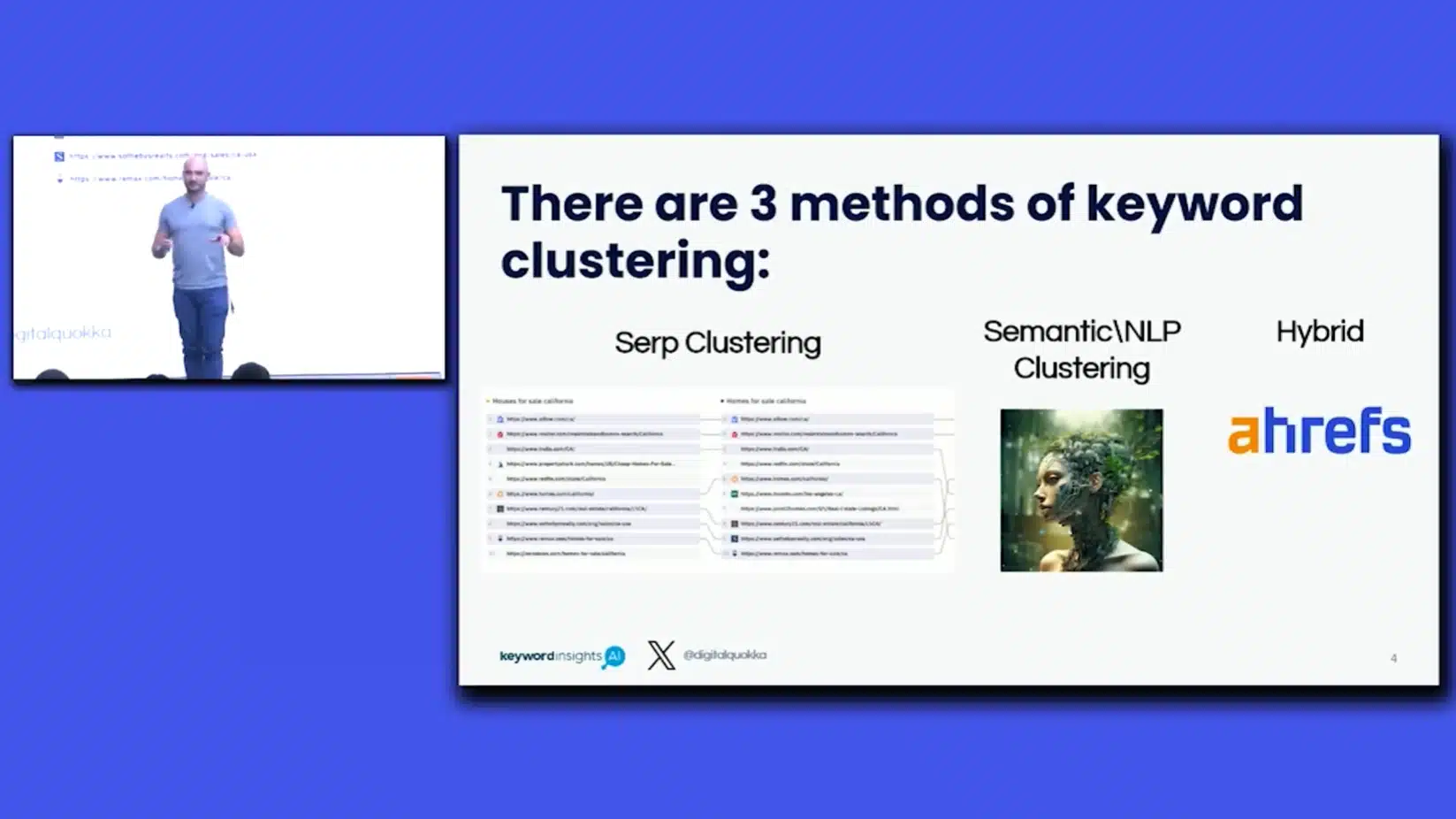
Andy Chadwick offered a practical, no-nonsense breakdown of keyword clustering and why it should matter to anyone managing large sites or complex content portfolios.
He walked us through the strengths and pitfalls of different clustering approaches, namely:
- SERP-based: Based on overlapping Google results
- Semantic/NLP: Organise keywords by meaning
- Hybrid models: Mix both for a balanced approach
He made it clear that picking the right method depends on your resources and goals.
The case studies, especially those showing how clustering solved major cannibalization issues, highlighted just how much untapped value lies in tidying up redundant or fragmented content.
What really stuck with me was Andy’s focus on the strategic applications: from uncovering “uncannibalization” opportunities to mining zero-volume Reddit queries for fresh content ideas, he demonstrated that keyword clustering isn’t just about organising a messy spreadsheet.
When done right, it becomes a powerful way to spot gaps, prevent overlap, and carve out a competitive edge—even in tough markets.
How to apply this:
- Use keyword clustering to spot and fix keyword cannibalization, especially in large e-commerce sites.
- Convert URLs or H1s into keywords to find and consolidate duplicate content in blog-heavy or franchise sites.
- Map existing pages to target keywords by turning URLs into keyword identifiers and clustering with your research data.
- Check for “uncannibalization” opportunities—identify similar keywords with different search intents that deserve separate pages.
- Run regular clustering checks to uncover content gaps and update your content strategy accordingly.
- Fragment big competitor content clusters into more focused articles to compete on specific topics.
- Mine Reddit or other forums for zero-volume questions and cluster them for new content ideas.
- Analyse low-impression queries from Search Console by clustering them to uncover hidden opportunities.
Advanced CTR Optimisation
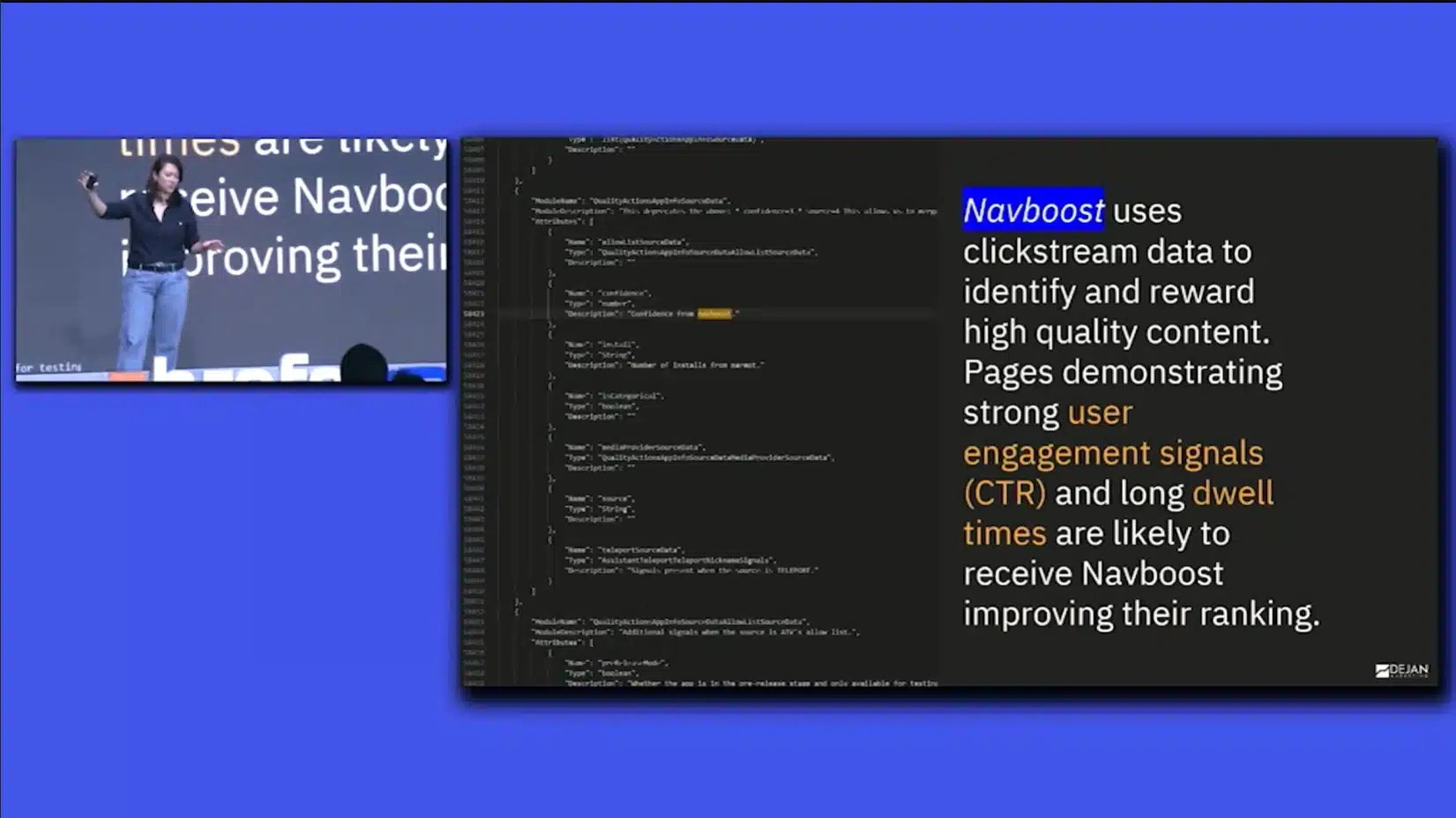
Nik Ranger had a refreshingly practical approach to CTR optimization.
Nik went beyond the basics, showing how click-through rate—though not a direct ranking factor—still influences how pages get selected in ranking algorithms.
Her explanations of PageRank NS and the use of engagement signals like NavBoost highlighted how Google likely pays more attention to user interactions than it admits. For anyone serious about organic growth, keeping an eye on these engagement metrics makes sense.
Nick’s workflow stood out for its straightforwardness and proven results. By focusing on targeted snippet updates, improving internal linking, and keeping content fresh, she demonstrated measurable improvements in both clicks and keyword rankings.
The case studies were convincing, whether she was optimising a single page or taking on an entire site. I left with a clear sense that a few focused adjustments can have a significant impact, without requiring a full-scale overhaul.
How to apply this
- Dive into Search Console and spot pages with low CTRs—focus on easy wins first.
- Split branded from non-branded queries to find real audience growth.
- Try tools like you.alguru.com to visualise CTR data and strengthen your case to stakeholders.
- Refresh page snippets: update titles, meta descriptions, and headings for better click appeal.
- Fix schema errors to tidy up your search appearance.
- Update your content and tweak publish dates to stay relevant.
- Run internal linking campaigns between related content clusters.
- Use TensorFlow vector embedding (or similar) to find and connect orphaned content.
- Cut back on disruptive ads and layout shifts to protect user experience.
- Build simple traffic and revenue projections to show the impact of small CTR gains.
AI Content Is Short-Term Arbitrage, Not Long-Term Strategy
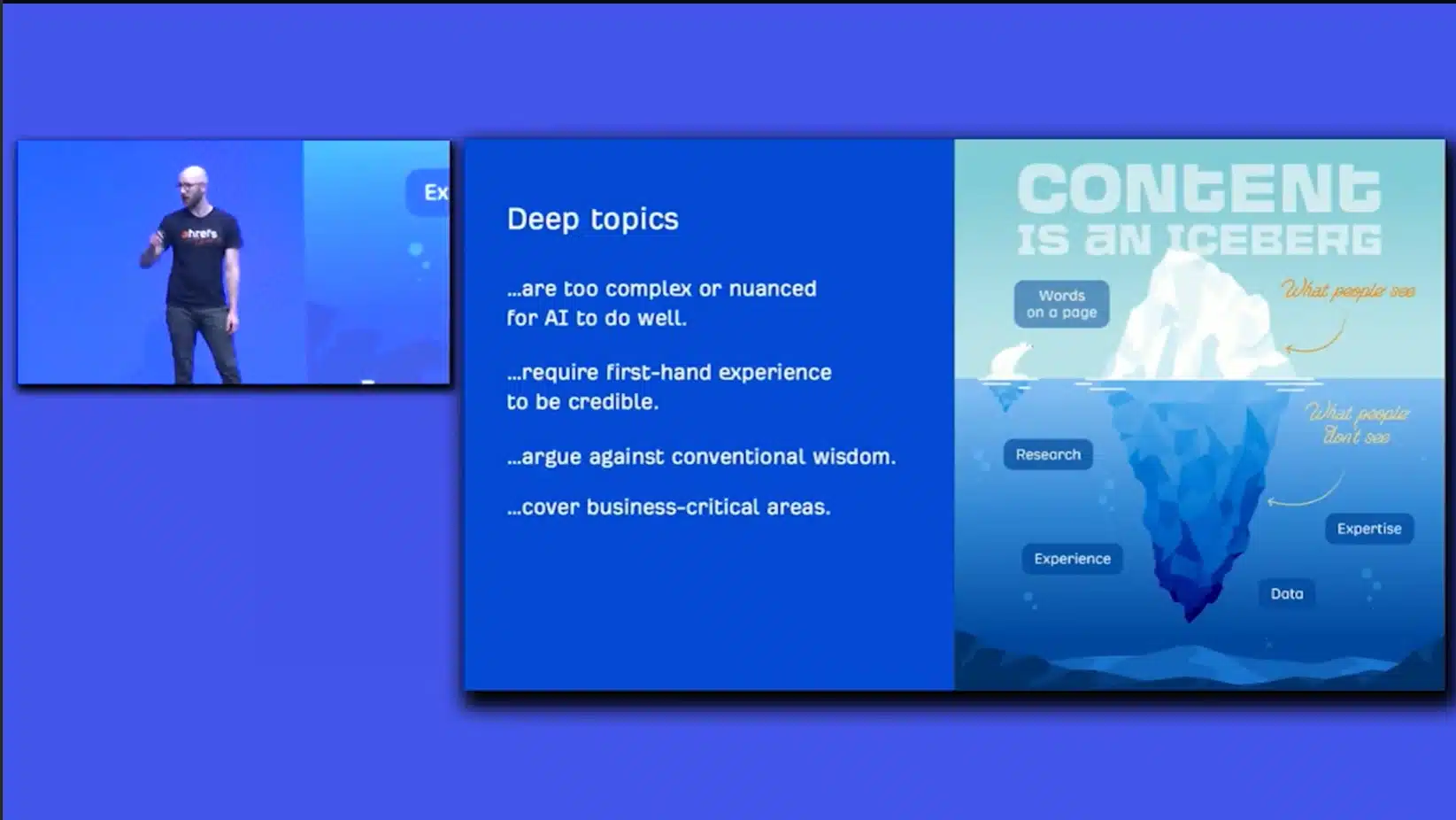
A revelatory talk by Ahrefs Director of Content Marketing Ryan Law from that challenged everything I thought about AI-generated content.
Through the cautionary tale of Causal’s spectacular traffic rise and fall, Ryan demonstrated that AI content is fundamentally broken, not just risky, but strategically bankrupt. His message was clear: generic, AI-produced articles are a dead end.
Ryan introduced “deep content” as our strategic alternative, emphasizing that future content marketing demands genuine human expertise, original research, and unique insights.
The most compelling content will come from first-hand experiences and challenging conventional wisdom, creating value that AI cannot replicate.
How to apply this:
- Conduct original research and surveys within your industry
- Create interactive tools or widgets that provide unique value
- Invest in video content that shows real-world application
- Hire and showcase team members with genuine expertise
- Develop content that challenges existing industry narratives
- Use personal anecdotes and first-hand experiences in your writing
- Prioritize depth and nuance over quantity of content
- Experiment with unique content formats
- Interview industry experts and incorporate their insights
- Focus on creating content that cannot be easily replicated by AI
- Develop a content strategy that emphasizes human touch and unique perspectives
Ready to Put These Insights Into Action?
Reflecting on everything I picked up at Ahrefs Evolve 2024 Day 1, one thing is clear: staying ahead in SEO means embracing both the technical and human sides of search, especially as AI SEO services become an essential part of the mix.
If you’re keen to cut through the noise and actually see real results. Whether it’s optimising content for user value, future-proofing your brand, or making sense of the latest Google updates, there’s no need to go it alone.
Book a free strategy call with First Page Digital Singapore and let’s figure out together how to leverage these AI SEO insights for your business’s next chapter.