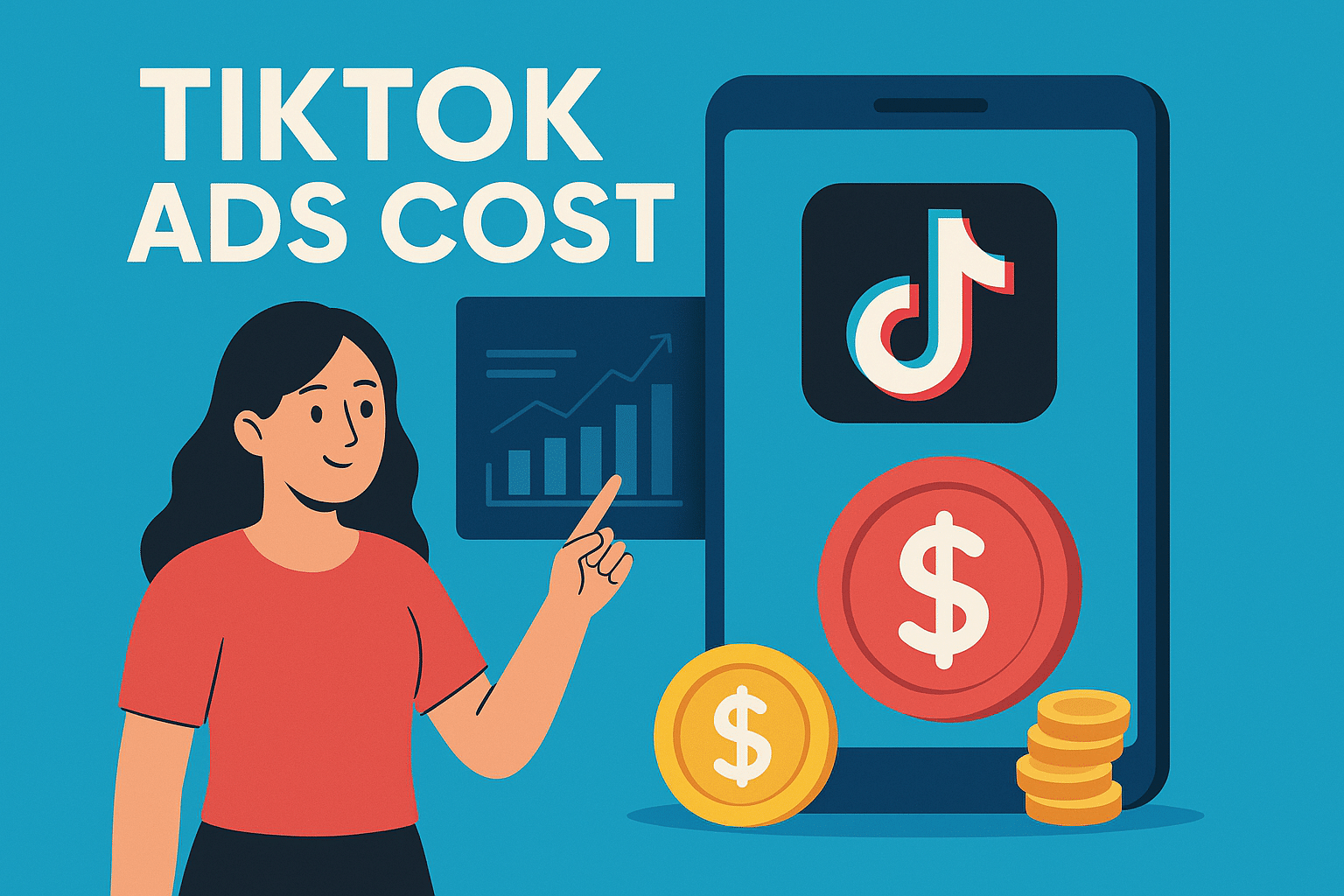
On average, businesses in Singapore can expect to pay between S$0.50 and S$2.50 per click (CPC) for In-Feed ads, while cost-per-impression (CPM) rates typically range from S$4 to S$10 per 1,000 impressions. For lead generation campaigns, CPC can rise to as high as S$3. The minimum daily budget for TikTok ads typically starts around S$50 to S$70, making it relatively accessible for small businesses while still scalable for larger brands.
Higher-end ad formats, such as TopView ads and Branded Hashtag Challenges, come with significantly higher costs. TopView ads can start from S$7,000 per campaign, while Branded Hashtag Challenges can range from S$200,000 or more, depending on the scale and targeting.
Here’s a breakdown of common costs associated with TikTok ads in Singapore:
- Minimum Daily Budget: Typically S$50 to S$70 per day.
- Cost Per Click (CPC):
- In-Feed Ads: S$0.50 to S$2.50
- Lead Generation Campaigns: S$3
- Cost Per Mille (CPM):
- In-Feed Ads: S$4 to S$10
- Spark Ads: S$5 to S$10
- Cost Per Lead (CPL): Typically ranges from S$50 to S$120, depending on the industry.
- Higher-End Ad Formats:
- TopView/Brand Takeover: Starts at S$7,000 per campaign.
- Branded Hashtag Challenge: Starts at S$200,000.
- Branded Effects: Starts at S$20,000.
These costs are influenced by various factors, including targeting options, competition within your industry, and the type of ad you choose. In this guide, we’ll explore how to navigate these costs and optimize your TikTok ad spend to maximize returns for businesses of all sizes. Whether you’re a small business trying to test the waters or a large enterprise running high-budget campaigns, understanding TikTok’s cost structure will help you make smarter advertising decisions.
Types Of TikTok Ads
| Ad Type | Description | Cost | Best For |
|---|---|---|---|
| In-Feed Ads | Ads that appear in users’ feeds as they scroll through TikTok. Skippable and blend seamlessly with user-generated content. | CPC: S$0.50 to S$2.50 CPM: S$4 to S$10 per 1,000 impressions |
Driving brand awareness, website traffic, and conversions. |
| TopView Ads | Full-screen ads that appear when users first open TikTok. High visibility but non-skippable. | Starts from S$7,000 per campaign. | High visibility campaigns, large-scale promotions. |
| Branded Hashtag Challenges | Encourages users to create content around a branded hashtag. Can go viral and generate significant engagement. | Starts from S$200,000 per campaign. | Generating user-generated content, viral marketing. |
| Branded Effects | Custom filters, lenses, and special effects for users to apply to their videos. | Starts from S$20,000 per campaign. | Engaging users through creative interactive features. |
| Spark Ads | Ads that leverage organic, user-generated content to amplify engagement. | CPC: S$0.50 to S$2.50 CPM: S$5 to S$10 per 1,000 impressions |
Engaging with user-generated content, extending campaign reach. |
| Branded Content Ads | Ads featuring influencers or creators who integrate the brand into their own content. | Varies based on influencer, starting from S$2,000 to S$10,000 per collaboration. | Building credibility, influencer marketing, social proof. |
Factors Affecting TikTok Ads Cost in Singapore
The cost of TikTok ads in Singapore is influenced by a variety of factors, from the bidding model to targeting choices, ad quality, and even external factors like seasonality. Understanding these factors can help businesses optimize their budget and improve ad performance. Below is a breakdown of the key elements that impact TikTok ad costs:
Bidding Model: CPC vs. CPM
TikTok offers different bidding models, each influencing the cost structure of your ad campaign:
| Attribute | Cost-per-Click (CPC) | Cost-per-Impression (CPM) |
|---|---|---|
| Description | Charges you every time a user clicks on your ad, ideal for driving website traffic, lead generation, or app installs. You only pay for actions, making it easier to track and optimize ROI. | Charges you for every 1,000 impressions your ad receives. Best for campaigns focused on brand awareness or audience reach. |
| Typical Cost in Singapore | S$0.50 to S$2.50 for In-Feed ads. | S$4 to S$10 per 1,000 impressions. |
| Best For | Conversion-based goals like website traffic or app installs. | Building brand visibility and reaching a large audience. |
Target Audience and Demographics
The more specific your targeting, the higher the potential cost, especially if you’re focusing on highly competitive audiences. TikTok allows you to target based on factors like:
| Attribute | Age Groups | Interests and Behavior | Geography |
|---|---|---|---|
| Description | Targeting younger users (e.g., Gen Z) may be more expensive due to the platform’s popularity among this demographic. Targeting age groups like 18-34 may increase costs due to high competition. | Targeting users with specific interests (e.g., fashion, fitness, tech) can vary in cost, depending on the competitiveness of the audience in those niches. | Location-based targeting can significantly impact costs, especially in major urban areas like Singapore. More localized targeting can increase costs due to high competition. |
| Impact on Cost | Targeting younger or premium age groups typically leads to higher costs due to increased demand and competition. | The more specific the interest or behavior, the higher the cost, as niche audiences tend to have higher competition. | Focusing on specific regions or cities may drive up costs, especially when those areas are competitive. Broader targeting can reduce costs. |
| Best For | Reaching younger audiences, particularly those in Gen Z or 18-34 age groups. | Reaching audiences with specific interests that align with your product or service, but costs may be higher in competitive niches. | Targeting specific locations for local campaigns or tailored promotions, but higher costs can occur in densely populated areas. |
Ad Placement Options
TikTok offers multiple ad placements that influence the cost and effectiveness of campaigns:
| Attribute | Home Feed | Search Feed | Explore Page |
|---|---|---|---|
| Description | Ads shown in users’ primary feed. This is one of the most common and effective placements for reaching a wide audience. | Ads shown when users search for specific content on TikTok. Great for targeting users interested in particular topics or keywords. | Ads shown in the Explore tab, reaching users who are browsing content outside their usual feed. |
| Cost Impact | Home Feed placements are cost-efficient but can become expensive during peak periods (e.g., holidays). | The cost for this placement is generally higher, as it targets users actively looking for content related to your ad. | Explore Page placements are ideal for brand awareness campaigns but tend to come with a higher price tag due to their premium nature. |
| Best For | Reaching a broad audience for general campaigns and content promotion. | Targeting users with specific interests or intent, typically for niche marketing. | Building brand awareness and reaching users beyond their typical content, though at a higher cost. |
Ad Quality and Engagement
The quality of your ad plays a key role in its performance, which, in turn, can influence its cost:
| Attribute | High-Quality Content | Relevance and Creativity | Interactive Features |
|---|---|---|---|
| Description | Well-produced, engaging ads that resonate with users tend to generate better engagement, which can lead to lower costs per click or impression. TikTok’s algorithm favors ads with high engagement rates (likes, comments, shares). Ads with better performance are shown more frequently at a lower cost. | Ads that are creatively aligned with TikTok’s fun, informal style will likely perform better. Content that feels native to the platform (e.g., using popular music, trends, or challenges) can result in more organic engagement and help reduce ad costs. | Adding elements such as polls, questions, or interactive challenges can increase user interaction, improving ad performance and lowering the overall cost per engagement. |
| Impact on Cost | High engagement can reduce costs by improving ad performance. Ads that perform well tend to be shown more often at a lower cost. | Creative, native content tends to generate more engagement and lower costs as it resonates better with users and feels less like an advertisement. | Interactive elements increase user participation and engagement, which leads to lower cost per engagement as the algorithm favors interactive content. |
| Best For | Ads that require higher engagement and organic visibility. | Creating content that feels native to TikTok’s platform, making it easier to connect with users and improve performance at a lower cost. | Campaigns focused on user participation and high interaction, helping to amplify content organically and reduce ad spend. |
Seasonality and Demand
Seasonality plays a significant role in TikTok ad pricing, with certain times of the year seeing higher demand and, consequently, higher ad costs:
| Attribute | Holiday Seasons | Sales Periods | Trends |
|---|---|---|---|
| Description | Major events like Christmas, Chinese New Year, and Singles’ Day are peak times for advertising, causing higher competition for ad space and an increase in ad costs. | Events like Black Friday, National Day sales, and other promotional periods lead to higher competition, increasing costs per click or impression. | Popular trends or viral moments on TikTok can cause ad costs to rise, especially if trends align with specific audiences. These moments often lead to increased visibility but at a higher cost. |
| Impact on Cost | Ad costs tend to spike during holiday seasons as businesses bid higher for visibility, leading to increased competition for ad space. | Higher competition during sales periods causes an increase in ad costs as more brands bid for attention, resulting in higher costs per click or impression. | Ad costs increase as competition rises during viral trends. Brands targeting specific demographics during these trends may face higher bidding costs. |
| Best For | Advertising campaigns targeting large-scale visibility and promotions during key festive times. | Promotions or time-sensitive campaigns aiming to capitalize on heightened buying behavior during major sales events. | Campaigns leveraging viral trends or tapping into popular moments to increase visibility but are willing to accept higher costs for the increased reach. |
TikTok Ads Budgeting in Singapore
Budgeting for TikTok ads in Singapore involves understanding minimum budget requirements, ad type costs, campaign timing, and tracking ROI. By considering these factors, businesses can optimize their ad spend to get the best results for their investment.
Minimum Budget Requirements
TikTok offers flexible budgeting options, with businesses able to set both daily and lifetime budgets. On average, the minimum daily budget required for any ad campaign ranges from S$50 to S$70. For lifetime budgets, the typical starting point is around S$300, depending on the ad format and campaign objectives.
Estimated Costs for Different Ad Types
TikTok ad costs vary by format. In-Feed Ads typically have a CPC (Cost Per Click) of S$0.50 to S$2.50 and a CPM (Cost Per 1,000 Impressions) of S$4 to S$10. More advanced ad formats, like TopView Ads and Branded Hashtag Challenges, are significantly more expensive, with TopView Ads starting at S$7,000 and Branded Hashtag Challenges from S$200,000.
Campaign Length and Timing
The timing and length of your campaign can influence costs. For example, campaigns during peak periods, such as holiday seasons or major sales events (e.g., Black Friday), will be more expensive due to increased competition. In contrast, off-peak periods may allow for more budget-friendly advertising. The longer your campaign, the more flexibility you have to optimize your ad performance and cost-efficiency.
Expected ROI (Return on Investment)
To estimate ROI for TikTok ads, businesses should track key performance indicators (KPIs) like CPC, CPM, click-through rate (CTR), and conversion rates. By monitoring these metrics, businesses can assess how much they are paying per action (click, view, conversion) and determine whether their campaign is meeting their objectives. A well-targeted, high-engagement campaign will typically result in a higher ROI, meaning lower costs per conversion.
TikTok Ads Cost Breakdown for Different Business Sizes
1. Small and Medium-Sized Businesses (SMBs)
SMBs can run TikTok ads without insane budgets, but they need to be tight with structure and expectations.
Typical Budget Ranges for SMBs in Singapore:
- Minimum daily budget:
- Around S$50 to S$70 per day for basic campaigns
- Test campaigns (2–4 weeks):
- S$1,000 to S$3,000 total for a proper test across a few creatives and audiences
- Ongoing monthly spend (once validated):
- Common range: S$1,500 to S$5,000 per month for consistent presence
Practical Cost Expectations
In-Feed Ads
- CPC: S$0.50 to S$2.50
- CPM: S$4 to S$10
- Lead gen campaigns
- CPC can climb toward S$3
- Cost per lead (CPL): often S$50 to S$120, depending on industry and funnel
Budget-Friendly Tips for SMBs
- Start with In-Feed Ads only; ignore premium formats like TopView or Branded Hashtag Challenges.
- Use broad but relevant targeting (age + interest clusters) instead of tiny niche segments to keep CPC/CPM down.
- Run short sprints: 7–14 days per test, 3–5 creatives, then kill underperformers fast.
- Optimise for one primary objective at a time (leads, add-to-cart, landing page views). Mixing objectives in one campaign wastes money.
- Repurpose organic TikTok-style content instead of overproduced ads. Native-looking content usually performs cheaper and better.
Key takeaway for SMBs:
Stay with In-Feed/Spark-style ads, test aggressively, and protect your budget by cutting losers quickly.
2. Large Enterprises
Enterprises can use TikTok as a reach and brand platform at scale, including the expensive formats SMBs can’t touch.
Typical Budget Ranges for Enterprises
- Always-on performance layer (In-Feed / Spark Ads):
- S$10,000 to S$50,000+ per month, depending on market size and objectives
- Brand campaigns / big bursts (new product, seasonal push):
- Campaigns can easily run S$50,000 to S$500,000+ when including premium placements and creators
Cost Expectations by Format (Enterprise Use)
In-Feed / Spark Ads
- Same baseline as SMBs, but at scale:
- CPC: ~S$0.50 to S$2.50
- CPM: ~S$4 to S$10
TopView / Brand Takeover
- Starts from around S$7,000+ per campaign and climbs quickly with reach and frequency
Branded Hashtag Challenge
- Starts around S$200,000 and can go higher with creator packages, rewards and media support
Branded Effects
- Commonly S$20,000+ depending on complexity and bundling
How Enterprises Should Leverage TikTok
Use a layered structure:
- Brand layer: TopView, Hashtag Challenges, Branded Effects for reach and fame
- Performance layer: In-Feed / Spark campaigns optimised for site traffic or conversion
Combine creators + paid:
- Use creators to generate authentic content
- Amplify best-performing creator posts using Spark Ads
Use frequency + sequencing:
- Plan multiple touchpoints: teaser, launch, reminder, offer
- Vary creatives to avoid fatigue at high spend levels
Key takeaway for enterprises:
Treat TikTok as both a brand platform (mass reach) and a performance channel (conversion), and plan budgets in layers instead of one big vanity format.
Cost Comparison with Facebook, Instagram, and Google Ads
You’re not choosing TikTok in a vacuum. It competes directly with Meta (Facebook/Instagram) and Google (Search/YouTube/Display).
Typical Cost Ranges (Broad Benchmarks)
These are directional, not absolute, and vary by industry and targeting:
| Platform | Approx. CPC Range (S$) | Approx. CPM Range (S$) | Notes |
|---|---|---|---|
| TikTok (In-Feed) | S$0.50 – S$2.50 | S$4 – S$10 | Strong for attention and video engagement, great for younger demos. |
| Facebook / Instagram | S$0.80 – S$3.00+ | S$6 – S$15+ | Very mature auction; costs can get high in competitive verticals. |
| Google Display (GDN) | S$0.50 – S$2.00 | S$3 – S$8 | Wide reach, weaker engagement compared to vertical video. |
| Google Search | S$1.50 – S$6.00+ (higher in B2B, finance, legal) | Often S$20+ effective CPM | High intent but expensive; strong for bottom-of-funnel acquisition. |
| YouTube (Skippable Video) | N/A (mainly CPM bidding) | S$5 – S$15+ | Strong for long-form video reach, less “native” than TikTok. |
How TikTok Compares
- Cheaper attention vs Meta in many verticals
TikTok CPMs are often in the same range or slightly lower than Facebook/Instagram, with higher watch time and engagement for short-form video.
- Weaker direct intent than Google Search
Search wins when someone is already looking for a solution. TikTok wins at creating demand and feeding users into your funnel.
- Stronger creative dependency
TikTok punishes bad creative more than most platforms. If your ad looks like a banner or a TVC, you’ll waste budget. Native-style content matters more here than on Meta or GDN.
Practical Use Across Platforms
- Use TikTok to:
Drive awareness and mid-funnel traffic
Test creatives that can later be repurposed to Reels/Shorts
- Use Meta (Facebook/Instagram) to:
Retarget TikTok traffic
Capture mid–bottom funnel users with static + short-form video
- Use Google Ads to:
Harvest demand from users searching after seeing your content (brand + non-brand search)
Optimizing TikTok Ads for Cost Efficiency
Targeting and Audience Refinement
TikTok’s algorithm rewards relevance. The more your ad matches the interests of your target audience, the cheaper your results become.
How to Avoid Overspending
- Avoid hyper-specific targeting
Tiny audiences drive up CPC and CPM quickly. Stay broad enough (e.g., age + interest clusters) to give the algorithm room to optimise.
- Start broad, then narrow down
Use broader targeting for the first 3–5 days to gather data, then refine based on performance (demographics, behaviours, creatives).
- Use TikTok’s native signals
Allow the algorithm to leverage platform-level engagement signals instead of over-layering manual targeting.
- Exclude non-performers
After collecting data, remove cold audiences that consistently deliver high CPC/low engagement.
- Leverage lookalike audiences
Use data from follower lists, website traffic, and previous converters to build expansion audiences that improve cost efficiency.
A/B Testing for Ad Performance
Your creative quality matters more on TikTok than on most platforms. A/B testing ensures you quickly identify and scale what works while eliminating what wastes budget.
What to Test
- Creative hooks (first 1–2 seconds)
Test variations: curiosity-driven, problem-first, visual shock, humour, trending audio.
- Formats
Compare Spark Ads vs. In-Feed ads, creator-led content vs. brand-led content.
- Copy and CTAs
Test different CTA placements, callout text, and overlays.
- Length
Short (6–9 seconds) vs medium (12–18 seconds) videos can perform very differently depending on audience and niche.
How to Run A/B Tests Effectively
- Test one variable at a time to isolate what’s driving the difference.
- Run each variation long enough to reach statistical significance (usually 3–7 days).
- Kill underperformers quickly, don’t let poor creatives burn your budget.
- Scale winners by increasing spend gradually (10–20% per day) to avoid auction shock.
Analyzing Metrics to Improve Cost Efficiency
To optimise your TikTok ad performance, you need to track metrics that reveal where your money is going and what’s actually driving results.
Key KPIs to Monitor
| Metric | What It Indicates |
|---|---|
| CPC (Cost per Click) | Shows how expensive it is to drive traffic. High CPC usually means poor creative, poor targeting, or weak relevance. |
| CPM (Cost per 1,000 Impressions) | Indicates audience competitiveness. Rising CPMs signal increased competition or weak creative engagement. |
| CTR (Click-Through Rate) | Measures how compelling your ad is. Low CTR often indicates weak hooks or ineffective visuals. |
| CVR (Conversion Rate) | Shows whether users take action after clicking. Poor CVR may indicate landing page or funnel issues. |
| Engagement Rate (likes, comments, shares) | High engagement often leads to cheaper CPMs and broader organic reach due to algorithmic boosts. |
| Frequency | Shows how often a user sees your ad. High frequency without conversions signals ad fatigue, meaning creatives need refreshing. |
How to Use KPIs to Optimise Costs
- If CPC is high, test new hooks or shift to Spark Ads using creator content.
- If CPM is high, broaden targeting or improve engagement through more native-style creatives.
- If CVR is low, check landing page speed, message match, and offer relevance.
- If engagement is low, adopt trend-based content, popular audio, or creator-led scripts.
- Refresh creatives every 5–10 days in competitive niches to prevent performance decay.
How to Get the Best Value from TikTok Ads in Singapore
Choosing the Right Ad Format for Your Goals
Each TikTok ad format serves a different purpose. Selecting the one that aligns with your business objective prevents wasted budget and improves performance.
If your goal is brand awareness
Choose formats that maximise reach:
- TopView Ads
Expensive but unmatched for mass visibility.
- Branded Hashtag Challenges
Drives enormous UGC volume and virality.
- Explore Page or Search placements (In-Feed layered)
Solid for broader exposure at lower cost.
If your goal is performance (traffic, leads, conversions)
Stick to formats built for action:
- In-Feed Ads
Best balance of cost and conversion efficiency.
- Spark Ads
Leverage high-engagement, creator-led content for cheaper CPCs.
- Lead Generation Ads
Works well for service-based businesses (though CPC/CPL may run higher).
If your goal is user engagement
Use formats that encourage participation:
- Spark Ads using creator content
- Branded Effects
- Hashtag Challenges (for larger budgets)
Leveraging Influencer Partnerships
Why influencer partnerships work
- TikTok users trust creators more than traditional ads.
- Creator-led content consistently outperforms brand-produced videos in engagement and cost-efficiency.
- TikTok’s Spark Ads allow you to boost creator content directly, supercharging authenticity with paid distribution.
Typical influencer cost ranges in Singapore:
- Micro-influencers (10k–50k followers): S$150 – S$500 per video
- Mid-tier (50k–250k): S$500 – S$2,000
- Macro (250k–1M): S$2,000 – S$10,000
- Top creators: S$10,000 – S$50,000+
How to use influencers to improve ROI:
- Use creators to produce native-style content instead of ad-looking videos.
- Test multiple creators and amplify top performers using Spark Ads.
- Avoid one-off influencer posts; combine organic reach + paid boost for a layered effect.
- Repurpose influencer content across Reels, Shorts, landing pages, and ads to extend ROI.
Ad Creative Best Practices
Creative quality is the biggest driver of TikTok ad performance. Weak creative burns budget rapidly; strong creative reduces CPC, CPM, CPA, and boosts engagement.
- Hook fast (first 1–2 seconds)
Your hook determines whether users keep watching or scroll past.
Examples:
- A strong visual transformation
- A bold statement
- A relatable pain point
- A trending audio cue
- Use native TikTok behaviours
- Use trending audio
- Use subtitles and captions
- Use jump cuts, humour, behind-the-scenes shots
- Avoid polished, corporate-looking footage
- Keep videos short and tight
- 6–12 seconds for performance
- 12–18 seconds for storytelling or UGC-style content
- Highlight the value immediately
Don’t wait until the end to show:
- Benefit
- Pain point
- Product transformation
- Offer or CTA
- Include clear CTAs
Good CTAs for TikTok:
- “Learn more”
- “Try it now”
- “Watch until the end”
- “Tap to see the difference”
- Refresh creatives frequently
- TikTok ad fatigue is real.
- Rotate creatives every 5–10 days in competitive niches.
- Use Spark Ads to boost winning content
Spark Ads let you boost organic posts (yours or a creator’s).
They consistently deliver:
- Lower CPC
- Higher CTR
- More efficient conversions
Challenges and Considerations with TikTok Ads in Singapore
Ad Fatigue and Engagement Decline
TikTok users scroll fast and get bored even faster. If you keep showing the same creatives, performance will drop. That is not a “maybe”, it is guaranteed.
What ad fatigue looks like
You’ll typically see:
- CTR drops
- CPC goes up
- CPM rises as the algorithm stops favouring your ad
- Frequency climbs, but conversions stall
How to manage and prevent ad fatigue
- Rotate creatives regularly
- Aim to introduce new creatives every 5–10 days in competitive niches. At scale, you need a proper creative pipeline, not one or two videos.
- Build variations, not one-offs. For each concept, create multiple variants:
- Different hooks
- Different angles (problem-focused, benefit-focused, social proof, testimonial)
- Different lengths
- Use performance rules. Kill or pause:
- Creatives with low CTR and high CPC
- Ads with high frequency and no incremental conversions
- Let winners “rest”
Sometimes pausing and reintroducing a previously strong creative after a few weeks can restore performance.
Platform Competition and Market Saturation
TikTok in Singapore is no longer “cheap blue ocean” in many verticals. Popular industries are already crowded.
Where competition bites hardest
- Finance and trading
- Education and courses
- Beauty and skincare
- F&B delivery and quick commerce
- E-commerce “TikTok shops” style offers
In these spaces, you will see:
- Higher CPMs (more advertisers chasing the same users)
- Higher CPCs, especially on conversion campaigns
- More volatility in performance during peak periods
How to deal with competition and saturation
Stop copying generic angles
If your ad looks like everyone else’s “Here’s my secret” or “3 things I wish I knew earlier” with no twist, you will pay more for mediocre performance.
Target smarter, not narrower
Overly tight targeting in saturated niches makes CPMs worse. Instead:
- Go a bit broader on interests
- Let your creative do the filtering
- Rely on TikTok’s optimisation rather than micro-targeting everything
Lean into stronger offers and hooks
In saturated markets, your offer is just as important as your creative:
- Real discounts
- Strong guarantees
- Clear, specific benefits, not fluff
Use TikTok as top/mid-funnel, not your only channel
In highly competitive niches, rely on:
- TikTok for awareness and cheap traffic
- Meta/Google for retargeting and closing
TikTok’s Strict Advertising Policies
TikTok is more conservative than many advertisers realise. If you ignore policy, you will get ads rejected, accounts flagged, or worse, disabled.
Areas with stricter scrutiny
- Finance
Trading, crypto, “get rich quick”, high-risk investments, misleading ROI claims
- Health and wellness
Weight loss, supplements, medical outcomes, anything that implies guaranteed physical changes
- Beauty and body image
Before/after photos, claims around appearance, “Fix your face/body” messaging
- Alcohol, tobacco, adult content, and sensitive topics
Common issues that trigger rejections or restrictions
- Overpromising results (“Make S$10,000 a month in 30 days”, “Lose 10kg in 2 weeks”)
- Sensational or fear-based claims
- Misleading testimonials or fake social proof
- Non-compliance with local regulations (e.g., MAS guidelines for financial promotions)
How to stay compliant and still market effectively
- Tone down claims, dial up proof
- Use realistic, defensible language
- Focus on process, benefits, and user stories without guarantees
- Use disclaimers where appropriate
- Especially for finance, health, or any “result-based” product
- Avoid “before/after” in sensitive categories
- Especially weight loss, cosmetic changes, and medical outcomes
- Align creatives with local regulations
- If your industry is regulated (finance, healthcare, insurance), treat TikTok as subject to the same level of compliance as any other media channel
Conclusion
TikTok ads in Singapore are not “cheap hacks” anymore. They are a serious paid media channel with clear cost benchmarks: S$0.50–S$2.50 CPC, S$4–S$10 CPM, and a minimum daily budget of around S$50–S$70 for most campaigns. Once you move into TopView, Branded Effects, and Hashtag Challenges, you are operating in the S$7,000–S$200,000+ range and should treat it like a full-scale brand investment, not an experiment.
The real leverage does not come from squeezing a few cents off CPC. It comes from:
- Picking the right formats for your actual goal (awareness vs leads vs sales)
- Using strong, native creatives instead of generic ad-looking videos
- Testing aggressively, cutting weak ads fast, and scaling what works
- Watching CPC, CPM, CTR, CVR, engagement, and frequency to know exactly where money is being wasted
For SMBs, the smart play is to stay with In-Feed and Spark-style campaigns, run tight tests, and protect budget with disciplined optimisation. For larger brands, TikTok is both a reach engine and a performance channel, as long as premium formats, creators, and always-on campaigns sit in a structured, layered strategy.
If you want help building a TikTok strategy that fits your budget and growth targets, engage First Page Digital’s TikTok Ads services.