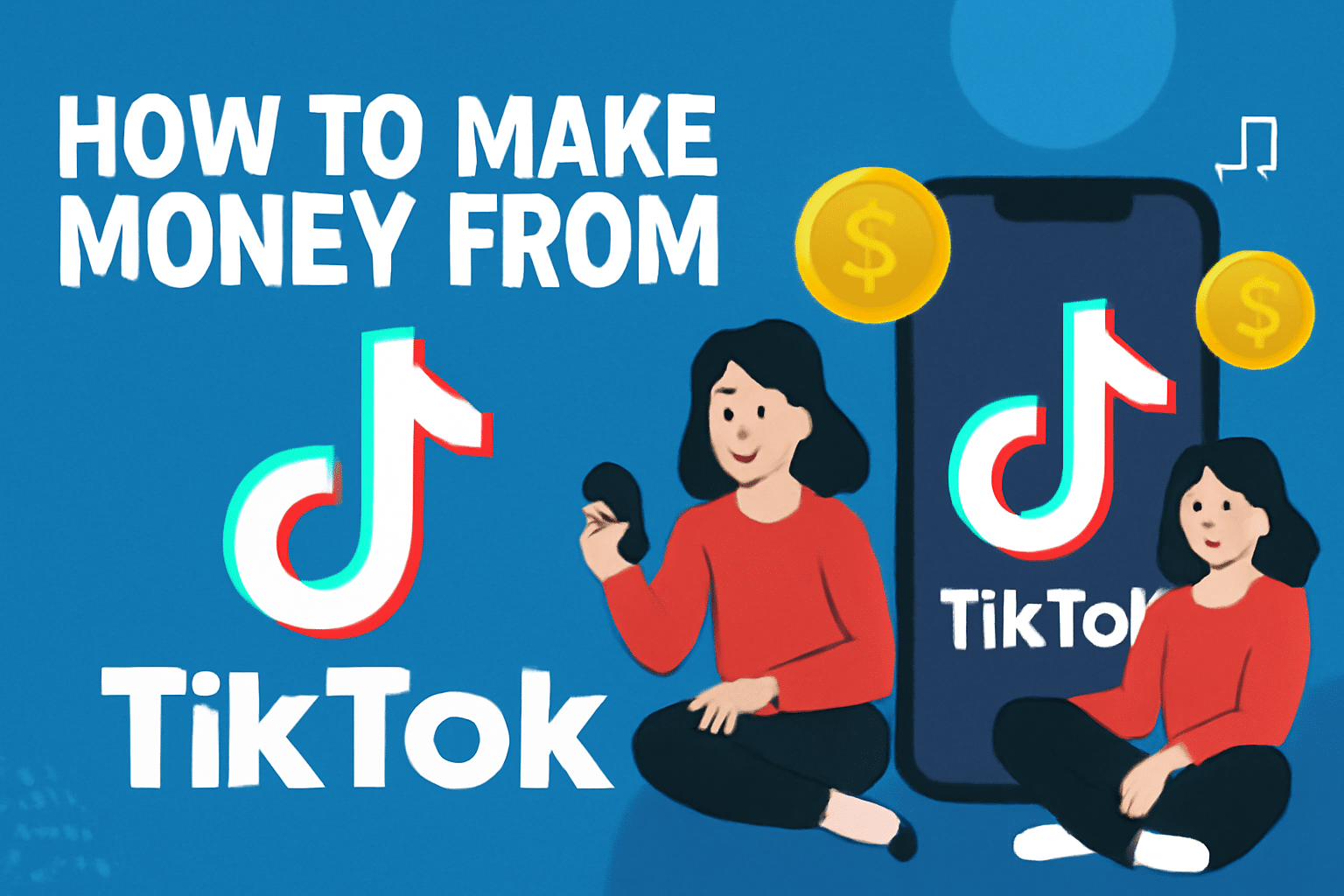
You make money on TikTok in two main ways: by using TikTok’s own monetization tools (Creator Rewards, LIVE Gifts, TikTok Shop, subscriptions, etc.) and by using TikTok to drive sales for your own or other people’s products, services, and brand deals.
TikTok alone will not magically pay you a full-time income just because you post videos. Most creators earn very little, some build a consistent side income, and a smaller group treat TikTok like a serious marketing channel and turn it into a real business. The gap between those groups is not luck, it is strategy and execution.
This article breaks down how TikTok monetization actually works today: the native features that pay you, the off-platform income sources that usually pay more, what they realistically earn, and how smart creators stack them. By the end, you will know which options fit your situation and what to prioritize so you are building an income stack, not just chasing views.
How TikTok monetization really works
At a high level, you make money on TikTok in two ways:
- TikTok-native payouts
- Off-platform income that TikTok traffic feeds into
You need to understand both, or you’ll either leave money on the table or rely on a single fragile income stream.
TikTok-native payouts
These are features built into the platform that pay you directly or indirectly.
Creator Rewards Program
TikTok’s main payout program. You earn based on:
- Qualified views (people who watch at least a few seconds)
- Video length and watch time
- Content quality and engagement
Requirements vary by region, but typically you need:
- A minimum follower count and recent view threshold
- Original content
- A personal account in good standing
Think of this as baseline income for views, not your main business.
LIVE Gifts and video Gifts
Viewers buy coins and send you virtual gifts on LIVE streams or sometimes on videos.
- Gifts convert into Diamonds, then into cash.
- Works best if you are interactive, entertaining, and consistent with LIVE sessions.
- Common in gaming, lifestyle, advice, and entertainment niches.
This can stack nicely if you already stream often, but it’s rarely stable on its own.
Series (paywalled videos)
Series lets you bundle a set of videos behind a paywall.
Good for:
- Tutorials and step-by-step guides
- Workout or challenge programs
- Short educational “mini-courses”
This only works if your free content already proves you can teach and deliver results.
Subscriptions / “Super fan” style memberships
Fans pay a recurring fee for extras such as:
- Exclusive videos or live rooms
- Badges, stickers, or priority replies
- Private chats or deeper tutorials
This is for creators with a loyal core audience, not casual viewers. If people don’t even click your free links, subscriptions will not save you.
TikTok Shop and affiliate tools
This is where a lot of real money starts:
- Sell your own products directly on TikTok
- Promote other brands’ products and earn a commission as an affiliate
- Use live shopping and product pins so people can buy without leaving the app
If you can turn views into purchases, TikTok Shop and affiliate tools can out-earn Creator Rewards quickly.
TikTok Pulse ad revenue share
- Pulse shares ad revenue with selected creators whose videos run next to premium ads.
- TikTok chooses creators based on performance and content quality.
- You don’t control access much; you qualify by already being a top performer.
Treat this as a bonus, not a core strategy.
Off-platform income driven by TikTok
This is where most serious creators make the bulk of their money. TikTok is the traffic source, not the final destination.
Brand deals and sponsorships
Brands pay you to:
- Feature their product in your videos
- Create dedicated review or tutorial content
- Join campaigns, challenges, or UGC-style ads
Pay depends on niche, audience location, engagement rate, and how well you can actually drive results, not just views.
Selling physical or digital products
Common setups:
- Physical products via Shopify or similar (merch, niche products, bundles)
- Print-on-demand via tools like Printful / Printify (no inventory needed)
- Digital products: templates, plans, presets, e-books, mini-courses
TikTok brings attention. Your store or product page does the conversion.
Affiliate marketing
You promote products you don’t own and earn a commission per sale.
Works well if:
- Your content style is naturally review- or recommendation-based
- You pick offers that match your audience’s intent
- You’re transparent and don’t shill random low-quality products
Services, coaching, consulting
If you have a skill, TikTok is simply the top of your funnel.
Examples:
- Fitness coaching, nutrition plans
- Design, video editing, copywriting, marketing services
- Money, career, or business coaching
- Any specialised consulting
A single client can be worth more than what millions of views pay you in platform rewards.
TikTok earning reality
Here is what the numbers look like in practice, across multiple creator reports and income breakdowns:
- Creator Rewards usually pays around $0.40–$1.00+ per 1,000 qualified views, not total views.
- In some well-targeted, high-engagement niches, creators report effective $400–$800 per 1M views, sometimes higher, but those are good scenarios, not the default.
- TikTok Shop plus product profit can easily beat that if you convert even a small percentage of viewers into buyers on every few thousand views.
If you:
- Post inconsistently
- Never test hooks
- Ignore watch time and retention
- Avoid selling anything
You should expect pocket money, not a living.
The creators who actually make solid income are the ones who:
- Stack multiple monetization methods (Rewards, Shop, brand deals, products, services)
- Treat their content like a marketing engine for a real business, not a lottery ticket
That is the baseline mindset you need before diving into any detailed tactics.
Prerequisites to make money from TikTok
Before you worry about payouts and programs, you need the right setup, a clear niche, and a basic content engine. If those are weak, every monetization method will underperform.
Pick the right account type
Personal account
- Use this if you are a creator first.
- Required for Creator Rewards
- Needed for some tipping / gifting features
- Best if your main “product” is your content and personal brand
Business account
- Use this if you are a brand or store first.
- Better access to links, ad tools, and analytics
- Access to a commercial music library
- Some creator programs may be limited or unavailable
If you are a solo creator who wants platform payouts and brand deals, keep a personal account until you have a specific reason to switch to business, such as running paid ads or scaling a store.
Niche and positioning
“Whatever I feel like posting” is fine for a hobby. It does not work for serious monetization.
Pick a niche where:
People already spend money
Beauty, skincare, fitness, fashion, business, parenting, tech, gaming, hobbies, education, and similar spaces all have proven budgets.
You can create many angles
Tutorials, reviews, “do this not that”, myths vs facts, transformations, mistakes, behind the scenes, story-times.
There are clear products or services attached
Skincare routines, gym programs, SaaS tools, online courses, clothing, gear, templates, consulting.
You are not just choosing a topic. You are choosing a market and a buyer. Your niche should make it obvious what they might eventually buy from you or through you.
Minimum content base
Monetization should not be your first objective. A predictable content habit comes first.
Set a minimum standard before you worry about money:
- 3 to 5 posts per week for at least 60 to 90 days
- A clear hook in the first 1–2 seconds
- Proper format: vertical 9:16, at least 1080p, good lighting, clean audio
- One core topic per video so viewers know what they are getting
You are building two assets at this stage:
- Your skill in making watchable videos
- Data on what your audience actually responds to
If you cannot stay consistent at this basic level, Creator Rewards, TikTok Shop, brand deals, and all the other tools will feel weak or random, because you are not feeding them enough content.
TikTok’s own monetization features
TikTok gives you several built-in ways to earn. None of them fix weak content, but once you have views and engagement, these features turn attention into direct cash.
Creator Rewards Program (replaced Creator Fund)
Creator Rewards is TikTok’s main direct payout program today.
Basic idea
TikTok pays you based on:
- Qualified views
People who watch at least around 5 seconds, not just quick scroll-bys.
- Longer, original content
Videos over 1 minute that you created yourself.
- A variable RPM
Earnings per 1,000 qualified views change based on region, topic, engagement and TikTok’s internal metrics.
So two people with the same total views can earn different amounts, depending on how well their videos hold attention and who is watching.
Typical eligibility
You usually need:
- To be 18 years old or older
- At least 10,000 followers
- At least 100,000 views in the last 30 days
- A personal account in good standing
- Original, high quality videos over 1 minute
- To live in a supported country such as the US, UK, some EU and some APAC markets
How much you might earn
From public breakdowns and creator reports:
- Most people see around 0.40 to 1.00 USD per 1,000 qualified views, sometimes more in strong niches.
- If you do 1 million qualified views in a month, a realistic range is 400 to 800 USD per month from Creator Rewards alone.
Good extra income if you post anyway. Not enough on its own for most people to treat as a stable salary.
Pros
- Purely passive after the video is posted.
- Gives you a reliable baseline if you already get serious views.
- Does not require you to sell anything directly.
Cons
- Not available in every country.
- Payouts can move up or down month to month.
- Relies on consistent reach and retention. One viral hit does not change your life.
How to set up
- Keep a personal account and avoid community guideline issues.
- Shift part of your content to 1–3 minute videos that hold attention, not only 7–10 second clips.
- Once you hit 10k followers and 100k views in 30 days, apply through
- Settings → TikTok Studio → Monetization → Creator Rewards.
LIVE Gifts, video Gifts and tips
TikTok also pays indirectly when viewers support you with gifts.
How it works
- Viewers buy coins inside TikTok.
- They send virtual gifts on LIVE streams and sometimes under videos.
- You receive those gifts as Diamonds, which convert to cash.
Typical requirements
- Be 18 years old or older
- Usually 1,000+ followers to go LIVE
- Account in good standing
Reality check
Most creators report:
- Pennies to a few dollars per stream at the start
- Higher earnings only when you are:
- Very interactive
- Consistently live
- Good at creating a “hangout” atmosphere
This works best in niches where people feel close to you:
- Lifestyle and daily life
- Dating and relationship advice
- Tarot and spiritual readings
- Gaming and music
- Study, coworking, or education lives
Best practices
- Go live at predictable times so viewers can plan.
- Promote your live sessions in regular videos and stories.
- Use clear formats:
- Q&A
- “Rate your content”
- Mini consultations
- Live workouts or challenges
- Live shopping with products on screen
- Call out gifters by name, show appreciation, and use small milestones: “When we hit [X] gifts I will review 5 profiles” or “I will break down 3 of your videos.”
Treat live gifting as a bonus layer on top of other monetization, not your only plan.
TikTok Series (paywalled content)
Series lets you sell a bundle of videos behind a paywall.
How it works
- You create a Series of up to around 80 videos.
- You set a one-time price, often anywhere between 0.99 and about 189.99 USD, depending on the value and length.
- Viewers pay once to unlock the full bundle.
Best uses
Series suits structured, outcome-focused content, for example:
- In-depth tutorials on editing, Excel, coding, design, music, cooking
- Workout plans or 30-day challenges
- Language lessons
- Any “mini course” style training
Think of Series as a built-in course platform. But it only works if:
- Your free content already proves you know what you are doing
- People have asked for “more detail”, “full breakdown” or “step by step”
Series does not fix weak content. It is simply a paywall for content that already has demand.
Subscriptions / “Super fans”
Subscriptions give fans a way to support you monthly for extra access.
What subscriptions offer
Depending on your region and feature rollout, subscribers can get:
- Special badges by their name
- Access to exclusive chats
- Subscriber-only videos or live rooms
- Sub Space style rooms for closer interaction and extra content
In some regions, classic LIVE Subscriptions are being upgraded or rebranded into Super Fan memberships with more perks and clearer monthly pricing.
When this works
Subscriptions are for creators with:
- A strong emotional bond with their audience
- Viewers who care about the creator, not just the tips
- A clear list of perks, for example:
- Extra tutorials or deep dives
- Behind-the-scenes content
- Priority Q&A
- Feedback on their work
- Private community access
If your viewers rarely click a free link in bio, they are not ready to pay you monthly. In that case, subscriptions are early and will flop.
Use subscriptions after you see consistent comments like “I would pay for more of this” or “Do you have a course / membership?”
TikTok Shop (selling products and affiliate)
TikTok Shop is one of the strongest earning tools for creators who can sell.
What you can do
- Sell your own products as a TikTok Shop seller
- Join as a TikTok Shop affiliate and promote other people’s products
- Run live shopping where products appear on screen and viewers can buy inside the app
This suits:
- Ecommerce brands
- Print-on-demand stores
- Creators with strong product fit in their niche
- Review and recommendation-style content
Fees
In markets like the US, TikTok usually charges a referral or commission fee around 5–6 percent per order, with some variation by category.
Compared to many marketplaces and platforms, that fee level is relatively low, which keeps more margin for you.
Print-on-demand example
A common approach with services like Printful:
- Connect Printful → Shopify (or another ecommerce platform) → TikTok Shop.
- Create niche merch that fits your audience:
- Hoodies, t-shirts, mugs, posters, tote bags
- List those products in TikTok Shop.
- Promote them in:
- Regular videos
- Live shopping streams
- Product pins and shoppable posts
- Printful handles production and shipping.
You keep the profit margin after product cost and TikTok’s referral fee.
You do not hold inventory. Your real job is to know your audience well enough to create something they actually want to buy.
TikTok Pulse (ad revenue share)
TikTok Pulse pays you a share of ad revenue when brands run ads next to your content.
How it works
- Brands pay a premium to appear near high-performing videos.
- TikTok selects eligible creators and videos.
- A portion of that ad spend goes to the creator.
You cannot request Pulse the way you apply to Creator Rewards. Access depends on:
- Large follower count
- Strong engagement and watch time
- Brand-safe content that advertisers are willing to sit next to
Reality
- Requirements are high.
- Only a fraction of creators qualify.
- You should treat Pulse as a bonus that appears after you already have serious reach.
You do not build a strategy “for Pulse”. You build a strategy for strong content and monetization. If you hit that level, Pulse becomes one more line in your income stack.
Offline TikTok income streams
TikTok’s built-in payouts are side income. The real money for most creators comes from off-platform income that TikTok feeds: products, services, and brand deals.
Brand deals and sponsorships
Brands pay you to feature or talk about their product in your content.
That can look like:
- A dedicated sponsored video
- A short integration inside an organic video
- A multi-post campaign or recurring partnership
Typical rates
From public benchmarks and agency ranges:
- Micro-creators (10k–50k followers) often charge around 100 to 500 USD per post in many niches
- Larger creators and strong performers charge thousands per post or per package
Rates move a lot based on:
- Niche and industry
- Country and audience location
- Video format (simple mention vs full production)
- Usage rights (organic only vs paid ads usage)
What brands care about
- Niche fit
Does your content and audience match their target buyer.
- Engagement rate
Comments, shares, saves, not just raw followers.
- Audience location and demographics
Can you reach the markets they sell in.
- Ability to drive action
Clicks, sign-ups, discount-code sales, not just “brand awareness”.
If you are under 10k followers, your focus should be:
- Publishing strong, consistent content
- Building small case studies: “I talked about X and it sold out”
- Doing product exchanges or low-fee tests with small brands to collect proof
Once you can show screenshots of sales, clicks, or sign-ups you generated, you can justify higher fees quickly.
UGC (user-generated content) for brands
UGC is often more realistic than trying to become a big influencer.
You are not being paid for your audience. You are being paid for your skill on camera.
You:
- Create TikTok-style videos for brands
- They post them on their own account or run them as ads
- You get paid per video or per batch, even if your profile is tiny
Why brands like it
- Feels more natural than classic ads
- Converts well as ad creative
- Cheaper and faster than big production shoots
How to start
Post high-quality, brand-safe videos on your own profile to prove you can hook viewers.
Put something like “UGC creator – open to collabs” in your bio.
Build a simple media kit with:
- Who you are and your niche
- 3–5 best video examples
- Starting rates or packages
- Pitch small Shopify / TikTok Shop brands in your niche with specific ideas, not “let me know if you want UGC”.
Example pitch:
“I noticed you sell [product]. I can make 3 short TikTok-style videos: 1 unboxing, 1 testimonial, 1 ‘problem/solution’ clip you can run as ads. Here are examples of my work.”
Selling physical products (ecom and print-on-demand)
TikTok + Shopify + TikTok Shop is now a standard stack.
You use TikTok to get attention and push people into:
- Your Shopify store
- Your TikTok Shop
- Or both, depending on region
Main options
- Classic ecommerce with your own inventory
- Dropshipping using third-party suppliers
- Print-on-demand using services like Printful or Printify
- Selling directly on TikTok Shop as your main storefront
Printful and similar guides all say the same thing:
- Pick a niche audience
- Build a small line of products around their identity
- Post content that constantly reinforces that identity
So you are not just “selling shirts”. You are selling:
- “Gym memes for powerlifters”
- “Teacher humour”
- “Cat dad aesthetic”
- “Remote worker jokes”
- “Nurse night-shift survival gear”
TikTok gives you the culture and the jokes. Your store gives them a way to wear it.
Selling digital products and education
Digital products are low cost, high margin, and TikTok is a strong top-of-funnel for them.
What you can sell
- Notion templates
- Workout plans and challenges
- Lightroom presets
- Spreadsheets and budget planners
- Meal plans and recipe bundles
- Scripts, hooks, content calendars
- Checklists and playbooks
- Short courses and workshops
You can host them on:
- Gumroad
- Kajabi or similar platforms
- Shopify apps built for digital products
- Or bundle them as TikTok Series, if the content works as video lessons
Positioning that works
- Free content solves small, specific problems
- Paid offer solves the full system or the “all-in-one” version
Example:
- Free videos: “Here is 1 hook template for TikTok in your niche.”
- Paid product: “Here are 200 tested hooks + scripts + a 30-day posting calendar.”
Affiliate marketing
Affiliate marketing lets you earn without owning the product.
You promote a product, and get paid a commission per sale or per lead.
Common setups
- Amazon Associates and other big affiliate networks
- Brand-specific affiliate programs (SaaS tools, apps, DTC brands)
- TikTok Shop affiliate, where you:
- Add other people’s products to your shop showcase
- Earn a cut whenever someone buys through your link
When affiliate makes sense
Your content is naturally product-heavy:
- Reviews
- “Top 5 tools for…”
- “X vs Y” comparisons
- Setup / “what I use” videos
You are transparent:
- Disclose affiliate links
- Maintain trust instead of spamming random stuff
You pick products that actually convert:
- Things you use
- Things your audience is already asking about
Affiliate works even at small follower counts if you can get:
- The right product
- A clear call to action
- And content that actually makes people want to buy
Services, coaching, consulting
If you have a real skill, this is usually the most profitable path per viewer.
TikTok becomes a funnel, not the product.
You:
Post educational or proof-based content
- Teach something
- Show before/after
- Share client results
Build trust
- People see you as “the person for X”
Send them to a next step
- Link in bio to book a call
- Application form
- Direct checkout for a package
This works for:
- Design, editing, copywriting, marketing
- Fitness, nutrition, habit coaching
- Tax help, accounting, business consulting
- Dating and relationship coaching
- Career, job search and interview prep
- Any specialised skill people will pay to shortcut
One good client can pay you what millions of views pay in Creator Rewards. That is why creators who know what they are doing use TikTok as lead generation, then monetize off-platform with high-value services.
What to do at your current size
The right move depends on your follower count. At each stage, your job changes: from testing, to proving you can make money, to scaling what already works.
If you have 0–1,000 followers
Your only job right now is to learn what works. Money is a bonus, not the focus.
Content first
- Commit to posting 30–60 videos in your niche.
- Think in sets of 10 and change one main variable each set (hook style, angle, format).
Hooks to test
Use direct, pattern-breaking hooks such as:
- “Stop doing X if you want Y”
- “You’re wasting money on Y because…”
- “3 mistakes with Z nobody talks about”
- POVs and challenges specific to your niche
Your goal is not perfection. Your goal is data.
Soft monetization only
Start planting seeds without obsessing over results:
- Put one simple offer in your bio:
- An affiliate link
- A free lead magnet
- A Calendly link for calls
- If you already sell something, mention it calmly:
- “If you want my full checklist, link in bio.”
- “If you need help with this, I take a few clients each month.”
You’re in R&D mode. Learn your audience, sharpen your hooks, and build consistency. Revenue is optional at this stage.
If you have 1,000–10,000 followers
You have some traction. Now you need proof that your audience will actually pay.
Start using LIVE
Go LIVE once a week minimum.
Keep it simple:
- Q&A in your niche
- “Rate your content” or profile audits
- Mini consults or breakdowns
Turn on and test LIVE Gifts while you do this. Treat any income as signal, not salary.
Pitch UGC and small brand deals
You are big enough to be interesting to small businesses, especially Shopify and TikTok Shop brands in your niche.
- Start actively pitching UGC:
- “I’ll create 3 TikTok-style videos you can use on your account or as ads.”
- For tiny brands, offer small or first-time deals:
- Product in exchange for content
- Low-fee test packages to build case studies
This is where most people hesitate. Sending 20–50 targeted pitches will move you faster than waiting to be “discovered”.
Build one clear offer
Pick one main way to get paid:
- “I do TikTok audits for $X.”
- “Custom meal plans for [specific audience].”
- “Notion template bundle for [type of creator/pro user].”
Make this obvious in:
- Your bio
- Pinned video(s)
- Regular soft mentions in content
Your goal here is simple: prove you can make any money at all, even if it is small. Once you see consistent conversion, you scale that offer, not random new ones.
If you have 10,000+ followers
Now you can use nearly everything TikTok offers. The risk here is trying every feature at once and doing none of them well.
Layer in platform programs
- Apply for Creator Rewards if your region allows it.
- Turn on LIVE Gifts and commit to a consistent live schedule (for example 2–3 times per week).
- Set up TikTok Shop:
- Start with one or two core products or a strong affiliate offer.
- Make sure they clearly match your niche and audience.
Build a simple brand deal system
Stop improvising your rates.
Create a basic rate card:
- 1x dedicated TikTok
- 1x TikTok + usage rights for ads
- 3-video bundle
Add optional extras:
- Whitelisting (they can run your content as ads)
- Exclusivity in your niche for a period
- Spark Ads access
You can still adapt pricing, but a baseline stops you from guessing every time.
Know what actually limits you at the moment
At this size, your ceiling is rarely “lack of features”. It is:
- How often you post
You still need consistent volume to grow and feed every monetization stream.
- How strong your hooks are
Weak first 2 seconds means weak reach, which kills every income line.
- How well you turn attention into action
If people watch but do not click, buy, or book, you have a conversion problem, not a follower problem.
Audit your account monthly:
- What videos bring the most followers?
- What videos bring the most clicks or sales?
- Are you spending more time chasing views or building offers that pay?
Your next level of income will come from fixing those bottlenecks, not from adding yet another monetization feature.
Hard truths to keep in mind
You will not replace a full-time salary with Creator Rewards alone unless you are consistently hitting millions of qualified views every month. For most creators, it’s a bonus, not the core income stream.
When creators share real income breakdowns, the pattern is clear:
- Brand deals
- Products (physical or digital)
- Services/coaching
Are where most of the money comes from.
Platform payouts are secondary, even for big accounts.
- If you cannot stick to a posting schedule, none of the monetization tools will change much. Inconsistent content means inconsistent reach, which means inconsistent income.
The upside is simple:
If you can create good content consistently and attach it to one or more real offers (products, services, brand deals), TikTok stops being a lottery ticket and becomes what it should be for you: a powerful distribution channel for a real business.