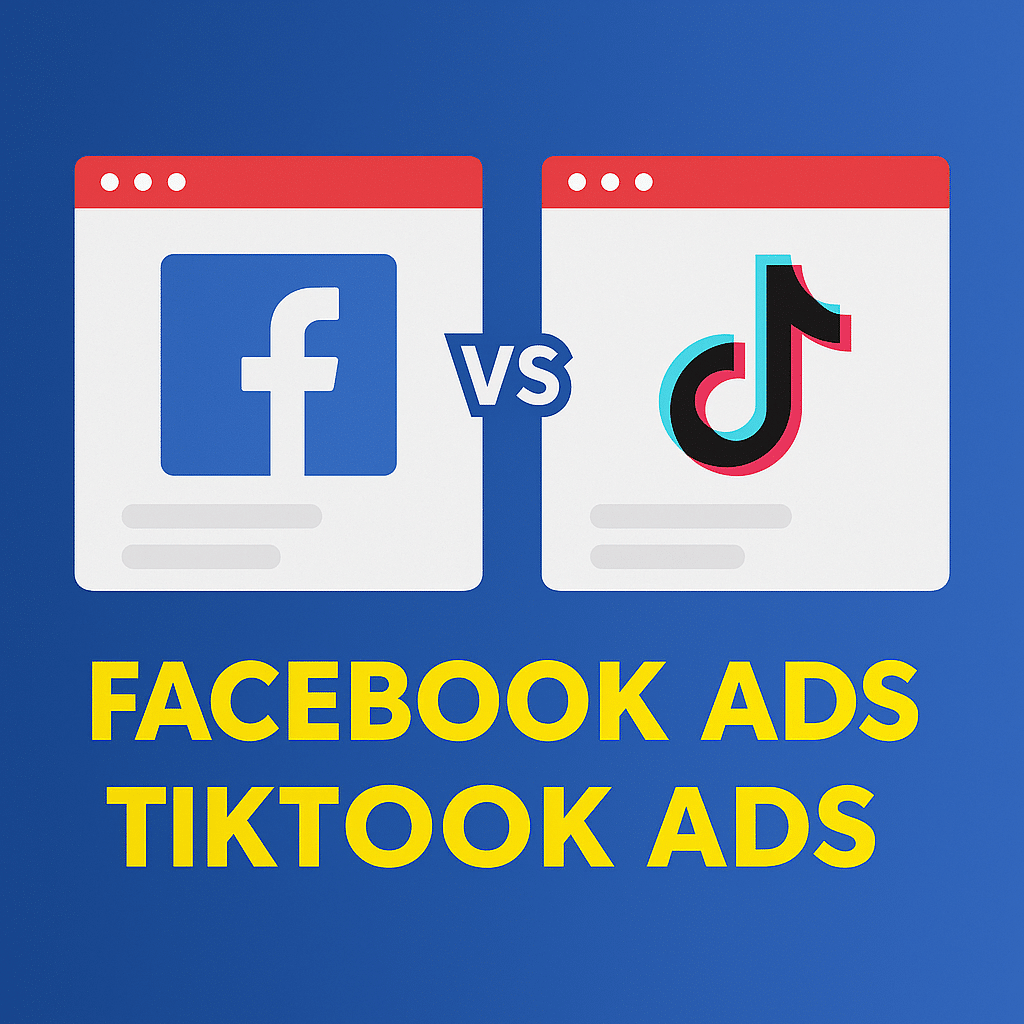
Choosing between Facebook (Meta) and TikTok in 2025 is not about declaring a winner. It is about matching each platform to the right job in your funnel. Meta’s mature delivery, retargeting depth, and testing controls make it a reliable profit center once demand exists. TikTok’s creator-led, entertainment-first feed is excellent for sparking attention and net-new demand if your creative engine moves fast.
This guide breaks down audience and reach, costs and performance, creative and formats, targeting and delivery, and attribution. You will see when to go TikTok-first, when to lead with Meta, and how to run both together for the strongest blended CAC and ROAS.
Audience and reach
| Platform | Footprint / Placements | Strengths & Use Cases |
|---|---|---|
| Meta (Facebook, Instagram, Messenger, Audience Network) | Broad reach across Feed, Reels, Stories; dependable delivery for prospecting & retargeting | Diverse placements support scale; effective when running 30+ audiences or seeking higher AOV reliability |
| TikTok | Entertainment-first consumption; high time-spent; rapid 25–44 adoption | Great for products that demo well, leverage social proof or creator endorsements |
Costs and performance
| Metric | What we see across accounts | When each platform shines |
|---|---|---|
| CPC / CPM | TikTok often shows similar or slightly lower CPCs; CPMs are competitive on both. Seasonality and vertical swings are common. | TikTok: cost-efficient reach in entertainment-first feeds. Meta: can deliver lower CPMs in some niches; steadier at scale. |
| CTR / CVR | TikTok in-feed video drives strong engagement/time-watched, but off-site CTR and web CVR often test stronger on Meta, especially for higher-consideration products. | TikTok: engagement, view time, creator-led discovery. Meta: stronger click-through to site and on-site conversion for complex buys. |
| ROAS / CPA | TikTok’s lower-funnel performance improved in the past 12–18 months (creator-led, TikTok Shop). Meta remains the most consistent profit center when harvesting intent. | TikTok: real sales channel for ecommerce with creators/in-app commerce. Meta: consistent scaled ROAS/CPA once demand exists. |
Creative and formats
| Platform | Creative style | Formats to prioritize | Cadence / Notes |
|---|---|---|---|
| TikTok | Must feel native: lo-fi, human, story-driven; hook in first 1–3 seconds; fast cuts, captions, strong CTAs. Think “ad that looks like a TikTok,” not a polished commercial. | In-feed conversion ads, Spark Ads (boost creator posts), LIVE Shopping (where available), and Shop ads. UGC with product demos, before/afters, “things I wish I knew,” and problem/solution angles. | High cadence. Test new hooks weekly, or multiple times per week at scale. Creative fatigue occurs faster on TikTok. |
| Meta (Facebook + Instagram) | Still rewards UGC and short-form (Reels/Stories), and also supports classic direct-response creative. | Image, carousel, collection/Advantage+ templates, and product catalog ads (DPAs) for dynamic retargeting. | Moderate-high cadence. Winners can run longer than on TikTok, but frequent updates help maintain efficiency. |
Targeting, Delivery, and Testing
| Platform | Targeting & delivery strengths | Recommended approach | Notes / Features |
|---|---|---|---|
| Meta (Facebook + Instagram) | Mature delivery system with best-in-class lookalikes, broad targeting tolerance, and robust retargeting controls. | Use broad + lookalikes with strong conversion signals; layer retargeting. | Advantage+ Shopping Campaigns (ASC) and native A/B testing widely adopted for ecommerce. |
| TikTok | Targeting improving (broad/open sets, custom audiences, lookalikes, search & Shop signals) but more sensitive to creative-market fit. | Go broad with excellent, native-feeling creative; prioritise creator-led assets. | Granular interest stacks matter less than creative quality; test rapid iterations. |
Practical tip: On both platforms, many users now succeed with broad/open ad sets and let the system find pockets of efficiency (provided your pixel/conversion API is clean and you’re feeding a steady stream of creative variation).
Attribution and Measurement
| Platform | Attribution defaults | How to compare / analyse | Notes / References |
|---|---|---|---|
| Meta (Facebook + Instagram) | Default is 7-day click / 1-day view; adjustable at the ad-set level. | Compare windows in Ads Manager and use reporting breakdowns to assess lift across windows. | Jon Loomer’s updates are a solid reference for Meta attribution nuances. |
| TikTok | Flexible via Attribution Manager (e.g., 7-day click / 1-day view). | Select window per objective/test; review post-view effects and pathing. | TikTok Shop and LIVE have separate guidance for attribution windows and event flow. |
Note: Expect platform-reported ROAS to diverge. Many ecommerce brands run a first-party or third-party attribution layer to reconcile.
Ecommerce and TikTok Shop
Social commerce behaviors are normalized in much of SEA, and TikTok Shop has grown rapidly. This compresses the funnel: discovery, engagement, and purchase can happen in-app, improving lower-funnel performance for the right products.
For Singapore or regional brands:
- If eligible, test TikTok Shop campaigns (e.g., product sales, LIVE) and pair with creator affiliates. Use Shop’s native signals to improve prospecting match quality.
- If you remain off-Shop (Shopify/brand.com), TikTok still improves awareness and nudges trial; Meta’s retargeting and DPAs then close the loop.
- Keep an eye on policy/compliance updates in each country. But the macro trend is clear: creators + Shop + LIVE are now a mainstream path to purchase in SEA. See industry roundups and coverage referenced across the sources.
What other PPC practitioners say
- TikTok can deliver cheaper traffic and “spiky” performance that swings with creative freshness.
- Results vary widely by niche and geo; some accounts encounter low-quality clicks if they go too broad with weak filters/creative, while others see breakout wins fueled by creator content.
Takeaway: don’t generalize from one account. Test both, control your variables (attribution windows, landing pages, offer), and let blended metrics guide budget shifts.
When to favor one platform over the other
Start TikTok-first if:
- Your product demos well in vertical short video (beauty, apparel, gadgets, home, personal care).
- You can sustain high creative velocity (new hooks/angles every week).
- You can leverage creators and, in supported markets, TikTok Shop or LIVE commerce.
Start Meta-first if:
- Your audience is 30+ or you sell higher-consideration/higher AOV products that benefit from deeper retargeting and broader placement coverage.
- You need rigorous testing controls, predictable scaling, and robust lead gen experiences (native forms, CRM integrations).
How to use both together
| Pillar | Platform | Recommendations |
|---|---|---|
| Measurement & signals | Both | Implement pixel + server-side events (Conversions/Events API). Standardize attribution windows (e.g., 7-day click / 1-day view) and document a single “source of truth” (analytics/MMP/first-party). Track blended CAC/ROAS and net-new customer share alongside platform ROAS. |
| Offers & landing experience | Both | Align offers across platforms; tailor landing pages to the creative promise. |
| TikTok | Keep pages fast, mobile-first, and social-proof heavy (UGC modules, reviews, FAQs high on page). | |
| Meta | You can test longer-form DR pages in some verticals; still keep above-the-fold friction low. | |
| Creative engine (cadence & formats) | TikTok | Produce 5–10 new variations/week at scale: swap hooks/introductions/problem statements; test different creators/props; rotate CTAs (“Claim your offer,” “Shop now,” “Watch full demo”). Run Spark Ads to amplify creator/organic posts; test LIVE Shopping during events (where eligible). |
| Meta | Port best TikTok UGC to Reels/Stories; test DR formats (single image, carousel, collection) for range/value props. Use Advantage+ Shopping Campaigns with UGC + catalog assets for retargeting and broad prospecting. | |
| Campaign structure & budgets | Prospecting — Both | Use broad/open targeting with strong creative diversity. Avoid over-stacking interests or too-tight lookalikes early. Start with learning-friendly bid strategies (no strict caps); consider cost caps after delivery stabilizes (volatility more common on TikTok at scale). |
| Retargeting — Meta & TikTok | Meta: Heavier investment into 7/14/30-day windows (ViewContent, ATC, InitiateCheckout); pair DPAs with social proof. TikTok: Retarget video viewers, engagers, recent site visitors with snappy “answer-objections” ads (top reviews, quick demo, limited-time offer). |
|
| Testing cadence & decision rules | Both | Weekly creative sprints on TikTok; bi-weekly on Meta. Hold tests to one variable at a time (hook, angle, offer, CTA). Move budget by blended CAC/ROAS and net-new customer ROAS, not just platform ROAS. |
Benchmarks to watch
- CTR: don’t confuse in-feed engagement with buying intent; track link CTR and on-site engagement separately. Meta often shows stronger landing page CTR in many ecommerce verticals.
- CVR: If you send TikTok traffic off-site, CVR can lag if your page doesn’t mirror the ad’s promise. Align the landing experience to the ad’s first three seconds (same hook, headline, and hero creative).
- ROAS: Use consistent attribution windows and a single source of truth. TikTok’s contribution to net new customers can be underestimated if you only look at last-click or narrow windows.
Common pitfalls
| Pitfall | Why it hurts | Fix |
|---|---|---|
| Treating TikTok like Facebook | Highly polished brand spots and infrequent updates underperform in TikTok’s native, fast-paced feed. | Build native UGC, iterate quickly, hook early, and rotate creatives weekly. |
| Misaligned attribution windows | Meta and TikTok defaults can differ, exaggerating performance gaps. | Align attribution windows across platforms and compare blended metrics. |
| Underinvesting in creative | On TikTok, creative is the main performance lever; weak or stale assets cap results. | Budget time and money for creator sourcing, briefs, and editing alongside media spend. |
| Over-targeting early | Narrow interest stacks throttle delivery and slow learning. | Go broad with strong creative; add exclusions/retargeting after learning. |
Industry specifics
- Beauty/Personal Care/Fashion: TikTok has outsized upside (tutorials, transformations, before/afters); Meta retargeting to close.
- Fitness/Wellness/Consumer Electronics: Educational UGC on TikTok can efficiently build demand. Meta is strong for comparison creatives, carousels, and DPAs as shoppers evaluate options.
- Lead Gen/Services/B2B: Meta is typically stronger for form fills and retargeting. Use TikTok for awareness and trust via founder/experts UGC, then shepherd prospects to Meta retargeting and email.
30-day test plan you can copy
Week 1
- Set up pixels + server-side events, standardize attribution windows (7-day click, 1-day view).
- Build 12–20 TikTok ad variations across 3 angles (problem/solution, testimonial, demo) with 2–3 creators.
- Prepare 8–12 Meta assets: 4–6 UGC videos (ported from TikTok cuts), 2 image ads, 2 carousels, 2 collection ads.
- Launch broad prospecting on both; set small retargeting pools.
Week 2
- Kill the bottom 30% of creatives by CTR and cost per add-to-cart; launch 6–8 new TikTok variations iterating top hooks.
- Add Spark Ads for any organic/creator posts with strong early engagement.
- On Meta, test Advantage+ Shopping with your top 4 UGC assets and a DPA retargeting set.
Week 3
- Introduce a timed offer or value prop test across both platforms (free shipping, bundle save, or limited color drop).
- Expand retargeting windows and add social proof creatives for warm audiences.
Week 4
- Rebalance budgets toward the channel/ad sets with the best blended CAC and net-new customer share.
- Lock in 2–3 evergreen winners per platform; plan next month’s angles based on comments/objections seen in-feed.
Conclusion
TikTok vs Facebook isn’t an either/or for most ecommerce brands in 2025. TikTok has matured into a serious performance channel, particularly for creator-friendly products and in markets where Shop/LIVE are active. Meta remains the most reliable backbone for harvesting demand and scaling retargeting profitably. Build a creator engine, align attribution windows, and let blended CAC and net-new customer impact decide where the next dollar goes.
Ready to turn this into growth? Explore First Page Digital’s social media services: