Your campaigns can look perfect on paper. Targeting is sharp, budgets are healthy, and performance starts strong. Then, results quietly slide. Clicks drop, costs rise, and the ads that were winning last week suddenly stop pulling their weight.
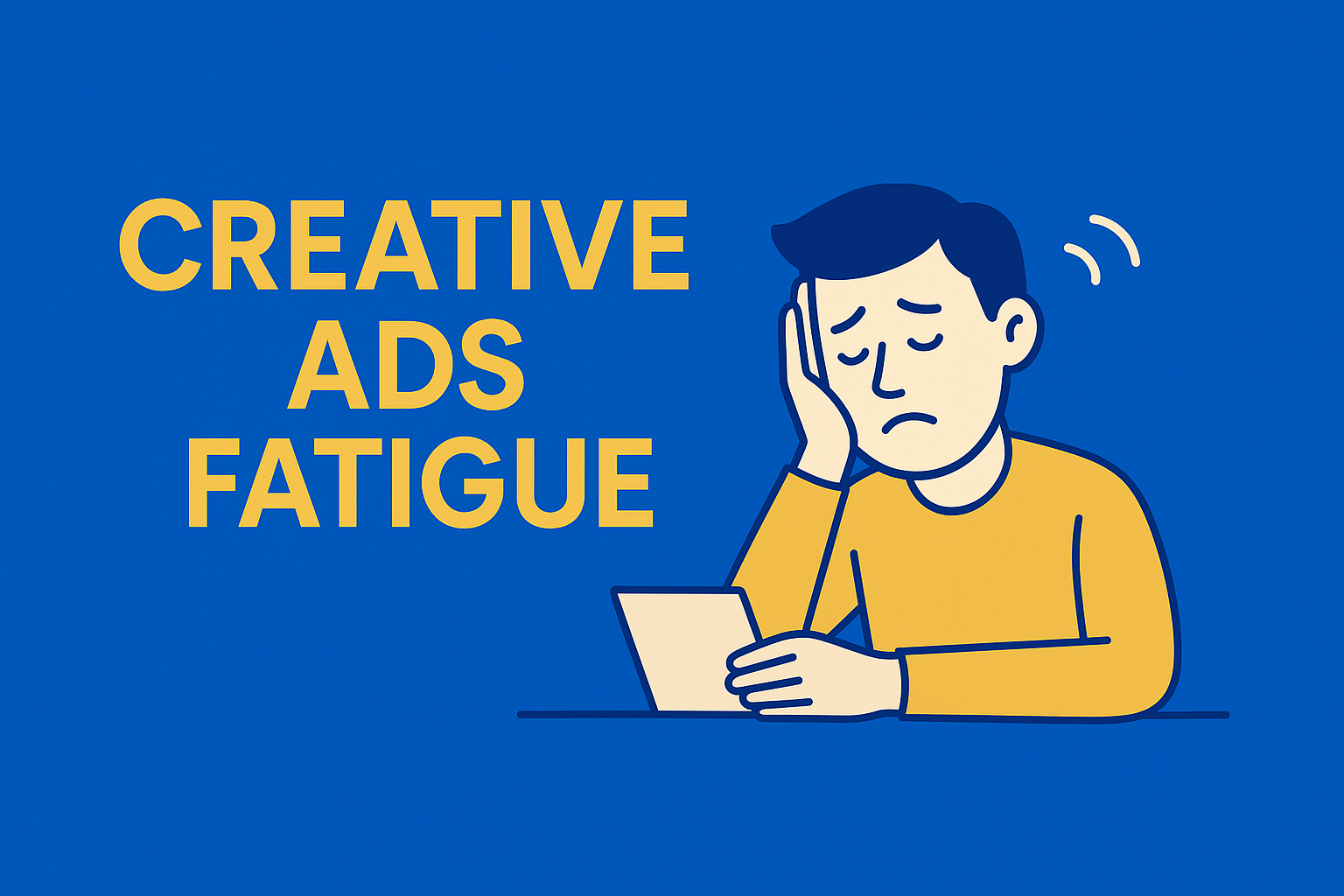
In many cases, the core problem is not targeting or budget. It is creative ad fatigue.
Creative ad fatigue happens when people have seen your ads, or very similar creatives, so many times that they stop noticing or caring. As a result, engagement falls, algorithms reduce your delivery priority, and your cost per result climbs even though nothing in your account settings has changed.
Because platforms like Meta and Google push “best performing” ads aggressively, they can burn out your strongest creatives faster than you expect. This is why even great ads eventually fail if you do not actively manage creative rotation and audience exposure.
This guide is built to be a practical playbook that helps you:
- Understand what ad fatigue and creative fatigue actually are
- Spot early warning signs before your ROAS collapses
- Fix fatigued campaigns without starting from zero
- Build a repeatable system for refreshing creatives at scale
First, let us define the key concepts clearly so you can diagnose problems correctly.
What Is Ad Fatigue?
Ad fatigue is what happens when the same people see the same ad too many times. At first, the ad might perform well. However, as frequency increases, users become bored, indifferent or even annoyed. They stop clicking, stop engaging, and in some cases start hiding or reporting the ad.
Typical signs of ad fatigue:
- The same ad is shown repeatedly to the same audience
- Click through rates decline over time, even though targeting is unchanged
- Cost per click and cost per result increase as algorithms struggle to find fresh engagers
From the user’s point of view, ad fatigue feels like “this brand keeps showing me the exact same ad everywhere.” From your point of view, it looks like a winning ad slowly turning into an expensive underperformer.
What Is Creative Fatigue?
Creative fatigue is closely related, but it goes one level deeper. Instead of a single ad wearing out, the audience becomes tired of a whole creative concept.
In other words, even if you launch new ad IDs, they can still underperform if they look and feel the same as everything you have already been running.
Typical signs of creative fatigue:
- Multiple ads use the same visual style, hook or message
- New ads stop working quickly, even with fresh budgets
- Performance drops across a whole ad set or campaign that shares a creative theme
Here, the problem is not just frequency. The problem is that your creatives are no longer interesting, surprising or relevant. People recognise your ad “pattern” instantly and scroll past without thinking.
Ad Fatigue vs Creative Fatigue: What Is the Difference?
Marketers often use the terms interchangeably. However, separating them helps you decide what to fix and how aggressive your changes need to be.
In simple terms:
- Ad fatigue happens when a specific ad has been shown too often to the same people.
- Creative fatigue happens when a whole creative idea or style is worn out, even across different ads.
This difference matters because it changes the solution.
- If it is ad fatigue, you might recover by rotating that ad out, lowering its budget, or shifting delivery to other creatives.
- If it is creative fatigue, you need to rethink the concept itself – new hooks, new angles, new visuals, and sometimes a different offer or storyline.
If you misread creative fatigue as just a targeting issue, you can waste time rebuilding audiences while serving the same tired message. Likewise, if you only change small details like colours and background images, you might see a short rebound before performance drops again.
Why Creative and Ad Fatigue Happen
Creative fatigue is not random. It happens because audiences, algorithms and creatives interact in predictable ways. When you understand these mechanics, you can prevent performance crashes before they happen. This section breaks down the root causes in clear, practical terms so you can diagnose the problem accurately and avoid repeating the same mistakes.
Overexposure to the Same Audience
One of the most common reasons fatigue happens is simple overexposure. When your ads are shown repeatedly to the same group of people, they lose impact quickly. Users stop paying attention and eventually scroll past without thinking.
Typical triggers include:
- Small or narrow audiences that get saturated fast
- High daily budgets relative to audience size
- Automated delivery that maximises impressions to proven engagers
The result is the same every time. Performance rises early, peaks, then slides steadily as people become familiar with the ad and tune it out.
Audience Saturation Over Time
Even with large audiences, saturation eventually occurs. Modern ad platforms optimise aggressively for efficiency, meaning they do not spread impressions evenly. They show your ads more frequently to those who are most likely to engage, which causes pockets of your audience to saturate faster than you expect.
Signs of saturation include:
- Increasing frequency paired with declining CTR
- Higher CPMs as the algorithm moves into less responsive segments
- Falling conversion rates despite stable targeting
Saturation is inevitable. The only question is how quickly it happens, which depends on your audience size, budget and creative diversity.
Algorithmic Over-Optimisation
Meta and Google increasingly rely on machine learning to identify which ad variation gets the best early results. This sounds helpful, but it creates a hidden problem. When one creative performs well in the first few days, the platform may push it aggressively and starve all other creatives.
In practice, this accelerates fatigue because your strongest creative receives a disproportionate share of impressions. It burns out faster, and you lose the chance to test other variations properly.
This is especially common in:
- Meta Advantage+ campaigns
- Google Performance Max
- Display campaigns with overly broad targeting
Without a structured rotation system, the algorithm’s desire to optimise can work against you.
Lack of Creative Variation
Creative fatigue is not caused only by frequency. It is caused by repetitiveness. If your ads all look, sound or feel similar, audiences begin to recognise the pattern instantly. They mentally classify your ads as “same as last time” and ignore them.
Common causes include:
- Reusing the same headline structure or hook
- Using the same brand colours and layout in every ad
- Producing only one type of creative format, such as static images only
- Copying previous winning ads too closely
Remember that your audience does not differentiate between individual ad IDs. They perceive all of your creatives as part of the same experience. If everything looks alike, fatigue will set in even if the ads are technically “new”.
Campaign Structures That Speed Up Fatigue
Certain campaign setups cause fatigue faster than others. If you use these structures without controls, your ads will wear out more quickly.
High-risk setups include:
- Single-creative ad sets with no backups or variations
- Retargeting audiences that are too small or refreshed too slowly
- Heavy reliance on Advantage+ or PMax without creative rotation
- Static-only creative libraries in fast-paced industries
To slow fatigue, you will need to introduce more variation, update your rotation frequency and create healthier audience flows.
Human Psychology: Why People Tune Out
Beyond algorithms and settings, fatigue happens because the human brain is wired to ignore repetition. When people see something familiar too many times, their attention naturally decreases. This is a survival mechanism that keeps the brain from processing unnecessary information.
In advertising, this means:
- Repetition reduces emotional response
- Predictability kills curiosity
- The brain filters out creative patterns it recognises instantly
This is why novelty matters. Your ads must evolve not only to please algorithms, but also to maintain the audience’s interest.
Platform Changes and the Modern Ad Landscape
Creative fatigue is more common today than it was a few years ago because digital advertising has changed significantly.
Key shifts include:
- More advertisers competing for the same attention
- Higher creative volume needed to stay competitive
- Faster ad cycles due to short-form video culture
- Greater reliance on automation, which increases impression clustering
All of this increases the pressure on brands to refresh creatives more often and diversify ad formats more aggressively.
How to Detect Creative Fatigue Early
Creative fatigue rarely appears suddenly. It builds gradually, and the earlier you recognise the signs, the easier it is to recover performance without overhauling your entire advertising setup. This section breaks down the most reliable metrics, behavioural signals and platform indicators you should monitor. When you track these consistently, creative fatigue becomes predictable rather than disruptive.
Key Performance Metrics That Indicate Fatigue
Creative fatigue shows up first in your performance data. Certain metrics decline long before conversions collapse, so reviewing these regularly helps you spot problems early.
Click-through rate (CTR)
- A drop in CTR is one of the clearest signs your audience is no longer responding to your creative.
- If impressions stay stable but CTR declines, fatigue is likely developing.
Cost per click (CPC)
- As people click less, platforms increase your cost to maintain delivery.
- Rising CPC paired with declining CTR almost always signals fatigue.
Cost per acquisition (CPA) or cost per result
- CPA rises when your creative stops motivating action.
- A stable landing page and stable targeting combined with rising CPA indicates creative wear-out.
CPM (cost per 1,000 impressions)
- CPM increases when platforms must work harder to find interested users.
- Higher CPM over time can mean your creative is losing relevance signals.
Conversion rate
- When conversion rates decline despite similar traffic quality, fatigue is likely affecting user motivation.
Individually, each metric can fluctuate for many reasons. However, when two or more decline at the same time, creative fatigue becomes the most probable cause.
Frequency and Reach Indicators
Ad fatigue directly affects how often an individual sees your creative. Monitoring these numbers regularly gives you a reliable early warning system.
Frequency
- If your frequency rises quickly, your audience is being saturated.
- High frequency with falling results confirms the ad has worn out.
Reach stagnation
- If reach stops growing but impressions continue increasing, it means the platform is showing your ads repeatedly to the same people.
On Meta and Google, this is a textbook signal of early fatigue developing.
Engagement Decline Across Creatives
If engagement metrics fall not just for one ad, but across multiple creatives that share the same concept, you are dealing with creative fatigue rather than ad fatigue.
Look for these patterns:
- All variations in an ad set decline simultaneously
- A newly launched ad with a similar look underperforms immediately
- Your audience stops interacting with the creative theme altogether
This indicates that people are tired of the idea itself, not just one ad.
Negative Feedback and User Behaviour Signals
The audience will tell you when the creative is wearing out. They do this through behavioural cues that platforms quietly track.
Common indicators include:
- More “Hide ad” actions
- More “I don’t want to see this” reports
- Shorter video watch times
- Lower post engagement (likes, comments, shares)
Because negative relevance signals affect delivery, platforms will throttle your fatigued ads further, worsening performance faster.
Platform Diagnostics and Warnings
Platforms like Meta now include fatigue-related signals directly inside their delivery diagnostics. These provide highly accurate alerts.
Examples include:
- Creative fatigue warnings inside Meta Ads Manager
- “Limited learning” caused by underperforming creatives
- Performance Max asset-level ratings dropping over time
- YouTube Video View Rate declining sharply
These automated signals make it easier to act proactively rather than reactively.
Creative Lifecycle Curves: Understanding Performance Decay
Every creative follows a predictable lifecycle. Recognising where your ad sits in this cycle tells you whether to improve, rotate or retire it.
Typical creative lifecycle pattern:
- Launch phase: early excitement and strong engagement
- Peak phase: stable performance and efficient cost
- Decay phase: metrics begin sliding steadily
- Fatigue phase: performance drops below profitability
Your goal is to identify the start of the decay phase, not the fatigue phase. Acting at that moment protects your ROAS and stabilises results.
Diagnostic Table: Symptoms and What They Mean
| Symptom | Possible Meaning | Recommended Action |
|---|---|---|
| CTR dropping steadily | Audience has stopped engaging with the creative | Refresh visuals or angle |
| Frequency increasing | Same users are seeing the ad repeatedly | Rotate creative and expand audience |
| CPA rising with stable traffic | Creative no longer persuades users to act | Introduce fresh hooks or offers |
| Engagement lower across all variations | Creative concept is worn out | Change the creative theme entirely |
How to Fix Creative Ad Fatigue
Creative fatigue is unavoidable in any long-running campaign, but the good news is that it is completely reversible when you act early and strategically. This section covers practical, step-by-step methods that restore performance, reduce wasted budget and help you regain control of your ad delivery. The solutions here are designed to be easy to implement while still giving you the depth needed for long-term success.
Refresh or Replace the Creative
The most direct fix for creative fatigue is to introduce something new to the audience. A creative refresh can be minor or major depending on how deeply fatigue has set in.
Light refresh ideas:
- Change the headline or opening hook
- Use a new image or video frame
- Adjust colours, layouts or product presentation
- Swap background music in video ads
These adjustments help extend the lifespan of a creative that is losing traction but has not fully burned out.
Full creative replacements:
- Introduce a completely new concept or storyline
- Use different user personas or use cases
- Change your value proposition or main selling point
- Rebuild the visual identity of the ad to feel fresh
Use full replacements when metrics decline across all variations or when new ads that resemble the original perform poorly immediately.
Increase Creative Variety
Many brands rely on a single creative direction for too long. Increasing creative diversity helps platforms distribute impressions more evenly and reduces the chance that users will see repetitive messages.
Ways to expand creative variety:
- Create multiple versions of each concept rather than relying on one “hero” ad
- Develop content in different formats, such as static images, video, carousel or UGC style
- Test different hooks: emotional, educational, comparison, humour or urgency driven
- Experiment with different calls to action to see which angle re-engages audiences
As you increase the number of creative angles available, algorithms have more options to work with, which slows down fatigue naturally.
Expand or Rotate Audiences
Sometimes fatigue is caused not by the creative itself, but by showing the creative to the same users too often. A strategic audience shift can reset performance quickly.
Effective audience solutions:
- Expand the audience by adding new interests or lookalike ranges
- Break large campaigns into segmented audiences for more balanced delivery
- Rotate creatives between audience groups to distribute impressions evenly
- Refresh retargeting pools so users do not see the same ad for months
You do not need a dramatic audience expansion. Even a small shift in who receives impressions can spark fresh engagement.
Adjust Frequency Controls and Delivery Settings
Overdelivery is one of the biggest drivers of fatigue. When platforms push your best creative too hard, frequency climbs and performance drops. Adjusting delivery settings helps you regain control.
Useful adjustments include:
- Lowering daily budgets temporarily to slow impression velocity
- Setting frequency caps when available, particularly on display or video campaigns
- Pausing fatigued creatives to force platforms to distribute impressions to fresher assets
- Duplicating an ad set to reset optimisation if delivery becomes stuck on an older ad
Small adjustments often produce immediate improvements by rebalancing how impressions are allocated.
Rebuild the Hook or Offer
When fatigue sets in, sometimes the problem is not your visuals. It is your message. Changing the core hook or offer is one of the fastest ways to revive performance because it addresses user motivation directly.
Hook refresh ideas:
- Switch from a problem-focused hook to a benefits-focused angle
- Introduce social proof or credibility elements
- Use a new headline structure that captures attention faster
- Highlight a different feature or use case of your product
Offer refresh ideas:
- Add a limited-time promotion or bonus
- Highlight bundles or seasonal deals
- Frame the offer differently without changing the price
- Use urgency or scarcity to stimulate engagement
This is particularly effective when CTR drops but conversion rate remains steady, suggesting people are no longer compelled to click.
Shift Creative Format for Maximum Contrast
If your existing ads are static, switching to motion will often solve fatigue immediately. Likewise, video-heavy accounts can benefit from bold static visuals for contrast.
Format shifts that help:
- Move from static images to short-form video
- Switch from polished video to UGC style content for authenticity
- Use carousel ads to change the browsing interaction
- Add animated GIFs or lightweight motion effects
Contrast is one of the easiest ways to reset user attention. Even small format tweaks can create enough novelty to revive performance.
Use Behavioural Insights to Refresh Messaging
Studying what your audience responds to gives you a clear roadmap for refreshes. Look at the comments, search terms, social interactions and reviews your brand receives.
Insights that drive fresh creative:
- Common objections your audience mentions
- Unexpected benefits people highlight in reviews
- Questions asked repeatedly in comments or messages
- Competitor angles or trends emerging in your niche
When you build creatives that reflect what real users care about, fatigue slows naturally because your messaging stays relevant.
Diagnostic Table: Fixes Based on Fatigue Severity
| Fatigue Level | Symptoms | Recommended Fix |
|---|---|---|
| Mild | CTR dipping, frequency rising slowly | Light creative refresh or small audience expansion |
| Moderate | CTR and CPC deteriorating across multiple variations | Rotate creatives, adjust budgets and refresh hooks |
| Severe | Wide performance collapse and negative feedback rising | Rebuild creative concept and restructure audience delivery |
How to Prevent Creative Fatigue Before It Happens
Fixing creative fatigue is helpful, but preventing it is far more efficient. When you build the right systems, your creatives last longer, your results stay stable and your ad account becomes easier to scale. This section outlines long-term prevention strategies used by top-performing advertisers, supported by insights from Meta, Google and leading performance marketing practitioners.
Build a Creative Rotation System
One of the most reliable ways to prevent fatigue is to rotate creatives regularly instead of waiting for performance to collapse. Predictable rotation keeps ads fresh, spreads delivery more evenly and gives campaigns space to breathe.
Recommended rotation guidelines:
- Refresh creatives every 7 to 14 days for fast-moving niches
- Refresh every 14 to 30 days for stable industries
- Rotate multiple formats together rather than introducing only one new ad
- Retire or pause variations as soon as decay trends appear
The goal is to introduce new ads before the audience becomes bored, not after.
Maintain a Creative Backlog or Pipeline
Brands that scale effectively always have a backlog of ready-to-launch creatives. This prevents the panic of needing to create new ads only after results fall.
Your creative pipeline should include:
- New concepts in development
- Variations of existing winners
- Multiple formats for the same message
- Seasonal or promotional versions planned in advance
A well-structured pipeline ensures you never run out of fresh assets and allows consistent testing throughout the month.
Use Multiple Creative Formats Continuously
Fatigue happens faster when users see the same style of ad repeatedly. By mixing formats, you automatically extend the performance lifespan of each creative type.
Formats to use together:
- Short-form video
- UGC-style testimonial videos
- Static images and graphics
- Carousel ads
- Lightweight animations or GIFs
When users receive a mix of formats, no single creative wears out as quickly.
Monitor Frequency and Performance Weekly
The earlier you notice fatigue signals, the easier it is to minimise damage. This makes weekly monitoring essential.
Track these indicators consistently:
- CTR changes week-over-week
- Frequency movement across campaigns
- CPM increases, especially during stable seasons
- Conversion rate trends
- View-through rate for video ads
Weekly monitoring protects your budgets and keeps your campaigns healthy long term.
Use Audience Expansion and Refresh Cycles
Even the best creatives cannot survive a rapidly saturating audience. To slow fatigue, you must refresh your audience flow regularly.
Best practices include:
- Expand targeting gradually instead of making large jumps
- Refresh lookalike audiences monthly or quarterly
- Use broad targeting paired with strong creatives in Meta campaigns
- Update remarketing windows to avoid overexposing small pools
High-quality audiences help your creatives last longer and perform more consistently.
Create Variation Within a Single Concept
Creative variation is one of the strongest tools against fatigue. The more variations you create per concept, the longer the concept lasts overall.
Variation ideas for a single concept:
- Different intros or hooks for videos
- Different personas or customer examples
- Alternative product angles or benefits
- Different scenes, testimonials or voiceovers
This allows you to scale a winning theme without burning it out too quickly.
Apply the 70/20/10 Creative Strategy
Many high-performing advertisers use a structured creative allocation model to keep fatigue low while continuing to test efficiently.
The model works like this:
- 70 percent: proven evergreen creatives
- 20 percent: existing concepts refreshed or repurposed
- 10 percent: brand new experimental creative concepts
This ensures a healthy balance between stability and innovation.
Leverage User-Generated Content to Slow Fatigue
UGC-style creatives age more slowly than polished brand ads because they blend naturally into social feeds. This makes them highly resilient against fatigue.
Why UGC slows fatigue:
- It feels genuine and less like advertising
- It allows more personality and variation
- It is easier to produce in batches
- It introduces fresh faces and voices
Consider maintaining a steady stream of UGC variations built around specific hooks and offers.
Plan Seasonal and Campaign-Based Refresh Cycles
Certain times of year, such as holidays, sales periods or industry events, accelerate fatigue because competition spikes and audiences are bombarded with ads.
Prevention strategies for seasonal fatigue:
- Prepare seasonal creative sets in advance
- Set shorter creative lifespans during peak periods
- Apply faster rotation cycles to maintain performance
- A/B test early to identify winning seasonal angles
Planning ahead keeps your ads competitive while competitors burn out from overexposure.
Build Creative Templates for Rapid Refreshing
One of the fastest ways to stay ahead of fatigue is to use creative templates that allow quick updates without needing a full redesign.
Templates allow you to refresh:
- Headlines
- Colour schemes
- Hooks
- Imagery or video clips
- Calls to action
By maintaining a library of templates, your team can generate multiple fresh variations in hours instead of days.
Encourage Cross-Functional Feedback
Fatigue prevention is most effective when insights come from multiple perspectives, including creative teams, media buyers, customer service teams and sales teams.
Feedback sources to leverage:
- Customer objections heard by sales teams
- Comments from social channels
- Product updates that inspire new hooks
- Support tickets revealing pain points
This helps you develop creatives that remain relevant and compelling for longer periods.
Platform-Specific Fatigue Signals and Solutions
Every advertising platform handles delivery, optimisation and creative rotation differently. This means the way fatigue shows up and the best way to fix it will vary across Meta, Google, YouTube and TikTok. Understanding these platform-specific patterns gives you a major performance advantage. Instead of guessing why results fall, you can diagnose the issue accurately and take corrective action fast.
Meta (Facebook and Instagram)
Meta is the platform where creative fatigue is most common and most noticeable. Because Meta optimises aggressively toward top-performing creatives, strong ads burn out quickly if you are not rotating enough variations or refreshing your messaging regularly.
Common fatigue indicators on Meta:
- CTR declines within 3 to 10 days of launch
- Frequency rises rapidly, especially in retargeting
- “Creative fatigue” appears directly inside Delivery Insights
- CPM rises while reach stagnates
- Your top creative stops getting impressions suddenly
Best Meta-specific solutions:
- Introduce 3 to 6 variations for every major concept
- Use both UGC and polished formats to slow fatigue
- Duplicate ad sets if delivery becomes stuck on one creative
- Refresh creators, hooks and intros frequently
- Rotate ads out of retargeting every 7 to 14 days
Meta’s algorithm rewards novelty. The more consistently you refresh your creative library, the more stable your results will be.
Google Display and Performance Max
Google handles fatigue differently. Because Google ads appear across millions of placements in varying contexts, fatigue often shows up as a gradual decline rather than an immediate crash. However, Performance Max campaigns can push specific assets too heavily, causing hidden fatigue if you are not monitoring asset-level performance.
Common fatigue indicators on Google:
- Declining asset ratings in Performance Max
- Static images losing impressions while other formats overwhelm delivery
- CPM and CPC increasing across Display placements
- Lower engagement on responsive display ads
- Declining conversion signals without changes in targeting
Best Google-specific solutions:
- Refresh image and headline assets quarterly for PMax
- Introduce more video variants to balance the asset mix
- Review placement reports to identify saturation-heavy websites
- Use more audience signals such as custom segments or keyword-based intent
- Rotate evergreen and seasonal creatives periodically
Google thrives on diversified asset groups. The more types of creatives you provide, the slower fatigue spreads.
YouTube Ads
YouTube behaves differently from Meta because the platform is content-first. Fatigue appears when viewers stop responding to your hook or skip your ad faster than before. YouTube’s algorithm is highly sensitive to early viewer behaviour, making fatigue easier to detect through watch patterns.
Common fatigue indicators on YouTube:
- View-through rate (VTR) declines
- Early drop-offs increase in the first 3 to 5 seconds
- Cost per view rises steadily
- Lower conversions from the same audiences
- Suggestions and reach plateau across campaigns
Best YouTube-specific solutions:
- Refresh your first 3 seconds more often than the full video
- Test new intros, sound effects or on-screen text
- Use multiple video lengths such as 6s, 15s and 30s
- Rotate creators or spokespersons to increase novelty
- Use audience exclusions to avoid oversaturation
YouTube rewards strong hooks. If your intro loses power, the rest of your video cannot compensate.
TikTok Ads
TikTok is highly sensitive to creative fatigue because the platform moves fast and content trends change weekly. Ads that perform well initially can burn out in days if they do not adapt to the rapid content style users expect.
Common fatigue indicators on TikTok:
- Sharp drops in CTR and engagement
- Higher skip rates within the first 2 seconds
- CPM surges during periods of heavy competition
- Algorithm shifts delivery away from fatigued videos completely
- Shorter viewer retention curves
Best TikTok-specific solutions:
- Refresh creatives every 5 to 10 days for best performance
- Use trending sounds, formats and native editing styles
- Launch multiple variations weekly
- Maintain a strong UGC production pipeline
- Break creative patterns frequently to maintain novelty
TikTok rewards constant creative output. The more often you produce native-style videos, the more resistant you become to fatigue.
LinkedIn Ads
Fatigue on LinkedIn happens more slowly because impressions are more expensive and audiences are smaller. However, when fatigue hits, performance can collapse dramatically due to LinkedIn’s narrower delivery ecosystem.
Common fatigue indicators on LinkedIn:
- Falling CTR across single-image or carousel campaigns
- Higher lead costs with stable audience size
- Repetitive delivery to the same job titles or companies
- Slow impression growth despite adequate budgets
Best LinkedIn-specific solutions:
- Refresh creatives monthly or semi-monthly
- Rotate between single-image, video and document ads
- Expand seniority or job function layers occasionally
- Use conversational ads to introduce more variety
Because LinkedIn audiences saturate quickly, segmentation and rotation are essential for maintaining engagement.
Summary Table: How Fatigue Shows Up on Each Platform
| Platform | Primary Fatigue Signal | Fastest Fix |
|---|---|---|
| Meta | CTR drop, high frequency | Rotate creatives and refresh hooks |
| Google PMax | Low asset ratings, rising CPM | Add new image and video assets |
| YouTube | VTR decline and early drop-off | Refresh the first 3 seconds |
| TikTok | Instant drop in engagement | Launch new UGC variations weekly |
| CTR decline across static ads | Alternate formats and expand audience layers |
Advanced Creative Testing Frameworks
Creative fatigue becomes far less damaging when you have a strong testing framework in place. Instead of reacting to declining performance, you proactively identify what works, scale it and retire underperforming ideas before they waste spend. This section outlines advanced creative testing methodologies used by high-performance advertisers across Meta, Google, TikTok and YouTube. These systems help you test faster, learn faster and refresh creatives consistently without guesswork.
Structured Creative Testing vs Random Testing
Most advertisers test creatives randomly. They launch a few variations, wait for results and hope something works. This approach is slow, unreliable and guarantees that fatigue appears before you have enough winning creatives to replace declining ones. A structured testing system eliminates these problems entirely.
Key differences between structured and random testing:
- Structured testing isolates variables such as hooks, visuals or CTAs so you learn what drives performance.
- Random testing tests multiple variables at once, making it impossible to know what caused the outcome.
- Structured testing scales winning patterns across formats and campaigns.
- Random testing forces you to restart from zero each time.
To prevent fatigue, structured testing is essential because it accelerates the creation of new winning formulas that replace decaying creatives quickly.
Hook-First Testing Methodology
Your hook is the first one to three seconds of your creative, and it is the component most responsible for fatigue. When the hook stops working, the entire creative fails. Therefore hook testing should be the core of your testing strategy.
How to run a hook-first test:
- Create three to six hook variations for a single base video or concept.
- Keep the rest of the creative identical so the hook is the only variable.
- Launch a small testing campaign or ad set with equal budget distribution.
- Measure CTR, thumb-stop rate or first three-second retention.
- Scale the winning hook and refresh weaker ones with new angles.
With this system, you learn what captures attention quickly. Strong hooks significantly slow fatigue because they compete better in crowded feeds.
Message-Mining for High-Impact Angles
One of the fastest ways to generate fatigue-resistant creative ideas is to extract new messaging angles directly from your audience. This method, called message-mining, reveals what people genuinely care about rather than what marketers assume.
Sources for message-mining:
- Customer reviews
- Competitor reviews
- UGC content on TikTok, YouTube or Instagram
- Support tickets and helpdesk transcripts
- Comments on existing ads
- Survey responses and NPS feedback
Once you collect these insights, group them into themes such as objections, desires or pain points. Each theme becomes a creative angle you can test. Because these angles come from real audience language, they naturally resist fatigue longer.
Modular Creative Architecture
Modular creative production is one of the most powerful systems for preventing fatigue because it allows you to refresh ads quickly without rebuilding everything from scratch. Instead of creating full ads one by one, you break them down into interchangeable parts.
A modular creative typically includes:
- Multiple hooks
- Different product scenes
- Customer testimonials or quotes
- Alternative CTAs
- Swap-in graphics or offer overlays
By mixing and matching these modules, you can generate dozens of variations rapidly, keeping your asset pipeline full and reducing the risk of creative exhaustion.
The High-Velocity Creative Testing Cycle
Top advertisers use fast feedback loops to stay ahead of fatigue. The high-velocity cycle ensures new creatives are always entering the account while old ones are tested, measured and rotated out seamlessly.
A typical cycle looks like this:
- Week 1: Launch new creative variations and run controlled tests.
- Week 2: Identify winners, refine hooks and retire underperformers.
- Week 3: Scale winners into performance campaigns.
- Week 4: Introduce new angles based on learnings and message-mining.
Because fresh creatives are always flowing, fatigue never gains the chance to impact performance severely.
Creative Sandbox vs Scaling Campaigns
One of the biggest mistakes advertisers make is testing creatives inside their main scaling campaigns. This burns budget and introduces randomness into your results. Instead, you should separate testing and scaling into two controllable environments.
Creative sandbox campaigns:
- Small daily budgets
- Equal delivery across ads
- Limited audience segments for consistency
- Clear testing objectives such as hook performance
Scaling campaigns:
- Use only proven creatives
- Optimise for conversions or ROAS
- Minimal creative experimentation
This separation prevents fatigue by ensuring only strong creatives enter your main campaigns.
Using AI for Creative Testing and Variation
AI tools can accelerate your creative testing pipeline significantly. Although they cannot replace strategic creative direction, they can multiply your production speed.
AI-assisted creative uses include:
- Generating multiple headline or hook variations
- Identifying fatigued elements through similarity scoring
- Accelerating UGC script writing
- Creating fast mockups to preview concepts
- Translating winning ideas into alternative formats
When paired with a human-led strategy, AI enables faster iteration and helps delay fatigue by producing more creative variations in less time.
Creative Quality Score and Similarity Analysis
Platforms like Meta increasingly use similarity scores to detect when your creatives are too similar to each other. High similarity signals increase fatigue risk because your ads look repetitive, even if they are technically new.
To reduce similarity:
- Change more than just colours or text
- Switch creators or spokespersons
- Use different editing styles or pacing
- Avoid reusing identical opening shots
Keeping similarity scores low ensures your creative library remains visually diverse, which slows fatigue across your whole account.
When to Pause vs When to Retire Creatives
Not all fatigued creatives should be permanently retired. Some can recover if given enough rest. The key is identifying the difference between temporary fatigue and complete burnout.
Pause a creative when:
- Frequency is high but engagement is still acceptable
- It has had past success and may rebound with a new audience
- You are reshuffling your campaign structure
Retire a creative when:
- All variations underperform consistently
- New audiences also respond poorly
- Metrics decline immediately after relaunch
This ensures your creative library remains efficient while letting high-potential ads return when the time is right.
How to Design Creative Concepts That Resist Fatigue
The strongest defence against ad fatigue is to design creatives that naturally stay fresh longer. These are ads built around human psychology, storytelling and platform-native behaviour, rather than rigid templates or generic promotional messaging. When your creative concept is engaging by design, users stay interested for longer periods, algorithms reward your ads with cheaper delivery and your campaigns maintain stability even under heavy spend.
Use Emotional Triggers That Capture Attention
Emotionally driven ads fatigue more slowly because they create a deeper connection than transactional creatives. When users feel something, they are less likely to tune out the message.
High-impact emotional triggers include:
- Curiosity: tease a result or transformation
- Relief: show how a problem is solved effortlessly
- Excitement: reveal something new or surprising
- Belonging: show users a community they want to join
- Frustration: highlight a pain point users immediately recognise
Creatives with emotional weight tend to perform longer because the message resonates, not just the visuals.
Apply Storytelling Frameworks
Story-based ads naturally resist fatigue because humans are wired to follow narratives. Even simple stories engage the brain more than static product images or feature lists.
Effective storytelling frameworks include:
- Problem to solution: identify a challenge, introduce your product as the answer
- Before and after: highlight transformation clearly and visually
- Customer journey: narrate a real user’s experience step-by-step
- Challenge or experiment: “We tried X for 7 days and here’s what happened”
- Myth busting: challenge common assumptions in your industry
These stories maintain user interest because each stage pushes them forward, delaying fatigue.
Create UGC Variations to Increase Authenticity
User-generated content (UGC) consistently shows the highest resistance to fatigue across most platforms. This is because UGC feels native to social feeds, making it difficult for users to identify it as an ad instantly.
Types of UGC to produce:
- Testimonial videos
- Unboxing or product demo videos
- “A day in the life” product integrations
- Reaction-style videos
- Review or comparison videos
UGC is easy to refresh because different creators naturally produce different styles, tones and personalities.
Design Platform-Native Creative Concepts
Ads that match the style of native content fatigue more slowly because they blend into the platform naturally. When users cannot distinguish your ad from organic content immediately, they are more likely to stop scrolling.
Examples by platform:
- TikTok: fast-paced edits, trends, casual speaking formats
- Instagram: aesthetic visuals, influencer-style framing, lifestyle shots
- YouTube: narrative intros, creator-led storytelling, value-driven content
- Google Display: clean graphics and bold CTA-focused layouts
Mirroring platform culture is one of the easiest ways to extend creative longevity.
Create Multiple Angles for Every Concept
One creative concept should yield several distinct angles so you can refresh the idea without rebuilding it entirely. This extends the lifespan of the concept and slows audience fatigue.
Angle types to incorporate:
- Benefits angle: highlight results the user wants
- Pain-point angle: emphasise the user’s frustration
- Social proof angle: show reviews, awards or user numbers
- Comparison angle: “Why choose this over alternatives”
- Demo angle: show exactly how the product works
This ensures you always have multiple refresh paths for any winning creative.
Design Ads With High Pattern-Interruption Power
Pattern interruption is one of the strongest tools for slowing fatigue. It works by breaking users out of autopilot scrolling and forcing the brain to pay attention.
Examples of strong pattern interruptions:
- Unexpected visual cuts
- Loud or surprising first seconds in video
- Bold text overlays that challenge assumptions
- Unusual camera angles or transitions
- A fast transformation or reveal
When your ads interrupt scrolling effectively, users view them more as content than as repetitive promotion.
Use Contrasting Visuals and Colour Psychology
The visual contrast between your ad and the user’s feed is a major factor in fatigue resistance. If your ads blend in too much, people quickly ignore them.
Ways to increase visual contrast:
- Use bright colours against muted feed backgrounds
- Add dynamic motion to static-heavy platforms
- Use bold typography to capture attention
- Introduce unexpected visual elements
Even small colour or layout adjustments can give your creatives several extra days of strong performance.
Build Creatives Around Strong “Hooks”
The hook is the most important part of any ad, and a strong hook dramatically slows fatigue because it continuously earns attention. If your hook is compelling, the ad remains relevant longer.
High-performing hook formats:
- “You’ve been doing this wrong” hook
- “Here’s what nobody tells you” hook
- “Watch this” or visual demo hooks
- Open loops that create curiosity
- Personal storytelling intros
Refreshing the hook alone can revive a fatigued ad entirely.
Humanise the Creative
Ads that feature real humans fatigue more slowly than faceless graphics because viewers naturally connect to expressions, tone and personality.
Humanisation techniques:
- Use creators or brand spokespeople
- Show hands, faces or real-life usage
- Add personal commentary or reactions
- Use conversational scripting rather than corporate language
Humanised content feels less repetitive, making it more resilient against fatigue.
Design Ads With Multiple Places for Refresh
The best-performing creatives are built with multiple swappable components. This ensures you can refresh sections without remaking the entire asset.
Refreshable components:
- Intro hook
- Offer or CTA
- Text overlays
- Background b-roll
- Voiceover or captions
This modular approach extends creative lifespan significantly because you can update individual parts frequently.
How to Build a Long-Term Creative Strategy
Creative fatigue is not a one-time problem. It is a continuous challenge that requires a sustainable, long-term strategy. Brands that scale profitably understand that creative management is an ongoing process involving forecasting, planning, teamwork and structured iteration. This section outlines everything you need to build a self-sustaining creative ecosystem that consistently produces high-performing ads while minimising fatigue across all platforms.
Forecast Creative Needs Based on Spend
One of the most common reasons brands experience fatigue is that they do not produce creatives at the pace required to support their spending levels. As budgets scale, creative demand increases. Without forecasting, your accounts will inevitably suffer from burnout.
General creative output guidelines:
- Lower spend accounts (under SGD 5,000 per month): 4 to 6 new creatives monthly
- Medium spend accounts (SGD 5,000 to 30,000 per month): 8 to 12 new creatives monthly
- High spend accounts (SGD 30,000+ per month): 12 to 30+ creatives monthly, depending on platform mix
Higher spend accelerates audience saturation. This means creative production must scale alongside budget to maintain healthy performance.
Build a Monthly Creative Calendar
A monthly creative calendar keeps your team organised and ensures consistent creative output. It lets you schedule testing cycles, production deadlines and rotation dates in advance.
Your calendar should include:
- Testing weeks and scaling weeks
- Creative drop dates for each platform
- Seasonal or promotional timelines
- Deadlines for scripting, filming and editing
- Launch dates for new campaigns or angles
Once your calendar is established, you can maintain a steady flow of assets and reduce last-minute rushes that contribute to weak creative quality.
Develop a Creative Pipeline Workflow
A structured pipeline ensures every creative moves through consistent stages before it reaches your campaigns. This minimises errors, improves quality and speeds up production.
A typical pipeline includes:
- Ideation: generate concepts, angles and hooks
- Scripting: prepare messaging and structure
- Production: film, design or record assets
- Editing: finalise cuts, UGC, graphics or motion
- Review: quality check and approve
- Launch: upload to ad accounts and monitor performance
- Iteration: refresh weak creatives and scale winners
By enforcing a pipeline, you avoid bottlenecks and maintain creative freshness at scale.
Set Clear Creative Benchmarks
To prevent fatigue effectively, you need clear performance benchmarks that tell you when to keep, refresh or retire a creative. Without benchmarks, fatigue may go unnoticed until results collapse.
Suggested benchmark ranges (example only):
- CTR target: Above 1.0 percent for most Meta campaigns
- Thumb-stop rate: Above 20 percent for video creatives
- View-through rate: Above 25 percent on YouTube ads
- Frequency cap: Under 3.0 for top-of-funnel campaigns
- Similarity score: Under 30 percent on Meta to avoid pattern issues
Benchmarking helps you decide quickly when a creative needs intervention.
Integrate Creative Learnings Into Future Concepts
Creative fatigue becomes much less of a threat when you systematically apply learnings from each test. You should continuously document what worked, what failed and why.
Elements to track in your learnings database:
- Winning hooks and opening lines
- Angles that resonated with specific audiences
- Failed concepts and why they fatigued quickly
- Top-performing visuals and formats
- Creator performance for UGC-style ads
Well-documented learnings create compounding advantages over time.
Use Team Roles to Avoid Bottlenecks
Creative fatigue accelerates when production bottlenecks occur. To avoid this, assign clear roles across your team so no single step slows the entire pipeline.
Common roles include:
- Creative strategist
- Copywriter or scriptwriter
- Graphic designer or video editor
- Media buyer
- UGC coordinator or creator manager
- Performance analyst
Even small teams can assign hybrid roles. The key is clarity, not size.
Create a Testing-to-Scaling Ratio
Not all creatives belong in scaling campaigns. To keep fatigue low and performance stable, you should maintain a balanced ratio between testing assets and proven evergreen winners.
Recommended ratio:
- 20 percent of budget for testing new concepts
- 80 percent of budget for scaling winning creatives
This ratio ensures your scaling campaigns stay stable while you continuously discover fresh concepts to replace declining ones.
Document a Creative Refresh Cycle
Every brand should have a documented timeline for when creatives are refreshed, replaced or retired. This prevents campaigns from running the same ad for months unintentionally.
A refresh cycle may look like:
- Every 7 days: Evaluate hook performance
- Every 14 days: Replace weak variations
- Every 30 days: Introduce entirely new concepts
- Every quarter: Overhaul creative themes or brand messaging
Creative cycles help maintain momentum and minimise fatigue across all campaigns.
Introduce Seasonal Themes and Micro-Campaigns
Seasonal changes, events and cultural moments offer natural opportunities to refresh your creative direction. These moments, when planned well, break fatigue patterns and boost engagement.
Examples of seasonal cycles:
- Lunar New Year
- Black Friday and Cyber Monday
- Back-to-school period
- Industry conferences or product launches
- Mid-year sale periods
Micro-campaigns built around these moments naturally reset audience expectations and slow fatigue.
Build Creative Variability Into Every Concept
To keep your creative strategy sustainable, every concept you produce should be built with variability in mind. This ensures each idea can survive longer through easy iteration.
Variability examples:
- One concept with five unique hooks
- Three different CTAs for the same ad
- Multiple versions of the same offer
- Different creators or voices delivering the same script
Variability prevents over-reliance on any single creative and dramatically reduces the rate of fatigue.
Creative Fatigue Case Studies and Real-World Examples
Understanding creative fatigue conceptually is useful, but seeing how it plays out in real campaigns gives you the clarity needed to diagnose and fix issues quickly. This section provides practical case studies based on common scenarios across Meta, Google, YouTube and TikTok. Each example includes the symptoms, root cause and actionable solution so you can apply the learning directly to your own campaigns.
Case Study 1: Meta Retargeting Saturation
A mid-sized ecommerce brand running Meta ads noticed that retargeting performance collapsed even though top-of-funnel delivery remained stable. CPA doubled, CTR dropped and frequency surged to above 10 within two weeks.
Symptoms:
- CTR dropped from 2.5 percent to 0.9 percent
- Frequency increased from 5 to 12 rapidly
- CPM spiked despite no targeting changes
- Users commented “I keep seeing this ad everywhere”
Root cause:
- A retargeting pool that was too small for the ad volume
- No creative rotation in four weeks
- Same promotional message delivered repeatedly
Solution:
- Rotate in two UGC-style creatives and two new static visuals
- Refresh retargeting window from 30 days to 14 days
- Split retargeting into warm audiences and cart abandonment
After changes, CTR rebounded to 1.8 percent and CPA returned to sustainable levels. Creative diversity and audience segmentation slowed future fatigue.
Case Study 2: Google Performance Max Asset Burnout
A service-based business running Performance Max saw its conversion rate drop for three consecutive weeks. Asset groups displayed declining ratings and Google favoured one image asset excessively.
Symptoms:
- One image delivered over 80 percent of impressions
- Headline CTR dropped
- Asset quality ratings moved from “Best” to “Low”
- CPM increased steadily
Root cause:
- Over-optimisation on a winning asset
- No new image or video assets added for months
- Message relevance decreased due to seasonal changes
Solution:
- Add three new images and two fresh videos
- Create new headlines using emotional and benefit-driven angles
- Split asset groups based on themes, not all-in-one messaging
Following the refresh, conversion rate improved by 40 percent and impression distribution became more balanced across assets.
Case Study 3: YouTube Hook Failure After Initial Success
A SaaS brand launched a successful YouTube ad with strong early watch metrics. Two weeks later, view-through rate plummeted and users began skipping immediately.
Symptoms:
- View-through rate fell from 32 percent to 14 percent
- Early drop-off increased dramatically in the first three seconds
- Cost per view nearly doubled
Root cause:
- The novelty of the intro hook wore off
- Repetitive animations became predictable to frequent viewers
- No alternative hook variations were tested
Solution:
- Create three new intros using curiosity, tension and testimonial-style hooks
- Swap the opening visuals while keeping the main story intact
- Exclude audiences already exposed to the original ad
Watch rates improved and each new hook became its own scalable ad variation.
Case Study 4: TikTok Creative Trend Decay
An ecommerce brand leveraged a trending TikTok format that initially delivered strong results. However, the trend quickly faded and performance collapsed within 10 days.
Symptoms:
- CTR dropped suddenly from 1.9 percent to 0.6 percent
- Video completion rate fell dramatically
- CPM increased during off-peak hours
Root cause:
- Trend exhaustion due to overuse across TikTok
- Creative style no longer matched user expectations
- Lack of new variations or alternative trends
Solution:
- Produce new UGC content based on current trending hooks
- Refresh creators to bring new personality and style
- Introduce fast-cut demo formats to increase retention
Performance recovered once the content adapted to new platform trends.
Case Study 5: LinkedIn Fatigue in B2B Campaigns
A B2B company running document ads and single-image ads on LinkedIn noticed engagement dropping steadily despite targeting the same high-quality audience.
Symptoms:
- Lead costs increased
- Engagement rate fell across all creatives
- Impressions plateaued despite higher bids
Root cause:
- Heavy repetition of the same visual theme
- Narrow job title targeting that exhausted quickly
- No rotational creative pipeline in place
Solution:
- Introduce video ads and carousel formats for variation
- Expand job seniority layers slightly to refresh reach
- Develop quarterly creative refreshes tied to industry themes
After adjustments, LinkedIn lead volume increased and engagement recovered.
Case Study 6: Multi-Platform Fatigue Across Meta and Google
A brand using identical creatives simultaneously across Meta and Google Display noticed both platforms degrading in performance despite stable budgets.
Symptoms:
- Both platforms saw CTR decline
- Users were exposed to the same visuals repeatedly across channels
- Retargeting frequency became excessively high
Root cause:
- Creative oversaturation across multiple touchpoints
- Lack of platform-specific variations
- Weak hook differentiation between awareness and conversion ads
Solution:
- Create platform-native versions for each ad set
- Reduce overlap in retargeting windows
- Design a multi-angle creative library segmented by audience stage
Cross-platform freshness extended creative lifespan significantly.
Case Study Summary Table
| Scenario | Main Cause | Most Effective Fix |
|---|---|---|
| Meta retargeting saturation | Audience overexposure | Creative rotation and audience reshaping |
| Google PMax burnout | Over-optimised asset delivery | Add new assets and rebalance themes |
| YouTube hook decay | Weakening intro performance | Test and refresh hooks |
| TikTok trend exhaustion | Outdated trend usage | New UGC and trend-driven content |
| LinkedIn B2B fatigue | Visual repetition | Add new formats and expand audiences |
Tools and Software for Detecting and Preventing Creative Fatigue
Managing creative fatigue manually becomes difficult as campaigns scale. Fortunately, a growing ecosystem of tools can help advertisers detect fatigue early, automate creative workflows and generate fresh variations at speed. This section covers the most effective tools across analytics, creative automation and AI-assisted production. When combined with a strong strategy, these tools significantly reduce the burden of fatigue management.
Meta’s Built-In Tools
Meta offers several native features that help diagnose creative fatigue directly within Ads Manager. These tools are accessible and highly accurate because they are based on real-time delivery data.
Key Meta tools:
- Delivery Insights: Shows whether an ad is experiencing creative fatigue or audience saturation.
- Breakdown Reports: Reveals performance by placement, age, gender and time to identify declining segments.
- Inspect Tool: Provides insight into auction competition, audience saturation and learning phase stability.
- Ad Relevance Diagnostics: Measures quality ranking, engagement rate ranking and conversion rate ranking.
Meta’s native signals are among the most reliable indicators of early fatigue. Regular checks allow you to refresh creatives before performance drops significantly.
Google Ads and Performance Max Tools
Google’s ad ecosystem provides asset-level insights that reveal when individual creatives are declining or losing relevance. These indicators make fatigue detection straightforward.
Useful Google tools:
- Asset Group Performance Ratings: Labels creative assets as “Best”, “Good” or “Low”.
- Ad Strength Indicators: Show whether your creative library lacks variation.
- Audience Insights: Helps determine if saturation has occurred in specific interest or behavioural segments.
- YouTube retention graphs: Visualise drop-off points to identify declining hooks.
Google prioritises diversity across creative types. Monitoring these signals enables better refresh planning.
TikTok Creative Tools
TikTok offers unique tools tailored to its fast-paced content environment. These tools help advertisers optimise native-style creatives and predict fatigue early.
Key TikTok tools:
- Video Insights: Measures retention curves and early drop-off rates.
- Creative Center: Displays trending formats, hooks and sounds.
- Creator Marketplace: Helps source new creators to refresh content.
- Automated Creative Optimisation: Automatically tests multiple variations.
TikTok’s trend-driven nature makes these tools essential for extending creative lifespan.
YouTube and Google Video Tools
YouTube provides detailed interaction metrics that highlight exactly where creative fatigue begins. You can use these insights to adjust intros, storytelling pace or audience targeting.
YouTube analytical tools:
- Audience Retention Charts: Show second-by-second viewer behaviour.
- Playback CTR: Indicates how often users choose to watch your video.
- Engagement Metrics: Tracks likes, comments and view progression.
- YouTube Studio A/B testing (via experiments): Allows thumbnail and creative testing.
YouTube’s data is particularly strong for diagnosing hook fatigue.
Creative Analytics Platforms
Creative analytics tools offer deeper insights by breaking creatives into components, analysing patterns and identifying what works or fails across campaigns. These platforms accelerate learning and reduce time spent on manual analysis.
Leading creative analytics tools:
- VidMob: Uses AI to detect performance drivers within specific creative elements.
- MotionApp: Helps analyse creative fatigue patterns and automate creative iteration.
- Hunch: Provides fatigue insights for dynamic creatives on Meta.
- Admetrics: Offers similarity scoring to detect repetitive creatives early.
These platforms are particularly useful for brands managing large creative libraries.
Ad Automation Platforms
Ad automation tools streamline creative rotation, production and distribution. They ensure that new creatives enter your campaigns consistently without manual scheduling.
Recommended automation platforms:
- Smartly.io: Builds automated creative pipelines for Meta and TikTok.
- Revealbot: Automates rules to pause fatigued creatives and launch new variations.
- TRIPLE WHALE: Analyses profitability and helps decide which creatives to scale or cut.
- Funnelytics: Visualises how fatigued creatives impact funnel flow.
Automation is especially helpful for advertisers managing multiple ad sets or platforms simultaneously.
AI-Powered Creative Tools
AI-driven tools have dramatically improved the speed of creative production. They can create initial drafts, generate variations and identify fatigue patterns much faster than manual workflows.
AI creative assistants:
- Midjourney or DALL·E: Generates ad visuals at scale with stylistic variation.
- Runway: Creates video variations, hooks and transitions rapidly.
- ChatGPT creative workflows: Helps script UGC content, write hooks and generate angles.
- Canva AI tools: Automated resizing, video cutting and template creation.
AI works best when combined with human oversight to maintain brand consistency and strategic direction.
Competitor Research and Benchmarking Tools
Fatigue management becomes easier when you understand emerging creative trends in your industry. Competitor analysis tools show you what other brands are running and how often they refresh their ads.
Helpful tools include:
- Meta Ads Library: See how often competitors change creatives.
- Google Ads Transparency Center: Review visual formats used by competitors.
- TikTok Creative Center: Explore platform-specific trends and hooks.
- Pinterest Trends: Identify rising aesthetic or thematic trends.
This helps you stay ahead of visual saturation within your vertical.
Creative Project Management Tools
A clear project management workflow ensures your creative team produces assets quickly enough to prevent fatigue. Without project structure, delays accumulate and your campaigns suffer.
Platforms to use:
- Asana or ClickUp: Manage creative tasks and timelines.
- Trello: Organise creative boards and production pipelines.
- Notion: Centralise research, learnings and creative documentation.
- Frame.io: Streamline review and approval for video content.
A strong organisational system ensures creative freshness even with small teams.
Summary Table: Tools and Their Functions
| Tool Type | Purpose | Example Platforms |
|---|---|---|
| Native platform diagnostics | Detect fatigue and performance drops | Meta Delivery Insights, Google PMax asset ratings |
| Creative analytics | Break down creative elements and measure impact | VidMob, MotionApp, Admetrics |
| Creative automation | Rotate creatives and automate testing cycles | Smartly.io, Revealbot |
| AI creative tools | Generate variations and speed up production | Midjourney, Runway, Canva AI |
| Competitor analysis | Identify fatigue patterns across the industry | Meta Ads Library, TikTok Creative Center |
Templates, Checklists and Frameworks for Managing Creative Fatigue
To keep creative fatigue under control, you need reliable systems that ensure your team rotates, refreshes and evaluates creatives consistently. This section gives you ready-to-use templates, checklists and frameworks that make fatigue prevention simple, predictable and scalable. These resources are designed for real-world use, whether you manage a single brand or oversee dozens of client accounts.
Weekly Creative Fatigue Audit Checklist
Use this checklist every week to identify early signs of fatigue before performance drops significantly. It helps you stay proactive instead of reacting only after results decline.
Performance indicators to check:
- CTR trend: rising or falling compared to last week
- CPC movement: stable or increasing unnaturally
- CPM trend: unexpected spikes indicating relevance loss
- Conversion rate consistency across platforms
- Video watch rates or thumb-stop rates for video ads
Audience indicators:
- Frequency above your benchmark threshold
- Reach stagnation despite active impressions
- Repetition in retargeting windows
- Overlap between Meta, Google and TikTok delivery
Creative variation indicators:
- Number of active creatives in rotation
- Similarity between ad variations
- Hook diversity across creatives
- Format diversity (video, static, carousel, UGC)
Once you identify weaknesses, you can decide whether to refresh, rotate or retire specific creatives.
Monthly Creative Rotation Template
This monthly rotation framework helps ensure that new creatives are launched consistently while fatigued ones are removed on time. You can adapt it for brands with fast or slow fatigue cycles.
Example monthly rotation plan:
- Week 1: Launch two new hooks and one new angle variation
- Week 2: Pause weakest creative and rotate in a refreshed version
- Week 3: Launch one UGC variation and one static concept
- Week 4: Retire all low-performing creatives and prepare new assets
By following this structure, you maintain a healthy mix of fresh and proven creatives all month long.
Creative Refresh Trigger List
This trigger list tells you exactly when to refresh a creative. Use these rules to avoid running ads past their natural lifespan.
Refresh creatives when:
- CTR drops by more than 20 percent from its peak
- Frequency exceeds 3.0 for cold audiences
- Frequency exceeds 6.0 for warm audiences
- CPM rises abnormally without platform-wide inflation
- Video retention falls sharply in the first three seconds
- Relevance diagnostics show “Low quality” or “Low engagement”
- Asset ratings in PMax fall to “Low” or “Poor”
Triggers allow objective decision-making, preventing emotional bias from keeping a once-winning creative running too long.
Creative Testing Matrix Template
This matrix helps you test multiple variables in an organised way. It prevents messy testing and allows you to extract learnings from every creative iteration.
Example testing matrix:
| Creative Element | Variation A | Variation B | Variation C |
|---|---|---|---|
| Hook | Problem-focused | Curiosity-driven | Demo reveal |
| Visual style | Static | UGC | Motion graphics |
| Message angle | Benefits-led | Pain-point-led | Social proof |
Use this template to isolate variables and discover what drives performance without introducing unnecessary noise.
Creative Production Brief Template
A well-structured creative brief reduces production delays and improves the quality of your ads. It also ensures that every creative is designed to resist fatigue.
Creative brief components:
- Objective: what the creative must accomplish
- Target audience: who the message is for
- Main angle or hook: the core idea behind the creative
- Format: video, static, carousel, UGC or mixed
- Key selling points: features, benefits or proof points
- Call to action: what users should do next
- Variation plan: predetermined hooks, CTAs or visuals to test
A strong brief ensures you produce ads intentionally, not reactively, which slows fatigue across campaigns.
Campaign-Level Creative Flow Template
This framework helps you understand which creatives should appear at each stage of your funnel. Aligning creatives with audience intent keeps ads relevant and reduces fatigue.
Top-of-funnel creatives:
- Platform-native videos
- Emotional hooks
- Short UGC clips
- Educational content
Middle-of-funnel creatives:
- Social proof angles
- Comparison ads
- Feature demos
Bottom-of-funnel creatives:
- Offer-led ads
- Retargeting testimonials
- Urgency-based messaging
Matching message to funnel stage ensures fatigue stays low because users see content that aligns with their buying intent.
Creative Lifecycle Scoring Template
Assigning a lifecycle score to each creative ensures you always know which ads are fresh, which are decaying and which must be retired.
Lifecycle stages:
- Stage 1 – Launch: new creative with no fatigue signals
- Stage 2 – Prime: peak performance and maximum efficiency
- Stage 3 – Decay: slight performance decline, needs monitoring
- Stage 4 – Fatigue: clear decline, requires refresh
- Stage 5 – Retired: removed from rotation
Scoring your creatives weekly helps you make fast decisions on rotation and replacement.
Creative Similarity Check Template
This checklist helps detect whether your creatives are too similar and therefore at high risk of platform-level fatigue or similarity penalties.
Check if the creatives share:
- The same opening scene
- The same hook phrasing
- Nearly identical visuals
- Similar editing style or pacing
- Repeated music or voiceovers
- Similar CTAs or overlays
If more than three of these apply, your creative set needs diversification.
Creative Ideation Brainstorming Worksheet
Use this worksheet to generate strong, fatigue-resistant creative ideas consistently.
Ideation prompts:
- What customer problem deserves a story?
- Which objections can we turn into hooks?
- What transformations can we show visually?
- What emotional angle feels most powerful?
- Which parts of our product experience can spark curiosity?
- What trends can we adapt without copying?
Revisit this worksheet monthly to maintain creative momentum.
Frequently Asked Questions About Creative Ad Fatigue
This section answers the most common questions advertisers ask about creative fatigue. These responses are designed to be practical and direct so you can apply them immediately across Meta, Google, YouTube, TikTok and LinkedIn campaigns. If you ever find your performance dipping and are unsure whether creative fatigue is the culprit, refer to this FAQ for fast clarification.
What exactly is creative fatigue?
Creative fatigue occurs when your audience has seen your ad too many times or when your creative concepts become repetitive. As a result, people stop paying attention, engagement declines and platforms reduce your ad delivery or increase your costs. Even strong ads eventually fatigue because users adapt and tune them out.
How is creative fatigue different from ad fatigue?
Ad fatigue refers to a single ad being shown too many times. Creative fatigue goes deeper and affects the entire creative theme. Even new ads will underperform if they look, feel or sound similar to previous ones. Solving creative fatigue requires new concepts, not just new ad IDs.
How do I know if my campaign is suffering from creative fatigue?
Common indicators include:
- CTR dropping consistently
- Frequency increasing
- CPM rising unexpectedly
- Conversion rate decreasing without targeting changes
- Lower video retention or faster skip rates
- Poor asset ratings inside Performance Max
If two or more of these happen together, fatigue is likely the cause.
How long does it take for creatives to fatigue?
This varies by platform, budget and industry. However, typical timeframes are:
- Meta: 5 to 14 days
- TikTok: 3 to 10 days
- YouTube: 2 to 6 weeks
- Google Display: Several weeks to months
- LinkedIn: 2 to 8 weeks
Higher spend accelerates fatigue faster because audiences saturate more quickly.
Do video ads fatigue slower or faster than static ads?
Video ads usually fatigue slower because they offer more information density and storytelling potential. However, weak hooks or repetitive intros can cause videos to fatigue faster than static images. Strong early engagement is the deciding factor.
What is the fastest way to fix creative fatigue?
The quickest fixes include:
- Launching a new hook or intro
- Switching to a new creative format (for example, static to video)
- Rotating creatives to fresh audiences
- Breaking the creative pattern with an unexpected angle
- Adding new CTAs, overlays or offers
Refreshing the first few seconds of a video is often enough to revive performance.
How many creatives should I run at once to prevent fatigue?
Brands that scale effectively run multiple variations simultaneously. A safe baseline is:
- Meta: 3 to 6 variations per ad set
- TikTok: 4 to 8 variations per campaign
- YouTube: 2 to 4 video variations
- Google Display: At least 5 to 10 assets per group
The more variations you have, the slower each individual creative fatigues.
What causes creative fatigue the most?
Top causes include:
- Overexposure to the same audience
- Repetitive creative concepts
- Limited variation in hooks or angles
- Platform optimisation pushing one creative too heavily
- Small retargeting pools
- Running the same ad across multiple platforms without variation
In most cases, lack of creative diversity is the biggest driver of fatigue.
Do smaller audiences fatigue faster?
Yes. Smaller audiences saturate quickly because the same users see your ads more frequently. To slow fatigue, expand audience size, refresh retargeting pools and use broader targeting when appropriate.
Can changing the CTA alone fix fatigue?
Changing the CTA can help temporarily, but it rarely fixes deeper creative fatigue. If the hook, storyline or visuals are already worn out, you will need to refresh more than just the call to action.
Does budget affect fatigue?
Absolutely. Higher budgets increase impression volume, meaning creatives reach saturation faster. If you scale budgets aggressively without increasing creative output, fatigue will appear quickly.
Why do some ads fatigue slower than others?
Ads fatigue slower when they:
- Use strong emotional or curiosity-driven hooks
- Look native to the platform
- Feature relatable human elements or UGC
- Use multiple scenes or modular storytelling
- Have visual contrast against the feed
Creatives that feel genuine or surprising usually perform longer.
What is the best testing strategy to avoid fatigue?
The most effective method is hook-first testing, supported by structured testing matrices and modular creative variations. This approach helps you find strong openings that carry the entire creative and delay fatigue.
Should I pause or permanently retire fatigued creatives?
Pause creatives when you plan to reintroduce them to a fresh audience or when the creative historically performed well. Retire creatives permanently when:
- They underperform across multiple audiences
- All variations of the concept decline
- They fail to improve even with refreshed hooks or CTAs
Some ads can return after three to six weeks of rest, while others should be removed entirely.
Is creative fatigue unavoidable?
Yes. Every creative fatigues eventually, regardless of quality or spend level. However, fatigue can be slowed dramatically with strong rotation systems, regular creative refreshes, multiple formats and platform-native concepts.
How do I build a fatigue-resistant creative library?
Focus on:
- Hook diversity
- Creator diversity
- Angle diversity
- Format diversity
- Modular creative components
Diversity is the most powerful long-term defence against fatigue.
Can AI help reduce creative fatigue?
AI tools can assist significantly by generating variations, analysing similarity patterns, writing hooks and speeding up production. However, AI cannot replace human creativity. The best results come from pairing AI-assisted iteration with strong creative strategy.
Conclusion: Stay Ahead of Creative Fatigue to Maximise Performance
Creative fatigue is one of the most persistent challenges in digital advertising, yet most brands overlook it until results drop sharply. The truth is that even the strongest campaigns will underperform if you do not refresh and rotate creatives consistently. By understanding how fatigue develops, monitoring the right signals and using structured systems to produce new assets, you can maintain strong performance across Meta, Google, YouTube, TikTok and every other paid platform.
As you have seen throughout this guide, the key to preventing fatigue is not simply producing more creatives. It is producing smarter creatives. This means using diverse hooks, modular storylines, platform-native formats and ongoing testing frameworks. It also requires predictable processes, such as weekly audits, monthly rotation plans, lifecycle scoring systems and clear creative benchmarks. When these processes work together, they allow your brand to scale without performance breakdowns.
Furthermore, reducing creative fatigue has a direct impact on your cost efficiency. CTR increases, CPM stabilises, conversion rates strengthen and budget wastage drops significantly. This makes fatigue management not just a creative-task exercise, but a revenue protection and growth strategy.
If your business wants deeper support with improving campaign performance, strengthening ad strategy or scaling paid media through high-quality creative systems, our team at First Page Digital is ready to help. We manage creative optimisation and paid ads strategy in an integrated way to deliver stronger results across your entire marketing funnel.
Explore our services:
With the right creative engine in place, fatigue stops being a threat and becomes a predictable part of the optimisation process. The brands that win are the ones that evolve faster than their audience gets bored. Now that you have the full framework, you are ready to stay ahead.