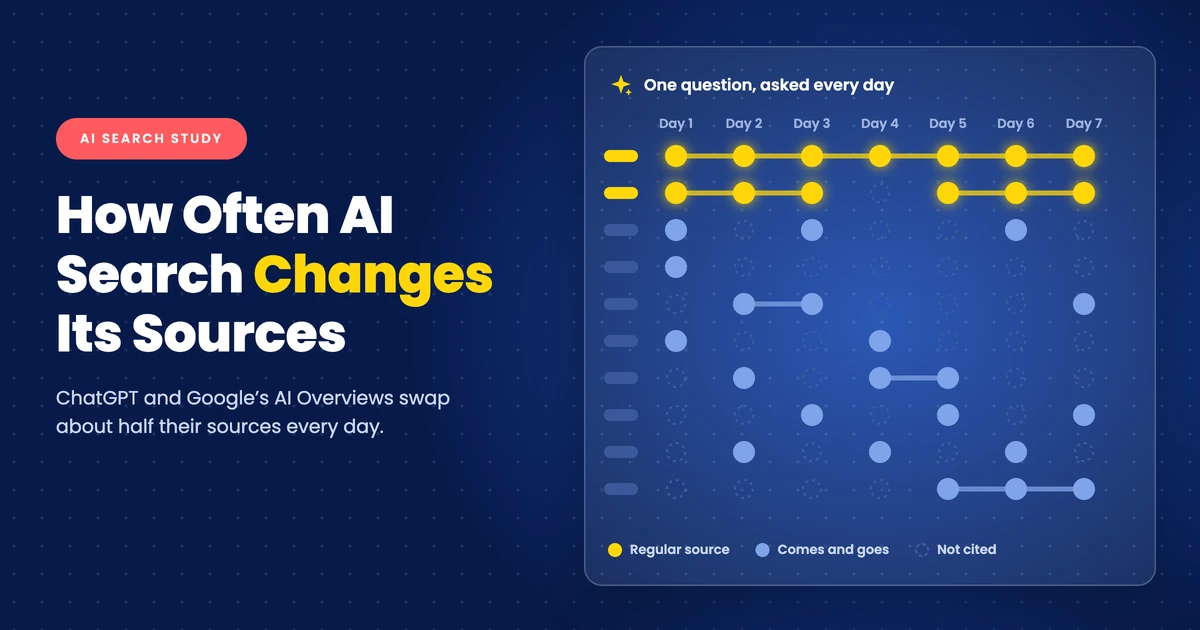
For the Singapore questions we track, AI search changes its sources almost every day. Between 9 October and 7 November 2026, ChatGPT cited only about half of the sites it had cited the day before for the same question, and Google’s AI Overviews about 40%. Over the month, a single question drew on six to seven times as many sites as it did on any one day.
So a single check of ChatGPT tells you what it cited that day, not what it usually cites. I think that matters for anyone judging their AI visibility, because a source that looks like a win today has a good chance of being gone tomorrow, and one you’ve never seen may turn up next week.
Key Findings
- ChatGPT and AI Overviews cited exactly the same sites as the day before on only 3% and 1% of days, while Perplexity did so on 23%.
- A small core of regulars carries more than a third of ChatGPT’s citations, while about 4 in 10 of the sites a ChatGPT question cites appear on one day only.
- A brand’s own site is among the steadiest sources on every platform, yet ChatGPT cites it on only 41% of days for a typical question that cites it at all.
- The sources change in steps as well as day to day. In mid-October, the share of ChatGPT’s answers citing a list site tripled, from about 8% to 25%, within three days.
- Month to month, ChatGPT kept about half of each question’s top 5 sites from August to October, and AI Overviews kept just under 40%.
How We Measured It
We track AI answers for Singapore brands through WorkDuo, a platform that sells this kind of tracking. This study takes 45 of those brands, three in each of 15 industries, from aesthetics clinics and tuition to industrial suppliers. Their 2,549 questions are asked once a day on ChatGPT and Google AI Overviews, and on Perplexity too for 13 of the brands. That came to 164,540 AI answers over the 30 days to 7 November 2026.
Each question runs once a day on each platform, so what we can measure is how its cited sites change from one day to the next. We count sites by domain, so two pages from the same site count as one. For the longer view, we compared the same questions’ top sites across three monthly windows, starting on 10 August 2026.
How Much Changes From One Day To The Next
On a typical day, ChatGPT goes back to about half of the sites it cited for the same question the day before, and swaps out the rest. AI Overviews keeps 40%, while Perplexity is far steadier, since it cites 10 sources in almost every answer and keeps nearly 9 in 10 of them.
| ChatGPT | AI Overviews | Perplexity | |
| Sites cited again from the day before (median) | 50% | 40% | 88% |
| Days with exactly the same sites as the day before | 2.7% | 1.3% | 22.7% |
| Sites cited on a typical day | 6 | 6 | 8 |
| Different sites cited over 30 days | 43 | 36 | 22 |
At the level of individual pages, the churn is higher still, because an answer can cite a different page on the same site. And answers with no citation at all are rare, at 3.5% of ChatGPT’s answers and 1.3% of AI Overviews’.
A Month Draws On Far More Sites Than A Day
Across 30 days, a typical question on ChatGPT cited 43 different sites, though only about 6 on any one day. Most of those sites come and go: 42% of them were cited on a single day, and only 8% on at least half the days, which for a typical question means about 4 regulars.
Those few regulars still matter, because they carry 37% of the question’s citations on ChatGPT. AI Overviews works the same way with even fewer regulars, about 2 a question, carrying 26% of its citations. On Perplexity, a typical question has 7 regulars carrying two thirds of its citations, and 83% of its questions have at least one site cited every day, against 6% on ChatGPT and AI Overviews.
ChatGPT’s answers also changed partway through the month, but the churn holds within a single steady week. From 24 to 30 October, 45% of the sites a ChatGPT question cited appeared on just one day, and for AI Overviews it was half.
Which Sources Stick
The steadiest sources on ChatGPT and Perplexity are a brand’s own site and its competitors’ sites, although on AI Overviews, social platforms are just as steady as the brand’s own site. On ChatGPT, a brand’s own site was a regular for 45% of the questions that cited it, and if it was cited one day, there was a 74% chance it was cited the next. Beyond those, ChatGPT and AI Overviews disagree about which sources to keep.
| Source type | How often it’s a regular for the questions citing it, on ChatGPT | The same, on AI Overviews |
| The brand’s own site | 45% | 25% |
| Tracked competitors’ sites | 21% | 18% |
| Government sites | 15% | 7% |
| List sites | 14% | 3% |
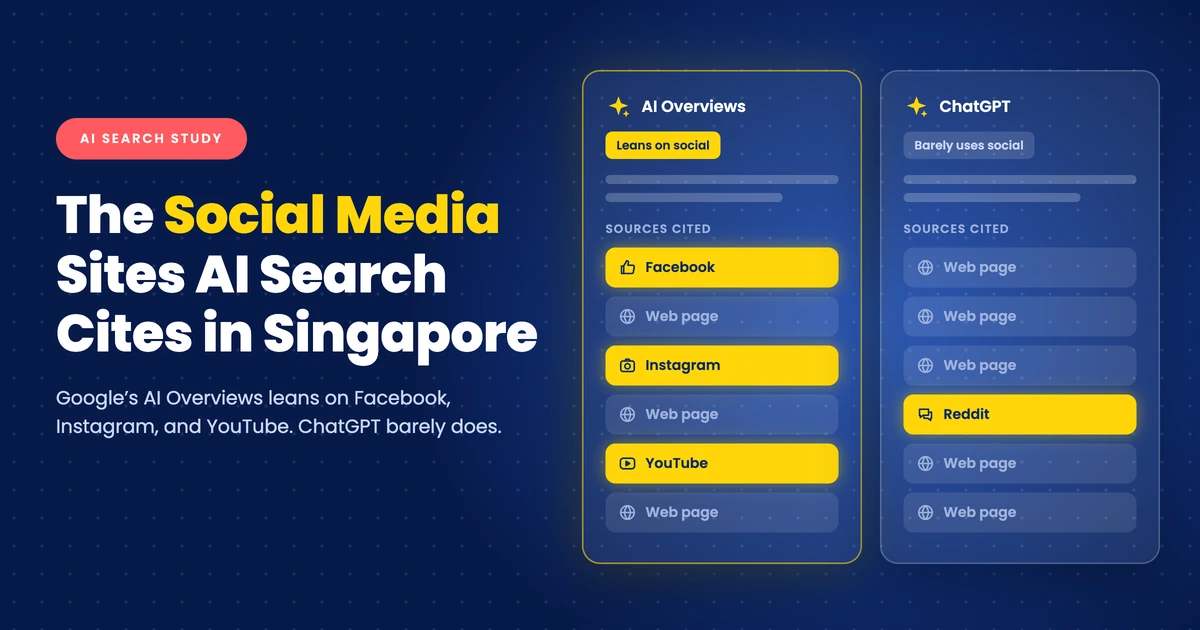
| Social and video platforms | 0.5% | 24% |
| News sites | 2% | 3% |
| Forums | 2% | 6% |
| Reference sites, mostly Wikipedia | 0.6% | 5% |
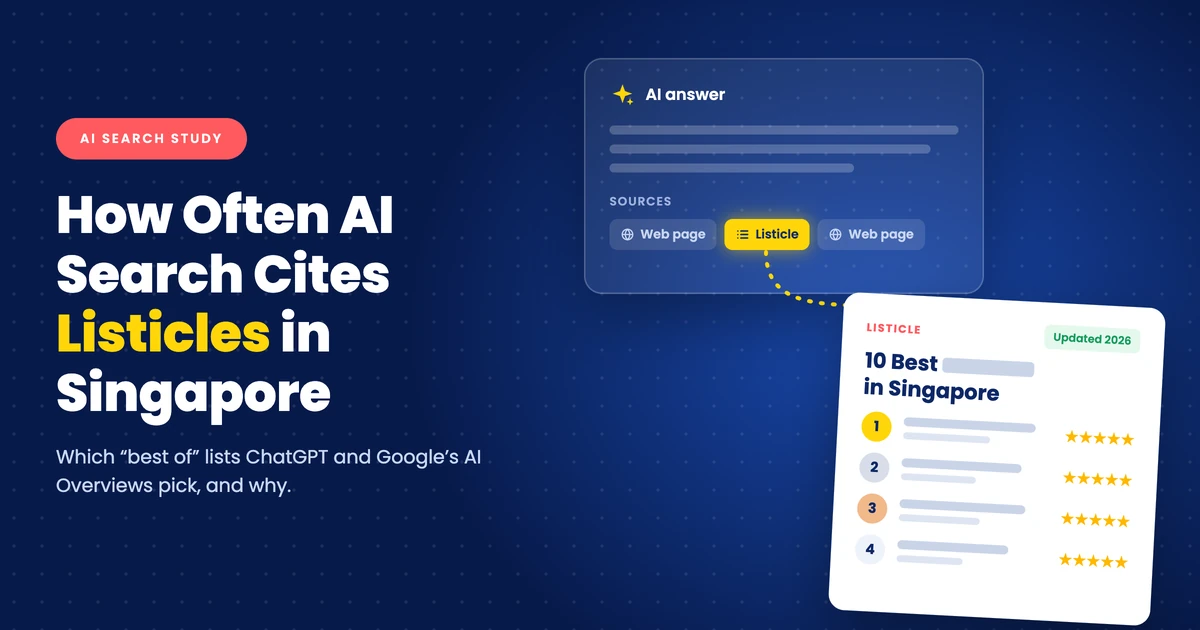
On ChatGPT, list sites such as Terris Recommends, Best in Hood, and MoreBetter are regulars for 26% to 30% of the questions that cite them, while on AI Overviews, Terris Recommends is a regular for just 5%. Social platforms go the other way. AI Overviews cites Facebook for 2,237 questions, from all 45 brands, and it’s a regular for 40% of them, yet ChatGPT cites Facebook for 355 questions and it’s a regular for none.
Wikipedia is the clearest case of a source that’s everywhere but never stays. ChatGPT cites it for 1,324 questions, more than any other site, but it’s a regular for none of them and turns up on a single day for 58%. Reddit behaves much the same. My view is that ChatGPT reaches for these to explain a term or check a fact, then moves on, while the list sites and official pages it keeps are the ones that answer the question itself.
Government sites are steady where they’re the authority on the subject. On ChatGPT, the Ministry of Manpower is a regular for 37% of the questions that cite it, and HealthHub for 26%, while a general site such as Ask.gov.sg is a regular for only 7%.
Your Own Site And Your Brand Mentions
ChatGPT cited the tracked brand’s own site at least once for 71% of its questions, and AI Overviews for 69%. But for those questions, the site turned up on a median 41% of days on ChatGPT and 28% on AI Overviews, and it was cited every single day for only about 2.5% of them on either platform. Perplexity was the exception, citing the brand’s site on 93% of days for the questions where it cited it at all.
Being named in the answer is just as patchy. ChatGPT mentioned the tracked brand at least once for 77% of its questions, on a median 57% of days, and every day for only 10%. AI Overviews mentioned it for 74% of its questions, on a median 36% of days.
So I’d treat a brand’s AI visibility as a share of days rather than a yes or no. A brand named on 57% of days is typical in this data, yet a single check would miss it about four times in ten.
Month To Month, And The October Shifts
Over a longer span, the top sources hold up better than the daily churn suggests, but they still move. If you take each question’s top 5 sites, ranked by how many answers cite them, ChatGPT kept 71% of them from August to September and 53% from August to October. AI Overviews kept 69% and 38% over the same spans, and the top site was the same in August and October for 46% of ChatGPT’s questions and 20% of AI Overviews’.
Most of that movement came in October, and it came in steps, on the same days for all 45 brands. From 15 to 17 October, ChatGPT’s answers went from about 5 citations to about 10, and the share citing at least one list site jumped from about 8% to 25%, where it stayed through 7 November.
Wikipedia dropped out at the same time, from up to 19% of ChatGPT’s answers on a single day to under 2%. Then from 24 October, Google Maps listings appeared in about one ChatGPT answer in ten, before falling to about 4% from 31 October.
| Dates in 2026 | Citations per ChatGPT answer | ChatGPT answers citing a list site | Sites cited again from the day before |
| 9–14 October | About 5 | About 8% | 25% |
| 17–23 October | About 10 | About 25% | 50% |
| 24–30 October | About 13 | About 26% | 55% |
| 31 October–7 November | About 11 | About 26% | 56% |
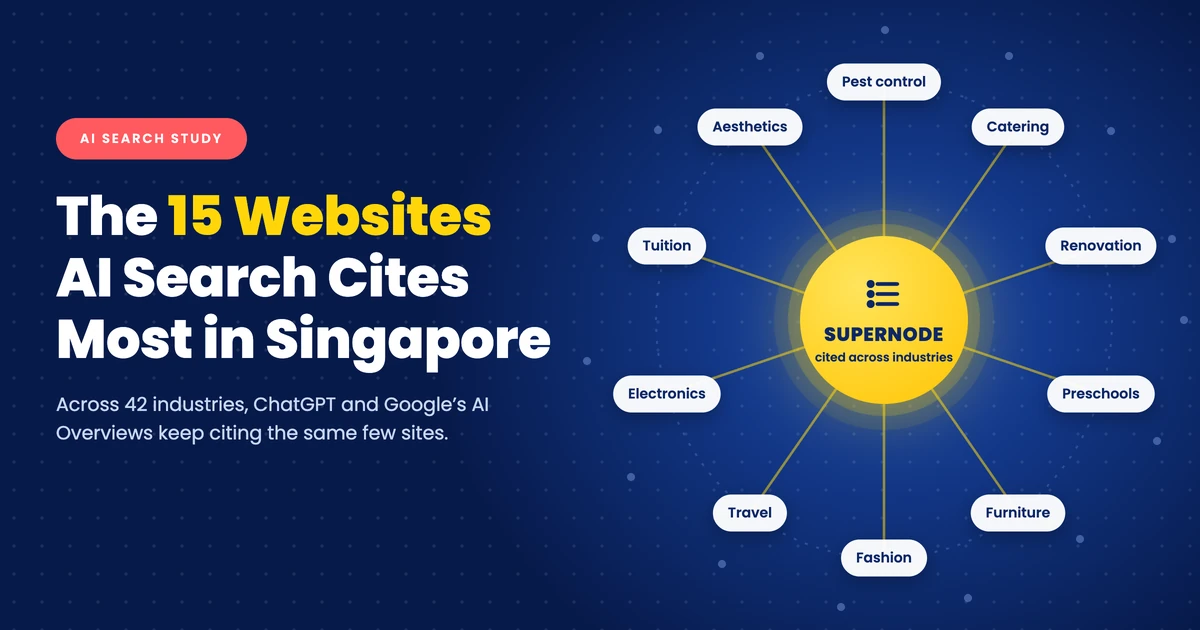
The list sites behind our ranking of the websites AI search cites most are a big part of that jump. Across the same brands’ questions, ChatGPT didn’t cite LocalRank at all between 10 August and 8 September. It cited it in 12 answers the month after, and in 3,227 between 9 October and 7 November, while Terris Recommends went from 39 to 458 to 4,406 ChatGPT answers. Over the same months, AI Overviews answers citing Terris Recommends roughly halved, from 3,411 to 1,743.
AI Overviews shifted too, though less sharply. From 28 October, Facebook appeared in about 42% of its answers, up from about 34% earlier in the month, while answers citing the brand’s own site fell from 25% to 20%. Over the three monthly windows, AI Overviews’ citations of Facebook roughly doubled. Perplexity’s sources barely moved on most days, but on 13 October, 24 October, and 1 November, they shifted more than usual for all 13 of its brands at once.
SISTRIX, which sells SEO and AI visibility tools, reported on 30 October 2026 that ChatGPT moved to a new answer layout from 9 October. It found source lists missing from most answers until 22 October, in six European and US markets rather than Singapore, and it doesn’t cite any statement from OpenAI.
Our dates are close to SISTRIX’s without matching exactly. Because the steps hit every brand on the same days, I’d put them down to ChatGPT, or to how its answers get recorded, rather than to anything the brands did, though this data can’t show the cause.
Industries And Question Types Barely Change The Picture
Every industry in the sample churns, and the gap between them is much smaller than the gap between platforms. On ChatGPT, the share of the day before’s sites cited again ran from 40% in electronics and in B2B tech to 60% for medical specialists and hospitals. On AI Overviews, it ran from 33% in five industries, tuition and renovation among them, to 50% in cars and in watches and jewellery.
The way a question is worded made little difference. Three in four of the questions ask for the best or a recommended provider, and on ChatGPT they kept half their sites from one day to the next, the same as questions starting “how”, “what”, or “should”. The “how” and “what” questions did repeat the day before’s sources exactly more often, though still rarely, on 6.5% of days against 1.9%.
What This Means For Your Business
The KPI that moves here is how often AI answers name you when a buyer asks about your category, and that number can’t be read from a single day. A brand that ChatGPT names on 57% of days will be missing from about four checks in ten, so a report built on one check a month can swing from good to bad without anything changing.
These are the changes I’d make to how AI visibility is measured:
- Report a share of days, such as how many of the last 30 days an answer named you or cited your site, rather than whether it did on the day you checked.
- Look for the regulars, the sites cited on at least half the days for your buyers’ questions, because they carry a quarter to a third of the citations, while a one-off doesn’t come back within the month.
- Compare platforms separately, since ChatGPT keeps list sites and official pages, AI Overviews keeps social profiles, and Perplexity barely changes from day to day.
- Check the trend after a platform shift, because October showed that a source mix can change within days across all the brands we track, and a shift like that isn’t about your site.
I’d also look after your own site before chasing anything else, because ChatGPT and Perplexity keep it more consistently than any other kind of source, and AI Overviews keeps it as often as social platforms. So if it’s cited on a third of days today, I think making it the clearest answer to your buyers’ questions is a better first step than chasing a place on someone else’s list.
What This Data Can’t Tell You
Each question runs once a day on each platform, so this data can’t tell real day-to-day change apart from the variation you’d get by asking the same question twice. Some of the daily churn is likely to be that kind of randomness, which a buyer would also see.
The 45 brands are a sample of the brands we track, and the questions are mostly commercial, so they lean towards “which provider should I choose” rather than general information. The data also covers three months of Singapore answers only. Perplexity here is its API version, tracked for 13 brands, which may not behave exactly like the Perplexity app, and the source types come from our own grouping of the most cited sites.
AI Citation Stability FAQs
How often does ChatGPT change its sources?
Almost every day. For the Singapore questions we tracked between 9 October and 7 November 2026, ChatGPT cited exactly the same sites as the day before on only 2.7% of days, and on a typical day it cited again about half of the previous day’s sites. Over the month, one question drew on 43 different sites, against about 6 on any single day.
Does Google AI Overviews cite the same sources every day?
No, it changes even more than ChatGPT. In our Singapore data from 9 October to 7 November 2026, AI Overviews cited again about 40% of the day before’s sites, and its sources were identical to the day before on only 1.3% of days. The sources it keeps most are a brand’s own site, competitors’ sites, and social platforms, led by Facebook.
Is Perplexity more consistent than ChatGPT?
Yes, by a wide margin in our data. Between 9 October and 7 November 2026, Perplexity cited again about 88% of the day before’s sites, against about 50% for ChatGPT. It still reshuffled on a few days, though, and on 13 October, 24 October, and 1 November its sources shifted more than usual for all 13 brands tracked on it.
Why does my brand appear in an AI answer one day and not the next?
Because AI answers change their sources almost every day, even for the same question. In our Singapore data from October and November 2026, ChatGPT named the tracked brand on a median 57% of days for the questions where it named it at all, and cited the brand’s own site on 41%. So a missing mention on one day is normal, and I’d judge visibility over weeks rather than from a single check.
How long should I track AI citations before drawing conclusions?
In my view, at least a few weeks, and longer for comparing months. In our data, a question cited six to seven times more sites over 30 days than on any one day, and from August to October 2026, ChatGPT kept only about half of each question’s top 5 sites. So a week shows you the regulars, and a few months show you whether they’re holding.
References
- WorkDuo: AI search visibility platform
- SISTRIX: What changed in ChatGPT in October (30 October 2026)
- First Page: The 15 websites AI search cites most across Singapore industries
AI citation figures come from WorkDuo for 9 October to 7 November 2026, with monthly windows from 10 August 2026.